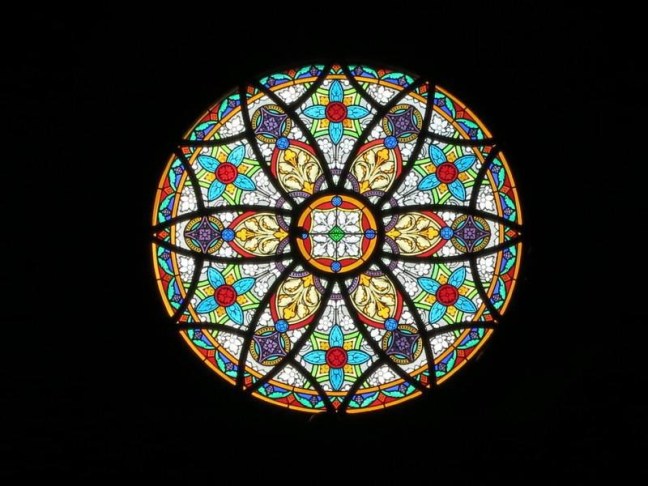
Blown Out

We continue our series of texts or essays on different subjects of spiritual interest. The question here is about ‘having a spiritual experience’, and delving into the nature of what is called ‘awakening’…


There is a safe place in view of all, but difficult of approach,
where there is no old age nor death, no pain nor disease.
It is what is called nirvāṇa, or freedom from pain, or perfection;
it is the safe, happy, and quiet place which the great sages reach.
That is the eternal place, in view of all, but difficult of approach.

~ Uttaradhyana Sutra, 81-4 (Buddhism)


Nothing much, really. Something just like peeking out of the window. But let’s not be overly disdainful, for this can bend the course of a life and change it in a profound way. To have a spiritual experience is a blessing, a call, maybe a rehearsal for the final dissolution. It leaves you puzzled, wanting to understand, and above all, searching to have it again in the future. It can be just a flavour suddenly lingering at the back of your mind, or a spectacular awakening, or anything in between. In all cases, you meet something new, that is outside any known experience, and yet has a familiar flame, like an old forgotten memory. Above all, peace, love, and happiness are attached to it. It is the DNA of any genuine experience, its vital core, and what makes it so desirable. After all, do we want anything in life but a lasting happiness? It can last for seconds, minutes, or days. It comes as a grace, unexpected, uninvited. One important characteristic is that it fades away, finally disappears. Otherwise we wouldn’t call it an ‘experience’. A spiritual experience is an awakening that failed.

An essay to delve into the nature of Awakening (READ MORE…)
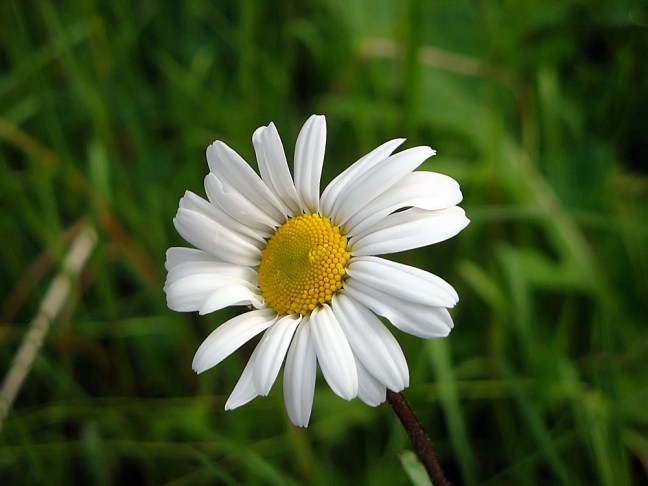
 

The Flower of Awareness

Awareness is like a flower
Always fresh and present and vibrant
In the morning mist of mind

It awakens to us every moment
Bending its fragrance and petals
To what we think is blurred for a time

Its fragility is an illusory one
For it is the only sharp thing we have
The indestructible ground of living

And in front of such shining beauty
What was once a so familiar scenery
Dissolves and fades like dust in the wind


~~~

Text and photo by Alain Joly

~~~


Suggestion:
Voices from Silence (other poems from the blog)


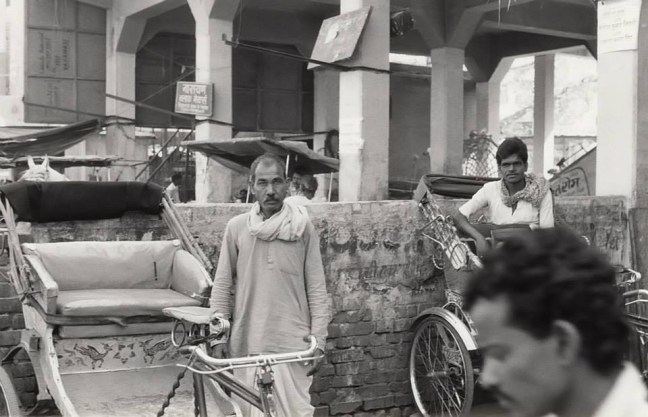
Le carillon de Bénarès

I’m sharing here a new page for the people speaking French only. If you are bilingual, you can check it too, since a few articles have not been shared on the main blog in English…

Voici une nouvelle page de la section En Français, où textes, poésies, citations vous sont proposés comme autant de mises en abîme de l’Être. Voici l’une d’elles:


A Bénarès, il est une rue qui descend doucement en serpentant,
Une artère où se répète chaque jour un événement extraordinaire.
Le soir venu, à l’heure où la nuit se pose, où la lumière des échoppes
Fait briller bracelets, pans de soie, et ustensiles,
Les habitants de la cité rentrent chez eux, empruntant
Les nombreux rickshaws qui descendent le long de cette avenue.
Les vélo-rickshaws de Bénarès ont une particularité étonnante,
Une sonnette placée sur la roue qui, par l’effet des rayons venant la frapper,
Produit quand on l’active une sonnerie continue et harmonieuse.
Du flot incessant des conducteurs de rickshaws avertissant de leur présence
Se répandait alors un carillon qui inondait la nuit de sa pureté,
Et remplissait la rue d’une atmosphère sonore féerique à nulle autre pareille.
Là, dans cette rue tout près du Gange sacré,
Des hommes simples, parmi les plus pauvres,
Nous offraient par le simple fait de pédaler
Une nuée de sons, cascades et tintinnabulements,
Composant une symphonie
Dont la splendeur ravive encore aujourd’hui ma mémoire endormie.
La musique céleste des rickshaws-wallahs de Bénarès.


~~~

Texte et photo de Alain Joly

~~~


Les autres articles présentés :
– ‘Prompt comme l’oiseau’ (texte court)
– ‘La solitude de l’Être’ (citations)
– ‘Les passants de l’abîme’ (poésie)

Quatre mises en abîme de l’Être… (LIRE LA SUITE)


The Pilgrims

9CD0A5BF-E702-498F-A679-2D7294F2D385

“Man is indeed abroad to satisfy needs which are more to him than food and clothing. He is out to find himself. Man’s history is the history of his journey to the unknown in quest of the realisation of his immortal self – his soul. Through the rise and fall of empires; through the building up gigantic piles of wealth and the ruthless scattering of them upon the dust; through the creation of vast bodies of symbols that give shape to his dreams and aspirations, and the casting of them away like the playthings of an outworn infancy; through his forging of magic keys with which to unlock the mysteries of creation, and through his throwing away of this labour of ages to go back to his workshop and work up afresh some new form; yes, through it all man is marching from epoch to epoch towards the fullest realisation of his soul, – the soul which is greater than the things man accumulates, the deeds he accomplishes, the theories he builds; the soul whose onward course is never checked by death or dissolution.

Man’s mistakes and failures have by no means been trifling or small, they have strewn his path with colossal ruins; his sufferings have been immense, like birth-pangs for a giant child; they are the prelude of a fulfilment whose scope is infinite. Man has gone through and is still undergoing martyrdoms in various ways, and his institutions are the altars he has built whereto he brings his daily sacrifices, marvellous in kind and stupendous in quantity. All this would be absolutely unmeaning and unbearable if all along he did not feel that deepest joy of the soul within him, which tries its divine strength by suffering and proves its exhaustless riches by renunciation.

Yes, they are coming, the pilgrims, one and all – coming to their true inheritance of the world; they are ever broadening their consciousness, ever seeking a higher and higher unity, ever approaching nearer to the one central Truth which is all-comprehensive.”

~ Rabindranath Tagore (1861 – 1941)

.

~~~

 Painting by Edward Burne-Jones (1833 – 1898)

~~~

.

Bibliography:
– ‘Sadhana’: The Realization of Life – by Rabindranath Tagore – (CreateSpace Independent Publishing Platform)

Website:
Rabindranath Tagore (Wikipedia)

.

Suggestions:
– Other articles from the same category in ‘Shreds of Infinity
The Heart of Tagore (Homage to Rabindranath Tagore)

.

.

Tripping over Joy

BD266EB8-3B13-4016-A613-8F7742E48D91What is the difference
between your experience of existence
and that of a saint?

The saint knows
that the spiritual path
is a sublime chess game with God
and that the Beloved
has just made such a fantastic move
that the saint is now continually
tripping over joy
and bursting out in laughter
and saying, “I surrender!”

Whereas, my dear,
I am afraid you still think
you have a thousand serious moves.

~ Hafiz


~~~

Text from Hafiz, a 14th Century Persian poet

Picture from Alain Joly

~~~


Bibliography:
– ‘I Heard God Laughing: Poems of Hope and Joy’, by Hafiz (translation by Daniel Ladinsky) – Penguin Books

Website:
Hafiz (Wikipedia)

Suggestion:
Voices from Silence (other poems from the blog)


The Aloneness of Being

‘The Aloneness of being’ is a phrase borrowed from Krishnamurti. Here are a few quotes to celebrate Aloneness…

.

Aloneness is the purgation of all motives,
of all pursuits of desire,
of all ends.

~ J. Krishnamurti

.

We walked up the steep bank of the river and took a path that skirted the green wheat-fields. This path was a very ancient way; many thousands had trodden it, and it was rich in tradition and silence. It wandered among fields and mangoes, tamarinds and deserted shrines. There were large patches of garden, sweet peas deliciously scenting the air. The birds were settling down for the night, and a large pond was beginning to reflect the stars. Nature was not communicative that evening. The trees were aloof; they had withdrawn into their silence and darkness. A few chattering villagers passed by on their bicycles, and once again there was deep silence and that peace which comes when all things are alone.”
~ J. Krishnamurti

~

One must be willing to stand alone — in the unknown, with no reference to the known or the past or any of one’s conditioning. One must stand where no one has stood before in complete nakedness, innocence, and humility. One must stand in that dark light, in that groundless embrace, unwavering and true to the reality beyond all self — not just for a moment, but forever without end. For then that which is sacred, undivided, and whole is born within consciousness and begins to express itself.
~ Adyashanti

~

Aloneness is indivisible and loneliness is separation. That which is alone is pliable and so enduring. Only the alone can commune with that which is causeless, the immeasurable. To the alone, life is eternal; to the alone there is no death. The alone can never cease to be.
~ J. Krishnamurti

~

Walking, surrounded by these violet, bare, rocky mountains, suddenly there was solitude. Complete solitude. Everywhere, there was solitude; it had great, unfathomable richness; it had that beauty which is beyond thought and feeling. It was not still; it was living, moving, filling every nook and corner. The high rocky mountain top was aglow with the setting sun and that very light and colour filled the heavens with solitude.”
~ J. Krishnamurti

.

635AFFA2-05B7-486F-8D19-46C78D56DD67

.

– J. Krishnamurti’s excerpts are from ‘Krishnamurti’s Notebook’ and ‘Commentaries on Living: First Series’.

– Adyashanti’s excerpt is from: ‘An Inner Revolution’, by Adyashanti

– Picture by Alain Joly

Bibliography:
– ‘Commentaries on Living: First Series’, by J. Krishnamurti – (Quest Books,U.S.)
– ‘Falling into Grace: Insights on the End of Suffering’, by Adyashanti – (Sounds True Inc)

Websites:
J. Krishnamurti
Adyashanti

Suggestion:
Fleeing to God (other pointers from the blog)
A Day at Brockwood Park (Homage to J. Krishnamurti)

.

Swift as a Bird

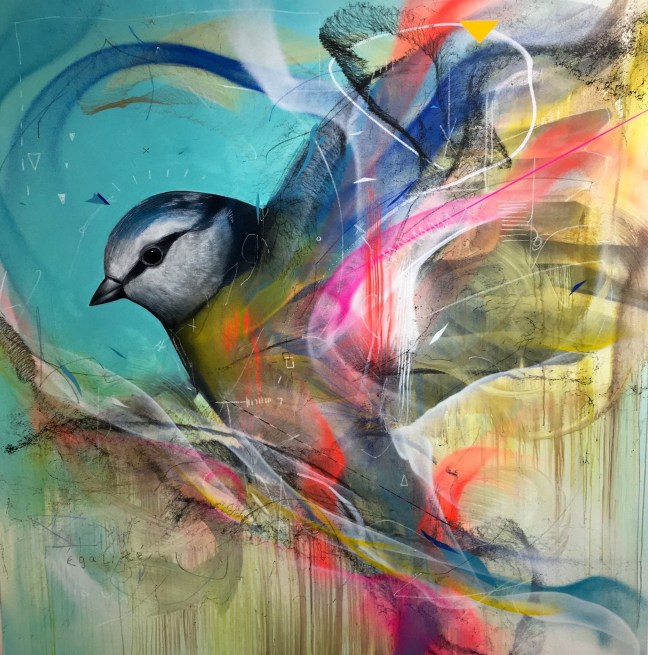
Birds, especially the smaller ones, are the most awake creatures of the world. Have you noticed? Their way of quickly moving their head down, and up, up and down, on the sides, pecking with extreme precision, addressing their acute little glance in all corner of life, observing, registering everything, hopping around, ready, for anything, not minding, alert, and gone, swiftly gone, at a lightning speed.

Surely we can find this place in ourselves, untamed, without obstacle, this quality of looking, without the past, without the past. Now. Irremediably now. It’s not that we should be hopping around, but when the mind, all the burden of it, is gone, dissolve, is it not there? This alertness, this awakeness, awareness. Is it not there? Unfettered, wide. Wide as a little bird. Is it not the same energy, the same freedom operating? It seems to me that it is…

.

~~~

Text by Alain Joly

Artwork by Luis Seven Martins (L7m)

~~~

.

8A19330D-F6FA-43D7-A12C-AA748F24348ALuis Seven Martins – L7m, is a street art painter. Inspired by the beauty and sorrow of life, he likes to work in deserted, disarrayed places. I find his colourful and elegant paintings – mixture of realism and abstraction, exquisite and harmonious. I’m happy that I can share his work with you…
L7MATRIX Street Art

.

Suggestion:
Other articles from the same category ‘Reveries into Oneness

.

.