Be Still and Know

This was our last retreat there. In the old mansion that we so dearly loved. Amongst the rolling hills of Wales. Here we have listened and felt. Here we have known what needs to be known. We have felt our heart sing and thrive beyond measure. 

Here we sang together for the last time. A small improvised choir. A last song that is like a hymn for future days. Its lovely tune I cannot convey to you. But the words. Oh the words… Only listen and feel the heart of it. It goes:

Be still and know that I am God
And there is none besides me

The first injonction is ‘be still’. It’s a call. There is a wild world out there. Don’t run after every seducing thought. Don’t follow every glitter of experience. Be disinterested for once. Turn your head away. Say: I don’t want you! Try it.

Don’t let the world eat you. If anything, swallow it yourself! But do it softly. Let it go and disappear of its own accord. Be gentle. We don’t want to upset it. It needs to tell you more. Wait a little longer. You will be surprised.

Put yourself together. Find the place of togetherness in you. Stay there. See how good it feels. Be reunited with your own self. Make it happy. Make yours its sweet presence. Hear its heartfelt cry resonating. You’re here. At last! […]

Continue unraveling these verses from a song… (READ MORE…)


The Unattainable One

Parvathy Baul – Wikimedia

If you want to attain 
the unattainable One,
Free yourself from all that is
Fragile and temporary.
Know yourself
.”
~ Rasika Dasa


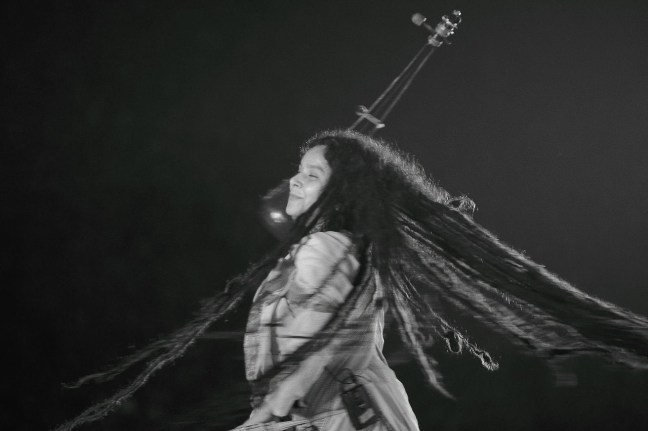
In the deepest villages of Bengal, there remains today a community of vagrant singers, both mystical bards and wandering minstrels, the Bauls. For centuries they have been treading the dust of the roads, with a firm and aerial step, at the rhythm of their daily needs and highest aspirations. The term ‘baul’, derived from the Sanskrit ‘vatulā’, means ’he who is affected, or carried away by the wind’. It might also refer to the term ‘vyakula’, meaning ‘impatient eagerness for god’, or ’auliyā’, a word of Arabic origin meaning ‘holy’, ‘ascetic’. But the asceticism of the Bauls is not lost in penances and meditations, is not only about achieving the set goal. It is rather a kind of refinement in the expression of the moment, a healthy ‘madness’ expressing through dance, music, and songs, the love of the divine and the spontaneity of living. Coming from both Hindu and Muslim religions, the Bauls retain nevertheless a fierce freedom of spirit and are rebellious to any ideology, following no ritual, referring to no scriptures. They are ’outside’, offbeat, refreshing and unique. […]

Continue reading about the Bauls of Bengal… (READ MORE…)


Benares my Love

One day long ago, I was stopped on my way, redirected as it were. It was one morning, the time of a glorious encounter with the subtle ethers of a city. Nothing would ever be the same. But what did I know at the time?

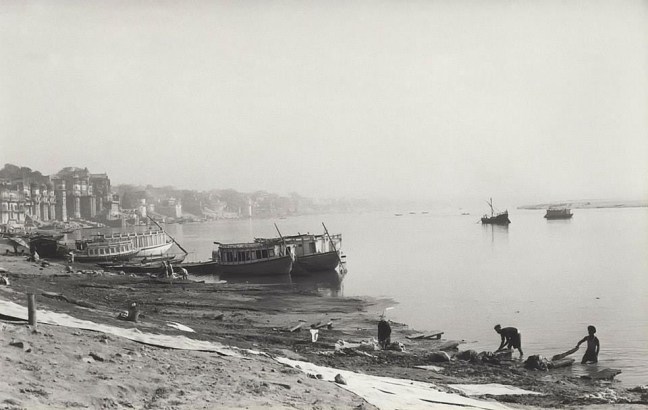
In Benares I met the Ganges. But it wasn’t a river. It was something calm, placid, yet charged with a force and power that I had never met before. At night, the river was still not a river. It was an absence, an emptiness. It was dark. And the boats that were aligned on it were like suspended, resting, immobile, placed here by something I could never comprehend. And the waters met here secretly with silence, in the crystalline air where a bell breathed an occasional, happy tone.

In Benares I saw the sun rising. But it wasn’t a sun. It was a bath of golden light spread above the waters. It was giving and fresh like all illumination must be. It was a pointer reminding us tirelessly to turn our attention on ourselves. It was not taken for granted but received. You were being exposed, as all beliefs and limitations ought to be. And in the evening, its setting amongst the heartfelt notes of a devotional song would send shivers down your spine. Then you knew. You would come again tomorrow to be clothed by its golden light. And you couldn’t wait.

A secret meeting with the city of Varanasi or Benares… (READ MORE…)


The Deepest Acceptance

It is truth that liberates, 
not your effort to be free
.”
~ J. Krishnamurti

The question of ‘surrender’ is one that is often misunderstood. Surrender implies, in everyday language, something that the mind does, even remotely, in order to give itself to a reality that seems inescapable. It often comes down to a form of resignation, a giving up, something passive at its core, which brings more delusion and suffering. So what is true ‘surrender’, in a non-dual context? I have gathered here many quotes and pointers on this subject, from various spiritual teachers and poets of the eternal and the infinite. I hope that this will bring some clarity into that which Jeff Foster calls the deepest acceptance…


~~~


People often think that surrender means to renounce wealth, sexuality, or objects. Such a renunciation might be useful but it could also be a hindrance. Real surrender takes place when we cease to take ourself for a separate entity, an object. This renunciation seems, at first sight, limited in scope and too simple, but it is, in fact, the ultimate surrender. Such a giving up has no purpose, it comes from the deep understanding that our true nature, consciousness, is free from all limitations. From this perspective, surrender means to see the limitations for what they are: mere concepts superimposed onto our real being, which is limitless.”
~ Francis Lucille (‘Eternity Now’)

~

You may discover that when there is no resistance to totally being in hell, that heaven opens up and samsara reveals its true nature as nirvana. But the catch is, if you are embracing hell as a strategy to get you to heaven, that doesn’t work. Only the complete absence of wanting what is to be different in any way pops the imaginary bubble of separation. No one can do this. It is like dying or falling asleep. It is the absence of any doing, the absence of control, the absence of effort, the absence of any concern about what happens. It is a letting go, a dissolving, a relaxing. This letting go begins with letting go even of the need to let go, for the need to fall asleep keeps us awake, just as the imperative to surrender is a form of holding on and seeking control. True surrender is the absence of resistance even to holding on if that is how life is showing up in this moment. Surrender is the absence of trying to surrender.”
~ Joan Tollifson

Continue the exploration on the question of ‘surrender’ (READ MORE…)


Bhakti, the Song of Love

Don’t forget love;
it will bring all the madness you need 
to unfurl yourself across the universe
.”
~ Meera Bai (1498-1546)


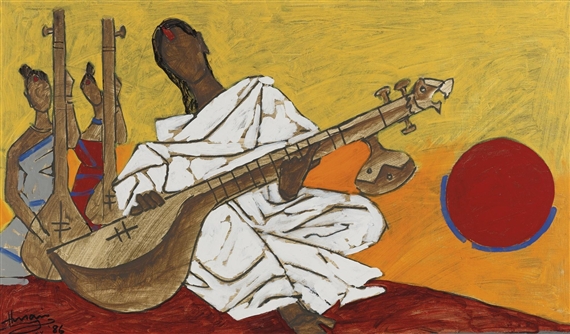
I intend here to continue exploring the three different pathways towards realising our true nature. I have some time ago given my attention to Jñāna, which in the Indian tradition is the name given to the means of attaining truth through the investigative qualities of the mind, which are mostly thinking and the power of discrimination. The two other paths towards realisation are the tantric path, which involves the senses, and the path of love, which involves feeling, and is the subject of this essay.

The path of knowledge requires a certain steadiness, orderliness, being thorough, constant. But even somebody set on this logical path of knowledge will be exposed to ineffable, timeless moments of pure love. Some people are best suited to a more loving, encompassing pathway, that would allow them to be just as they are, with all their confusion and overwhelming feelings. I can be the me that I am, as long as I am too this loving, embracing presence to which I can offer myself. In love there is no theory, no guidelines to follow. And it is not a surprise to find this expression of truth as one of the means to the realisation of our true self. This pathway of love has been called ‘Bhakti’ in the tradition of India. All the Indian faith, at least in its more popular expression, is of a devotional nature, and has elevated this simple love for god or truth to the rank of art. That seemed to me a good starting point to embark on this path of devotion, which the Śivānanda Laharī (verse 61) describes as: “The way needle seeks magnet, the way creeper seeks tree, the way river unites with ocean and the way the mind seeks the lotus feet of Śiva.”

An exploration into Bhakti, the path of love and devotion (READ MORE…)


Where God Speaks

God is my final end;
Does he from me evolve, 
Then he grows out of me, 
While I in Him dissolve
.”
~ Angelus Silesius (The Cherubinic Wanderer)


Angelus Silesius was a German mystic born Johannes Scheffler in 1624. Although a Lutheran, he converted to Catholicism and became a priest. After being a physician for a while, he became known for his mystical poetry. He published two poetical works, “The Soul’s Spiritual Delight“, a collection of more than two hundred religious songs, and “The Cherubinic Wanderer“, a collection of over sixteen hundred alexandrine couplets, from which the following selection is excerpted.

These short mystical poems – like spiritual haikus – are like bubbles sparkling with meaning and depth, infused with humour and sweet tenderness, bearing at their core the accents of a true non-dual understanding. I have attempted to give them a loose classification, each theme with a short introductory text, for better access and clarity. Chew them lightly, and they will never fail to deliver, behind their somewhat naive and archaic attire, the honey of their essence. Angelus Silesius died in 1677.

I hope you enjoy this selection from “The Cherubinic Wanderer” by the poet Angelus Silesius…

~

God is a big word, and it is important to understand what reality is hidden behind such a word.
The poet warns: “To know Him, Knower must be one with Known.”
Enjoy a taste of the nature of God
:


Being is not measured
“Turn wheresoe’er I will, I find no evidence
of End, Beginning, Centre or Circumference.”
~ Godhead, 1.2.188

God is not grasped
“God is an utter Nothingness,
Beyond the touch of Time and Place:
The more thou graspest after Him,
The more he fleeth thy embrace.”
~ Godhead, 5.1.25

The knower must become the known
“Naught ever can be known in God: One and Alone
Is He. To know Him, Knower must be one with Known.”
~ Godhead, 8.1.285

God is without will
“We pray: Thy Will be done! and lo! He hath no Will:
God in His changelessness eternally is still.”
~ Godhead, 12.1.294

The Rest and work of God
“Rested God never hath, nor toiled—’tis manifest,
For all His rest is work and all His work is rest.”
~ Godhead, 13.4.166

Enjoy many more poems by Angelus Silesius (READ MORE…)


I Am Nobody

Nasreddin Hodja is what could be called a sublime idiot. He is a liar, irreverent, a disturber of peace. But he is also ingenious, free, full of wit, a timeless figure whose stories have spread and been adapted the world over. In the Sufi tradition, they were used for study purposes. “There is the joke, the moral — and the little extra which brings the consciousness of the potential mystic a little further on the way to realisation.” writes Idries Shah. These stories are like ‘eternity with a smile’…

~

One day, the dervish Nasreddin entered a formal reception area 
and seated himself at the foremost elegant chair. 

The Chief of the Guard approached and said: 

“Sir, those places are reserved for guests of honor.”

“Oh, I am more than a mere guest,” replied Nasreddin confidently.

“Oh, so are you a diplomat?”

“Far more than that!”

“Really? So you are a minister, perhaps?”

“No, bigger than that too.”

“Oho! So you must be the King himself, sir,” said the Chief sarcastically.

“Higher than that!”

“What?! Are you higher than the King?! 
Nobody is higher than the King in this village!”

“Now you have it. I am nobody!” said Nasreddin.

~

Nasreddin’s pointers:

Nasreddin is a genius. In just a few attitudes, and a few chosen words, he has just conveyed that nothing, and nobody is greater than god.

There is a presence inside each and every human being, a consciousness, pure, indivisible, that is one without a second, that is all encompassing and infinite, therefore doesn’t bear, or conceive, or even renders possible the existence of another reality by its side. 

Therefore by being nobody, Nasreddin can be all and claim the most prominent seat in the world. That’s why one should show regard for those of humble means. This is the second lesson from Nasreddin, the mollah. Nobody is left aside, nobody is unworthy of the highest, most sublime throne of life, pure presence. For this is each and every being’s birthright and resplendent reality, despite being an unnoticed one for most.

The dignitaries, nobles and ministers of the assembly who believed in appearances and ranks, could not be humbled by a nobody, and catch thereby the high lesson that was delivered in that moment, which is: even a person of no consequence can be Hodja. Hodja is one with the ultimate skill and power to be, who by his or her very knowing of his or her highest identity, can be the vehicle and teacher of a truth that is the greatest and purest one on earth.

This elevation is attainable by everyone through the abandonment of the ego. This is Nasreddin’s ultimate teaching. The ego here is the illusion of being a ‘somebody’. When we abandon our very small identity, our believed being, our own limitations, we can access the highest rank of all. By his genius, in just a few attitudes, and a few chosen words, the mollah has just conveyed the ultimate truth.

This, my friend, is the extent of Nasreddin’s power, the deed of the simple, idiot, absurd, naive, fool, comic, irreverent, sometime witty, sometime wise, Nasir ud-din Mahmood al-Khoyi, known simply as the Hodja, or the mollah.


~

Some people say that, whilst uttering what seemed madness, he was, in reality, 
divinely inspired, and that it was not madness but wisdom that he uttered.”
~ The Turkish Jester or The Pleasantries of Cogia Nasr Eddin Effendi

~


The Nasreddin story is taken from Sufism/Nasrudin, Wikibooks.

‘Nasreddin’s pointers’ is by Alain Joly

The photo is by Ben_Kerckx / Pixabay

Bibliography:
– ‘The Sufis’ – by Idries Shah – (ISF Publishing)
– ‘The Exploits of the Incomparable Mulla Nasrudin’ – by Idries Shah – (ISF Publishing)
– ‘Nasreddin Hodja: 100 tales in verse’ – by Raj Arumugam – (CreateSpace Independent Publishing Platform)

Website:
Nasreddin Hodja (Wikipedia)