Christ (noun)
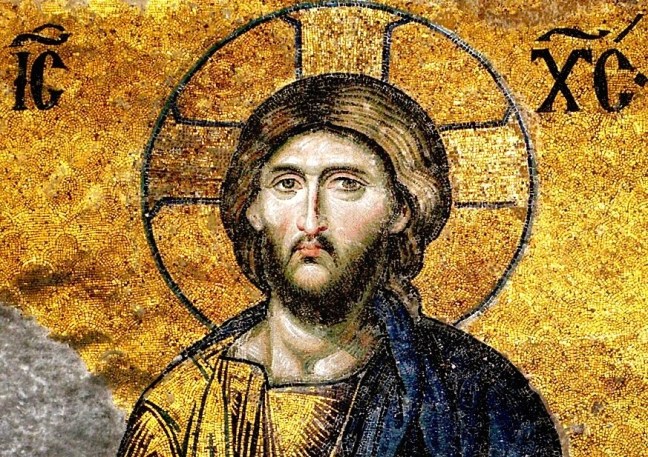

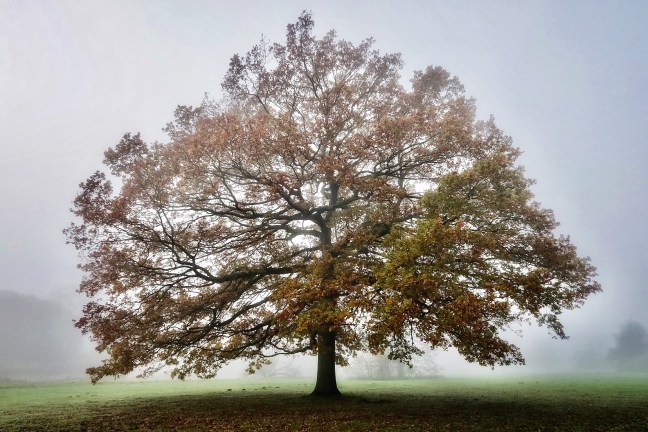
Well, now you know what to do, don’t you? All this time spent in the contemplation of truth must have served some purpose. The countless hours sitting on the cushion. The days in the company of Meister Eckhart or Rumi. And the sage of Arunachala. All these masters of presence. Surely they must have made a lasting impression on you. Now you won’t be seduced by experience anymore. You won’t be dragged into the train of every thought or worry that passes by. You won’t fall entranced by feelings, no matter how pregnant they may appear to be. You won’t let any of your sensations attach themselves to yourself, and suck your attention. Now you know better. You won’t be caught again. The time has come to find yourself just where you are. In that essential in yourself. Not at the periphery. Not in the weather of life, but deep down, in silence, in that presence that falls to nothing but itself. This is where you have to be. This is where your sacred interest lies. But we know that so well by now, don’t we? No need to stress that point again.
Well. But let’s rehearse it again. Just in case. Some part of it may have slipped away from our attention. There is never any harm in repeating what really matters: The important is never in the many, but lies secret in the reality that hosts every seeming appearance. So now we know, don’t we, where to look, where the promise hides, where that non-spoken truth is spoken. We know where is our duty to God. It is there, where you know, close to yourself, behind the behind, present as your most intimate identity. Don’t let yourself be drawn outside of it. Don’t fall to any passing occurrence, to anything that is not the entirety of you. That’s simple enough to make the difference. Stay with that part of yourself that is unmovable, that cannot be divided, set apart, isolated, looked at. That part that will never fail you, no matter hard you may try. And if you find anything, any thing, that stands to be noticed in your mind, an obstacle in yourself, then be unconcerned, go behind it, go for the space that holds it, that last frontier beyond it. And should that obstacle, that thought, that feeling, that perception, be so pregnant as to occupy the whole space of your self, then be bold, dive into it, right at the centre of it, free fall into it, on the other side of yourself, in this unknown, never visited part of you. Then… Then, you may come to that spaceless space, to that newness. Let it shower you, cleanse you. Be it and don’t move away from it no matter what. You won’t regret it.
.
~~~
Text by Alain Joly
Photo by Elsebet Barner
~~~
.
Suggestion:
Other ‘Ways of Being’ from the blog…
.
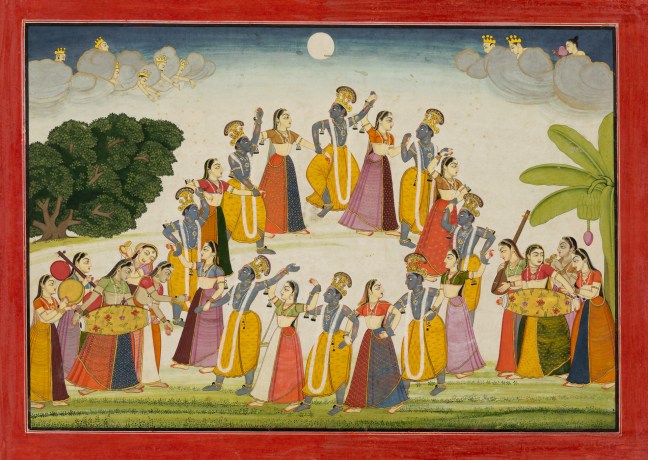
Arise, O Krishna! This is not a time for discretion. There is enchantment around the lake of experience. Ladies have come with fine clothes and jewellery to be adorned by you. You have to be their cup-bearer, the one presence giving to every forms of experience their gorgeous light. For what is a thought without the cup in which it grows, stands for a second, and disappears? Krishna, you alone are the meaning and beauty attached to every object that inhabit our daily living. So this is not a time to hide, but to reveal, to shed light, to glorify. The Gopis — the milkmaids of the Krishnaite folklore — have come to you in the effervescence of their longing. You are the reason for their looking so beautiful. They come to you to be revealed and embellished by your presence, by the one being that is their most precious jewel. So enter the round, O Krishna, and dance with every one of them.
Give to the thoughts that come and wander for a time in our minds their chamber of peace. Clothe them with clarity and intelligence. Appease the suffering of which they are the vehicle, and offer them the rest they deserve. Don’t let anyone unattended. Not a feeling should be left alone, frightened or sad, without benefiting from your warm embrace. No sensations should come along without your building for them a temple of awareness. Be the one present for all, infallible, unswerving. Should a Gopi be lost in the contemplation of nature, and you are here showering her vision with beauty. You are the noble harmony of every experience, and what confers to the dance of life the sweetest of melodies. And have you noticed, O Krishna, how your absence can throw a shadow of sorrow on every experience that passes unseen by you? And have you witnessed how acute is our longing for you, when you withdraw your loving gaze from the many happenings of our lives?
So now, with flowers in their hair, and boundlessness in their hearts, do the Gopis join in your endless round, O Krishna. You hold everyone, every experience, every object that stands lost and alone, in your loving arms. You create around them an armour of beauty, and clothe them in truth’s brightest apparel. That’s how we find the peace at the heart of experience: by marrying every appearance to the gentle presence that holds them. And that presence is ourself — who we are — now giving shape to every perception, every occurrence, sheltering them in the being that gives them protection and form. That’s how the Gopis are experienced as an emanation of Krishna, and how Krishna is seen to be their primordial cause. So now arise, O Krishna! Truly arise! We have come here in celebration of truth, to contemplate you and be contemplated by you. The set for the dance has been arranged. We have come to you enamoured as humble milkmaids, as the fervent Gopis of your heart.
.
~~~
Text by Alain Joly
Painting by Anonymous (1760-65)
~~~
.
Website:
– Raslila (Wikipedia)
Suggestion:
Other ‘Ways of Being’ from the blog…
.
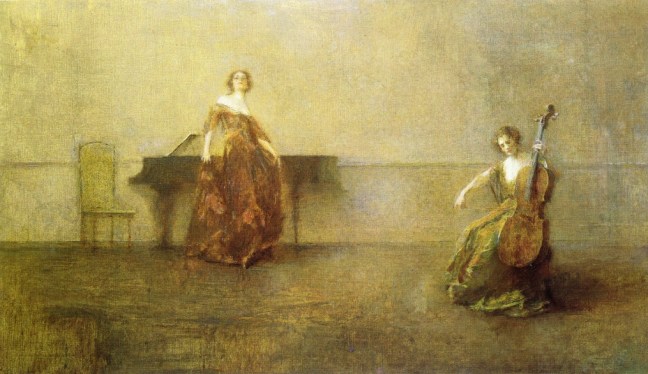
There is a prayer that was once addressed to our deepest self. This is a song of mourning for the life that we cannot get hold of, for the self that we cannot truly be. This mourning is the story of our wrestling with life, of our puny self, a self that is elusive, fragile, fearful, and has been plagued with suffering. So this prayer is a plea addressed to the one that can save us from our intolerable pain. But it is not intended to God. It is intended to ourself, to that part of ourself that appears to be soft, uncertain, constantly seeking affirmation, but is in fact holding the key to the peace we are so desperately looking for.
This self is called, in the Christian tradition, the ‘lamb of God’, and refers to Jesus as ‘Christ’. It is the one for whom John the Baptist had this exclamation: “A man who comes after me has surpassed me because he was before me”. (John 1:30) This self is called a ‘lamb’ because it is destined to die in the embrace of being. Being is its only reality, its rock-like ground and certainty, the one that ‘surpassed me’ because it was ‘before me’. The self that we believe ourself to be is a fragile construction, and a vulnerable entity. It is afraid of dying, of having no solid ground, and is pleading for one.
“Lamb of God, who takes away the sins of the world, have mercy on us.” This plea is a liturgical prayer used in every Catholic Mass, borrowed from a passage in the New Testament (John 1:29). This prayer, called in Latin ‘Agnus Dei’, was used by many of the greatest composers for a number of choir pieces. In 1967, an American composer named Samuel Barber, at the time battling with depression, decided to adapt his 1938 ‘Adagio for Strings’ into a choral work. His ‘Agnus Dei’ is a gorgeous expression of a longing for God, a longing that is the one longing of all humanity, the desire for peace, the unceasing quest for a happy living.
[…]
Exploring the meaning behind a choir song by Samuel Barber… (READ MORE…)
.
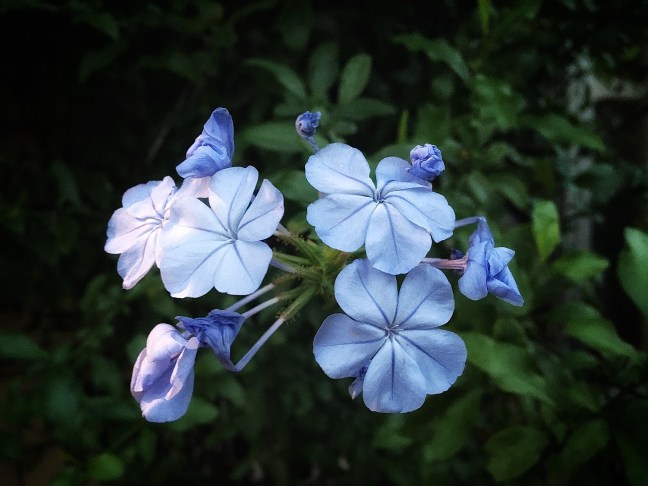
What a pity! That truly is a pity isn’t it, that the Divine isn’t an object? Consider for a moment: if God’s nature was objective, a thing to be acquired, we’d all be running after it with eagerness. Nothing could stop us from getting it. The path to it would be clear, easy, rehearsed a thousand times, with unmistakable steps. We would all be happy — the shy, lazy ones only in a small measure, but clearly so; and the greedy ones probably piling chunks after chunks of happiness at home, for the bad, chilly days. No doubt that after a while, happiness would be placed in the market place, to be simply bought — a democratic God, available to all. Only, God would then become so pricy, that only the rich amongst us could afford it. The poorest would have to stay unhappy, miserable. After some time, the rich ones would no doubt find God boring, to be replaced by another more exotic good. And happiness would be set aside, discarded as a thing of a time past. Dreadful prospect, isn’t it?
But thank God, the Divine wasn’t made into an object! So none of this could ever have happened. Not to God! To anything else yes, but not to god, not to happiness! The price for God had been set, right from the beginning, as an inestimable one. And the way to acquire true happiness was made into such a subtle, noble pursuit, that no money could ever be of any use for it. We may try, as we did for centuries, to make God’s being into another subtle object, something convenient, setting methods, churches, temples, ashrams, where it could be practised, and happiness made into a precious ornement to be obtained. But none of that was found to be effective, in final analysis. Only a few rare, lofty, unmatchable seekers were able to find God where it truly lived, and make themselves so available to it as to become of it themselves. These rare beings have found there a joy so ineffable as to appear unreachable, and God was downgraded to a celestial being or an exotic state, to be idealised and worshipped. That’s not yet an ideal situation, is it?
So let’s start again and be very clear from the beginning! God has never been, will never be, and could never be found as any kind of object. It is not something to be attained, and its presence is not at a distance from us. The difficulty in recognising its presence lies in God’s utter subjectivity, and in the abundance of it in ourself. So don’t move from where you already are. This place of yourself is the only suitable enough spot for happiness to thrive, and a precious enough container for God’s humble, sublime home. And don’t wait for another time than this present time of now. God is only accessible here and now. You will find it nowhere else. Stay there. In yourself. As yourself. But go to the very heart of it, at the core of what you are and always have been. Who you already are is the secret cabinet where God dwells, and has dwelled all this time, without your noticing.
Now I’ll tell you a secret. Ask yourself the question: What is the only portion of my present experience that is exempt of objects, of things known? Find this place in yourself where you cannot be any thing, where you cannot be located, where you cannot even be named, where you are made no existence at all, where you cannot know anything but your own present being, where you and the whole world can be embraced in one subtle presence that cannot be found but is paradoxically all there is, all that you were, and all you will ever be. Feel this presence in yourself, as yourself. See that you have been in God’s home all along. Gently notice its glory being slowly revealed. Delve in it, and as it, patiently. This is what God’s being feels like — that subtlest presence that you are in fact referring to when saying ‘I’. There! Do you feel it? Rest and live only as that.
.
~~~
Text and photo by Alain Joly
~~~
.
Suggestion:
Other ‘Ways of Being’ from the blog…
.
 The Dawn Within