The Way of Love

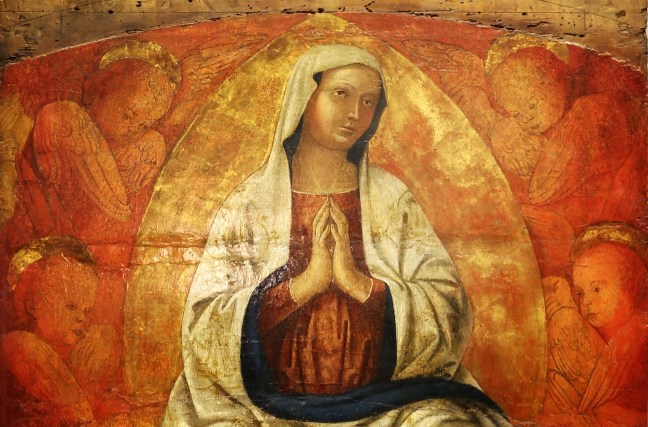
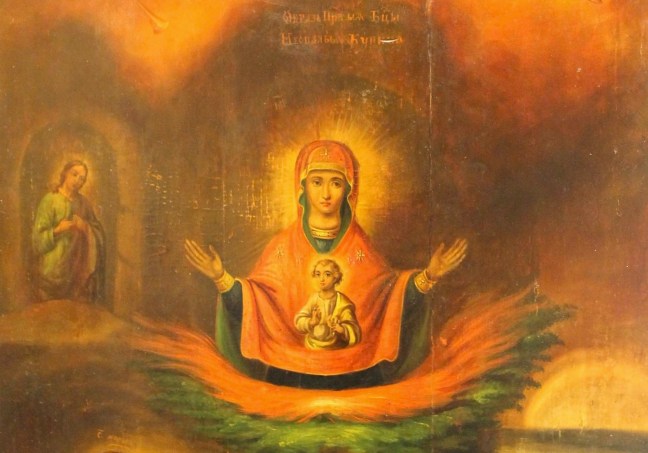
‘Madonna in Gloria’ (part) – Antoniazzo Romano – WikiArt

One of the oldest and most beautiful poem about love is found in the New Testament. This is a very human and touching piece, for both its modernity and universality. It was co-written 2000 years ago by Sosthenes and Paul. Paul, born Saul of Tarsus (5 – 64/65 AD), was one of Jesus’ apostles, who disseminated his teachings and founded some of the first Christian communities in Asia Minor and Europe. The poem is excerpted from the book ‘1 Corinthians 13’, and is presented here in the ‘World English Bible’ translation. This soaring piece presents all the qualities found in love. Some of its verses became famous over the years. The quote “Through a glass darkly”, (not appearing in this translation) inspired the title of a film by Ingmar Bergman and many other artworks in fields as diverse as poetry, plays, novels, songs, essays or television series. Many other verses of the poems were also quoted in similar works. Behind its apparent simplicity, I find the poem to have a profound meaning that confers it the quality of a prayer. I hope you will enjoy

.

If I speak with the languages of men and of angels,
but don’t have love, I have become
sounding brass, or a clanging cymbal.

If I have the gift of prophecy, and know
all mysteries and all knowledge;
and if I have all faith, so as to remove mountains,
but don’t have love, I am nothing.

If I dole out all my goods to feed the poor,
and if I give my body to be burned,
but don’t have love, it profits me nothing.

Love is patient and is kind; love doesn’t envy.
Love doesn’t brag, is not proud,
doesn’t behave itself inappropriately,
doesn’t seek its own way, is not provoked,
takes no account of evil; doesn’t rejoice in
unrighteousness, but rejoices with the truth;
bears all things, believes all things,
hopes all things, endures all things.
Love never fails.

But where there are prophecies,
they will be done away with.
Where there are various languages,
they will cease.
Where there is knowledge,
it will be done away with.

For we know in part, and we prophesy in part;
but when that which is complete has come,
then that which is partial will be done away with.

When I was a child, I spoke as a child,
I felt as a child, I thought as a child.
Now that I have become an adult,
I have put away childish things.

For now we see in a mirror, dimly, [through a glass darkly]
but then face to face.
Now I know in part,
but then I will know fully,
even as I was also fully known.

But now faith, hope,
and love remain — these three.
The greatest of these is love.

~ 1 Corinthians 13:1-13 (World English Bible)

.

~~~

Poem by Sosthenes and Paul the Apostle (1st century AD)

Painting by Antoniazzo Romano (1430-1510)

~~~

.

Websites:
1 Corinthians 13 (Wikipedia)
Paul the Apostle (Wikipedia)
Bible Gateway
Antoniazzo Romano (Wikipedia)

.

Unconditional Love

I just happened to fall in love with my life recently. Don’t ask me how and why. I just did. That came surreptitiously after a long line of unfruitful attempts. I had given up the idea. Discarded the thought — too complicated! This happened when I simply stopped wanting, hoping, needing. These are the ways things get done, it seems, in this world. Life is not something that you can mould to your own convenience. You cannot love life if you set up conditions. If you want it to espouse the contours of your likes and dislikes. You might painstakingly get the life you want, but you will reduce love. You will wound it. That won’t be love anymore but bargain, economy. Love can never be found in the market place. Love shows up with its one fundamental, non-bargainable condition: it is unconditional. And I’ll tell you why:

I discovered that life is self. That the one constituent of life is simply being — who I am fundamentally. Not even a small portion of this life of mine stands outside myself. I love my life because my life is my self, and I cannot not love my self. We all love our self. To not love our self is an impossibility. We love our self dearly, because the nature of our self is love itself. Self is made of love. And everything in this world is made out of this very self of love. So we are bound to love this world unconditionally. To love our life unquestionably. To love people boundlessly. People are our brothers and sisters in love. They are made of the very same bright self that we are made of. Therefore the question of not loving life doesn’t even arise. Love is the very home where our life finds everything it could ever need or want. This is how life becomes a fountain of joy: when it is found to be entrenched in love. This fountain of love is sometimes referred as god’s self. Or ultimate being. Or simply happiness — without cause or condition.

.

~~~

Text and photo by Alain Joly

~~~

.

Other ‘Ways of Being’ from the blog…

.
Humanity’s Healers

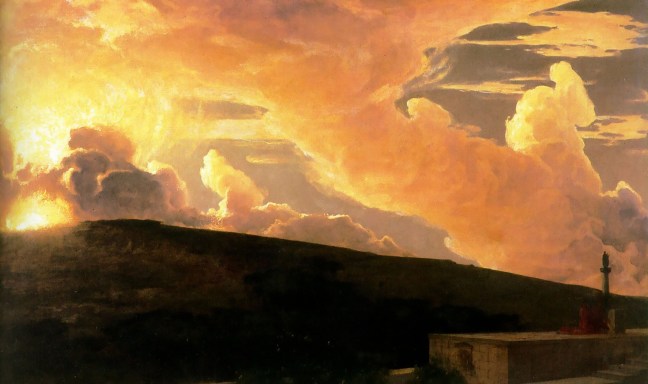
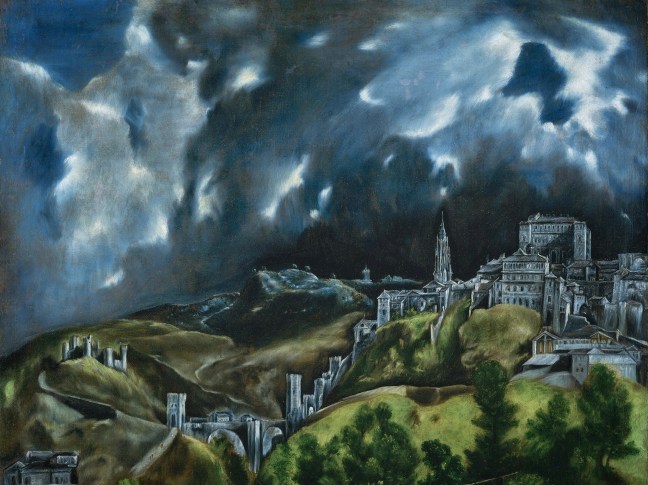
‘Clytie’ – Frederic Leighton, 1890 – WikiArt

.

The moment I realise I am humanity,
that is the greatest action
.”
~ J. Krishnamurti

.

Why has humanity left this whole field of knowing oneself — all the spiritual endeavour, the extraordinary adventure that it is — outside the conventional and widely accepted way of living? It is a difficult thing to understand, since the door to it is so wide open and evident. Of course, religions are there, and have taken an all too consuming place in the past, but yet to no real avail. For an immense majority of people, religious faith didn’t go very deep, and didn’t put much of a light on the everyday suffering of humanity other than being a widespread system of morals and rituals destined to give some rules to society, and to instil fear, consolation or respect. So why has this understanding been confined to only a few, scattered individuals? Why has it not yet become the one accepted and necessary endeavour of our lives?

[…]

An essay exploring the place of humanity in our being… (READ MORE…)

.

The Lazy Worker

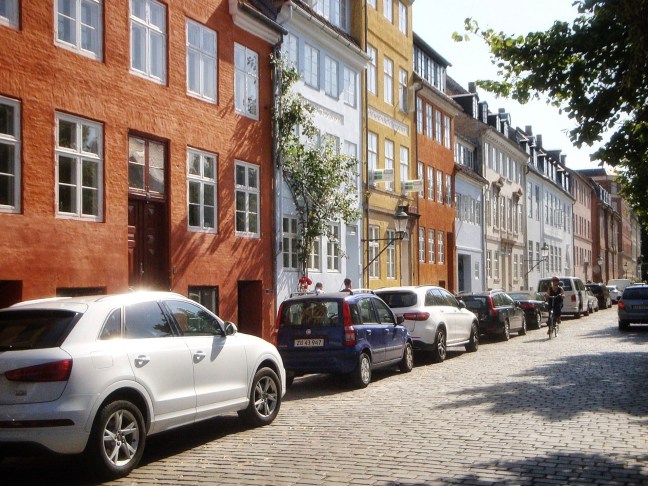
Today, I went out to clean the streets of Copenhagen. I did it with my love. I hadn’t left it pristine, so it needed a little ordering. I had crowded it with my worrisome thoughts, had encumbered it with my train of escapes, had disseminated some of my many unhappy faces along its avenues — I sure need to clean my mess. So here I am, scanning its landscapes with the blooming of presence, cleansing its pavements with the gaze of beauty, bowing to its people with the healing power of love. This job is an easy endeavour. No need for special tools. Love is accessed through presence. This is how you see every friend, every passing person, as if a long-term companion of voyage. As if we were all coming back from a giant spiritual retreat. Clear and bright. Beautiful. Lovers of being.

Isn’t it extraordinary — how quickly you can repair a world? How easily you can erase the polluting influence of mind? With its thoughts rummaging constantly for a passing, occasional relief. How the litter of separation can be done away with one single sway of the broom of presence? I’m the chief worker wherever I go — which is nowhere but in the expanse of my present experience. I was made the one responsible for the cleanliness of my city-world. To verify that all the neons of presence were shining their light in every dark corner. To make sure that the transports of happiness were running smoothly in all directions. To ensure that behind every blasting horn or tempestuous engine was a silence in sufficient amount.

And guess what? There is! There is already everything that we and the world need! It has already been cleansed through its perfect, eternal, incorruptible making. That’s why this job is only for the lazy workers. Not for the busy ones, attached to their own projected outcomes. Not for the needy ones, expecting to find in their city-world what they think will make them fulfilled and happy. This is all our world ever needs: our presence-ing it — without the ‘it’. In other words, Being.

.

~~~

Text and photo by Alain Joly

~~~

.

Other ‘Ways of Being’ from the blog…

.
Defining Enlightenment

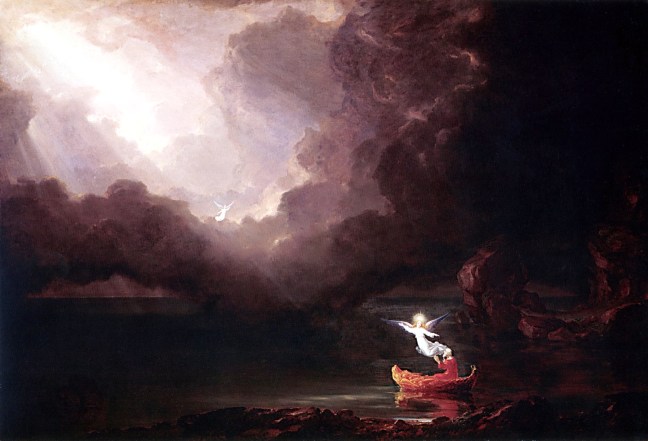
‘Saint Augustine’ (detail) – Philippe de Champaigne, 1645 – Wikimedia

.

A thunderclap under the clear blue sky
All beings on earth open their eyes;
Everything under heaven bows together;
Mount Sumeru leaps up and dances
.”
~ Wumen Huikai (enlightenment poem)

.

The words for the discovery of our true nature — like enlightenment, realisation, awakening, liberation, etc — are all very significant. They all point to truth and have numerous things to say. Take ‘enlightenment’ for instance. Its original signification is ‘to shine’ or ‘to make luminous’. So to enlighten means to put the light on. It means to cease being distracted by all that is objective in our experience and doesn’t define us truly, and make what is already and absolutely ours here and now apparent. It doesn’t mean to achieve, to reach, to attain, to get something new. Where did we get this idea from? But let’s be very cautious here: to make luminous — does this even require a doing? Why should we have anything to do when the light is already fully on? So to be enlightened is really more a matter of noticing what is already here, and that we have missed due to a pathological phenomenon of blindness. We are too occupied with a thousand things, worried, concerned, busy with this and that, distracted, ambitious, desiring, grasping, expecting, and god only knows what else we have in mind to so successfully avoid seeing the patently obvious. Our true reality and identity as consciousness is already present, luminous and shining in every corner of our experience and we are blind to it. That’s where the word ‘realisation’ comes in.

[…]

An essay exploring the signification of enlightenment… (READ MORE…)

.

The Dark Night

‘Night’ – Ivan Marchuk, 1981 – WikiArt

.

Being human is a complicated gig.
So give that ol’ dark night of the soul a hug.
Howl the eternal yes!

~ Friedrich Nietzsche

.

There is a poem that fed the imagination of many prestigious writers and philosophers like T. S. Eliot, Simone Weil, or Thomas Merton. Many a spiritual seeker has found in it a guiding lamp for the harsh ascent towards divine union. Its name: the ‘Dark Night of the Soul’, a short poem written by the 16th-century Spanish mystic and poet John of the Cross. It refers to the unknowable nature of both the goal and the path, and how such darkness would allow us to merge with the presence of god in ourself. As John of the Cross wrote: “In the dark night of the soul, bright flows the river of God.” I am presenting here the translation by Edgar Allison Peers. Following the poem is a short text that I wrote, words that the poem has evoked in me, the inspiration that it invoked…

.

On a dark night,
Kindled in love with yearnings — oh, happy chance! —
I went forth without being observed,
My house being now at rest.

[…]

.

Read this famous poem by John of the Cross and a few more words… (READ MORE…)

.

A Song of Two Humans

‘Sunrise: A Song of Two Humans’ – F. W. Murnau – (With actors George O’Brien and Janet Gaynor)

.

.
Silent films had a language of their own;
they aimed for the emotions, not the mind,
and the best of them wanted to be,
not a story, but an experience
.”
~ Roger Ebert on ‘Sunrise’ (film critic)

.

Life is relationship. No matter what. We are always engaged in a relationship with an apparent ‘other’. Should we be left alone in the world, with no other humans, life would remain an encounter with the other — any other being — be it the sun, the wind, the rugged stones on our path, or our very own self. Our life is always a song of apparent duality. And the success of any relationship, which is the coming of intimacy and love in our life, is always the road taken from apparent separation to the realisation of our shared being. Life is one. But that needs to be fully seen.

I was put on these tracks by watching the 1927 silent movie ‘Sunrise: A Song of Two Humans’ by German director F. W. Murnau. The film is a splendour. Although an overly simple love story, the title suggests that its lessons are of an universal nature. And the finesse and poetry of its making renders it as an archetypical manual for everything that a relationship can bring or teach. The story can be summarised in a few lines: a country man has become weary of his relationship with his wife, and has started a love affair with a passing woman from the city. His new lover convinces him to kill his wife while being on a boat trip on the lake, a plan which the man, overtaken by remorse, fails to execute at the very last moment. The rest of the film is the story of his winning his wife’s forgiveness and the return to a dazzling feeling of love and happiness between the two.

[…]

Discover the lessons contained in this masterpiece of the silent era… (READ MORE…)

.