The Meeting

I come as an orphan to you, moist with love.
I come without refuge to you, giver of sacred rest.
I come a fallen man to you, uplifter of all.
I come undone by disease to you, the perfect physician.
I come, my heart dry with thirst, to you, ocean of sweet wine.
Do with me whatever you will
.”
~ Jagannātha (Ganga Lahari)

.

FDB86CAA-FA77-4C31-8866-289AB1AC3D00enares – a strange and beautiful city, the most religious city of all, so entrancing, so mysterious. Pierre had often heard of this town, and now he was already treading its soil. Many people had advised him that it’s not a place to linger in. “You will be assailed by the rickshaws, the hoteliers, the merchants…”, said the tourist guides. So he was on his guard that morning, on leaving the station, and was preparing to fight hard with the hawkers and profiteers of all kinds. It was six o’clock in the morning and a beautiful day beckoned.

His anxiety was soon dispelled. Everything seemed strangely calm and serene. There wasn’t here this traditional turmoil of Indian cities, nor the famous dust that envelops every city with a gray and dirty halo. An incredible clarity illumined the landscape. Oh! Of course! One had to endure, as everywhere else in this country, the innumerable calls of the rickshaw drivers, or the greedy shopkeepers. Gazes were as intense as everywhere else in India, students as curious, children as mischievous, cows as nonchalant, dogs wandering everywhere. Everything was so marvelously the same as the rest of India, and yet Benares was not a place like any other.

A short story, that tells of an unexpected meeting (READ MORE…)

.

Every Time I Open my Eyes

This poem from Rupert Spira appears at the end of the film ‘The Unknowable Reality of Things’. Produced and directed by Zaya & Maurizio Benazzo, this film is a poem, a meditation made of a series of chapters, each introducing a question like ‘What do we mean by ‘I’”, or “The pure intimacy of experience”. For each of them, Rupert Spira, sitting or standing in a beautiful forest environment, brings a clear answer. It is delivered over a succession of elegant and soothing views of nature, like a dance with shapes, colours, and textures, highly conducive to going within…

~~

Every time I open my eyes,
I invite the world to take shape.
And every time the world takes shape,
I’m invited to open my eyes.

Every time I open my eyes,
I invite the world to take shape.
And every time the world takes shape,
I’m invited to open my eyes
And see the world raw and naked,
Holding out its hand,
Calling me into itself,
Where I am taken into the transparency of thing
And find myself transparent there.
Standing on the edge, looking down and in
To the dark, silent pool in which the world is cradled.
And I am cradled there, held with all things
And hold all things in myself.
Myself, not a thing in the world,
But This, Here, Seeing,
In which the world opens,
Inviting and offering itself.
And every time it is seen, it dies.
And in dying, holds out its hand again
Asking to be taken in.
And every time I take it in,
I, too, die.
And in dying, am known,
As This, Here, Seeing.
Every time I open my eyes.

~ Rupert Spira


~~~

This poem appears in the film ‘The Unknowable Reality of Things’

Painting from Claude Monet: ‘Cliff at Grainval’ (1887)

~~~

4328055C-0BA1-4237-A1D6-95E97931055B


Bibliography:
– ‘The Transparency of Things’ – by Rupert Spira – (New Harbinger Publications)
– DVD: ‘The Unknowable Reality of Things’ with Rupert Spira – (Neti Neti Media)

Websites:
– Rupert Spira
– Neti Neti Media

Suggestion:
Voices from Silence (other poems from the blog)
 

And There was Life…

I’d like to share a particular side in Krishnamurti’s writing: his exquisite descriptions of nature. You find them in ‘Krishnamurti’s Notebook’ and in the three series of ‘Commentaries on Living’. They usually start a chapter, and are an opening to his inner observations. They are a testimony to his looking at the world in a way that is always new and fresh, uncontaminated by thoughts, by the past. They are an exemple of a non-dual apprehension of life, of nature, and of the thousands happenings.

~

Again, it has been a clear, sunny day, with long shadows and sparkling leaves; the mountains were serene, solid and close; the sky was of an extraordinary blue, spotless and gentle. Shadows filled the earth; it was a morning for shadows, the little ones and the big ones, the long, lean ones and the fat satisfied ones, the squat homely one and the joyful, spritely ones. The roof-tops of the farms and the chalets shone like polished marble, the new and the old. There seemed to be a great rejoicing and shouting among the trees and meadows; they existed for each other and above them was heaven, not the man-made, with its tortures and hopes. And there was life, vast, splendid, throbbing and stretching in all directions. It was life, always young and always dangerous; life that never stayed, that wandered through the earth, indifferent, never leaving a mark, never asking or calling for anything.”
~ J. Krishnamurti
(‘Krishnamurti’s Notebook’ – August 21st, 1961 – Gstaad, Switzerland)

~~

Then, far away, came dawn. In the east there was spreading light, so young and pale, so quiet and timid; it came past those distant hills and it touched the towering mountains and the peaks. In groups and singly, the trees stood still, the aspen began to wake up and the stream shouted with joy. That white wall of a farm-house, facing west, became very white. Slowly, peacefully, almost begging it came and filled the land. Then the snow peaks began to glow, bright rose and the noises of the early morning began. Three crows flew across the sky, silently, all in the same direction; from far came the sound of a bell on a cow and still there was quiet. Then a car was coming up the hill and day began.”
~ J. Krishnamurti
(‘Krishnamurti’s Notebook’ – August 31st, 1961 – Gstaad, Switzerland)

~~

There wasn’t a cloud in the sky as the sun went down behind the hills; the air was still and not a leaf moved. Everything seemed held tight, in the light of a cloudless sky. The reflection of the evening light on a little stretch of water by the roadside was full of ecstatic energy and a little wildflower, by the wayside, was all life. There is a hill that looks like one of those ancient and ageless temples; it was purple, darker than violet, intense and vastly unconcerned; it was alive with an inward light, without shadow, and every rock and bush was shouting with joy.”
~ J. Krishnamurti
(‘Krishnamurti’s Notebook’ – November 9th, 1961 – Rishi Valley, India)

~~

DFE5DEB5-6291-454D-8BDE-1A3A2DF98897Demand is born out of duality: ’I am unhappy and I must be happy’. In that very demand that I must be happy is unhappiness. When one makes an effort to be good, in that very goodness is evil. Everything affirmed contains its own opposite, and effort to overcome strengthens that against which it strives. When you demand an experience of truth or reality, that very demand is born out of your discontent with what is, and therefore the demand creates the opposite. And in the opposite there is what has been. So one must be free of this incessant demand, otherwise there will be no end to the corridor of duality. This means knowing yourself so completely that the mind is no longer seeking.”
~ J. Krishnamurti

.

635AFFA2-05B7-486F-8D19-46C78D56DD67

.

Head picture from Alain Joly

Bibliography:
– ‘Krishnamurti’s Notebook’ – by J. Krishnamurti – (Krishnamurti Publications of America,US)
– ‘Commentaries on Living, I, II & III’ – by J. Krishnamurti – (Quest Books,U.S.)

Websites:
J. krishsnamurti
Krishnamurti Foundation Trust

Suggestions:
Fleeing to God (other pointers from the blog)
A Day at Brockwood Park (Homage to J. Krishnamurti)

.

The Truth Seeker

9DF6C27B-1BF6-4BED-949F-40F4B6360333long time ago, in India, lived a man named Admita. All his life had been spent in a harsh and hostile desert, surrounded by sand and dry, swirling winds. He led a life of wandering without help or hope on this desolate land. He had well heard of stories that described places of lush greenery and great beauty, where valleys, forests, meadows, rushing streams and great rivers were home for countless animals, where mountains stood above deep blue seas, where the sun was warm and friendly and the air ever filled with a cool and gentle breeze. He did not believe that such places really existed, but in front of so much loneliness, sorrow, and adversity, he could not help thinking about it and hoping to discover this wonderful land.

One day, one hot, scorching, blazing day, when winds were competing to torment the atmosphere, he thought that truly his last hour had come, for there was no hope of ending the killer storm. Suddenly, in the midst of swirling sand grains, he realised that he was standing right on the edge of a vast, profound precipice. He saw that there was a green carpet on the floor down below; he sniffed the air that was sweet and he could hear thousands of sounds, whispers, and cries of great beauty. “Surely,” he thought, “it must be that marvelous land that the stories mention.”

A short fairy story, a spiritual parable (READ MORE…)


This Moment…

Here is a reminder from Joan Tollifson. It is necessary and terribly efficient to look into these matters for ourselves. This is why I like to share here the parts of a spiritual teaching that sounds like ‘something to do’, something to experiment and verify for ourselves:

What is happening in this bodymind right now? Reading words on a computer screen, hearing sounds, seeing shapes and colors, breathing. And what else is going on? Is there expectation, curiosity, excitement, boredom, restlessness? Can we take a moment to pause and be aware of how it is right now, without trying to modify or correct it in any way, but simply being awake to the bare actuality of this moment, just as it is?
~ Joan Tollifson

~~~

Further exploring on the subject:

It is extremely difficult to be aware of dullness, to be aware of greed, to be aware of ill-will, ambition, and so on. The very fact of being aware of ‘what is’ is truth. It is truth that liberates, not your striving to be free. Thus, reality is not far, but we place it far away because we try to use it as a means of self-continuity. It is here, now, in the immediate. The eternal or the timeless is now and the now cannot be understood by a man who is caught in the net of time.”
~ J. Krishnamurti

~

Happiness is the absence of resistance to what is.
It is the highest spiritual practice.
However, it is not a practice of the mind;
it is the ever-present nature of Myself, Awareness
.”
~ Rupert Spira

~

You must leave behind you the idea of improving. There is nothing to be found, nothing to achieve. Searching and wanting to achieve something are the fuel for the entity you believe yourself to be. Don’t project an idea of reality, of freedom. Be simply aware of the facts of your existence without wanting change. Seeing things in this way will bring you a state of deep relaxation both physical and psychological. Even this state becomes an object of perception and dissolves in your observation where there is no longer observer or state observed. …
The only way out is to simply observe
.”
~ Jean Klein

~

Traffic sounds, bird songs, an airplane flying over, wind rustling the leaves, a television in another room, children’s voices, a dog barking. Shapes, colors. The movement of breathing, the sensation of contact with the chair, a cool breeze gently touching the skin, a tingling in the feet, maybe an uneasiness in the belly or a tightness in the throat, perhaps a vague sense of anxiety or discontent, these words registering in the mind.

Does this present happening take effort, or is it all happening effortlessly by itself?

This moment is utterly simple and straightforward, totally obvious, completely unavoidable, effortlessly being just exactly the way it is, however that is. It may be painful or unpleasant, but there is nothing confusing about the present moment until we start thinking.”
~ Joan Tollifson

.

635AFFA2-05B7-486F-8D19-46C78D56DD67

.

Joan Tollifson’s reminders are from her essay: ‘How Simple Can This Be?

The picture is from: Sasin Tipchai / Pixabay

Bibliography:
– ‘Nothing to Grasp’ – by Joan Tollifson – (Nonduality Press)
– ‘The First and Last Freedom’ – by J. Krishnamurti – (Rider Publishing)
– ‘Presence’, Vol. I & II – by Rupert Spira (Non-Duality Press)
– ‘The Book of Listening’ – by Jean Klein – (Non-Duality Press)

Websites:
– Joan Tollifson
J. Krishnamurti
Rupert Spira
Jean Klein

Suggestion:
Fleeing to God (other pointers from the blog)
The Inconceivable Actuality Here-Now (A text by Joan Tollifson)
A Day at Brockwood Park (Homage to J. Krishnamurti)

.

Blown Out

We continue our series of texts or essays on different subjects of spiritual interest. The question here is about ‘having a spiritual experience’, and delving into the nature of what is called ‘awakening’…


There is a safe place in view of all, but difficult of approach,
where there is no old age nor death, no pain nor disease.
It is what is called nirvāṇa, or freedom from pain, or perfection;
it is the safe, happy, and quiet place which the great sages reach.
That is the eternal place, in view of all, but difficult of approach.

~ Uttaradhyana Sutra, 81-4 (Buddhism)


Nothing much, really. Something just like peeking out of the window. But let’s not be overly disdainful, for this can bend the course of a life and change it in a profound way. To have a spiritual experience is a blessing, a call, maybe a rehearsal for the final dissolution. It leaves you puzzled, wanting to understand, and above all, searching to have it again in the future. It can be just a flavour suddenly lingering at the back of your mind, or a spectacular awakening, or anything in between. In all cases, you meet something new, that is outside any known experience, and yet has a familiar flame, like an old forgotten memory. Above all, peace, love, and happiness are attached to it. It is the DNA of any genuine experience, its vital core, and what makes it so desirable. After all, do we want anything in life but a lasting happiness? It can last for seconds, minutes, or days. It comes as a grace, unexpected, uninvited. One important characteristic is that it fades away, finally disappears. Otherwise we wouldn’t call it an ‘experience’. A spiritual experience is an awakening that failed.

An essay to delve into the nature of Awakening (READ MORE…)


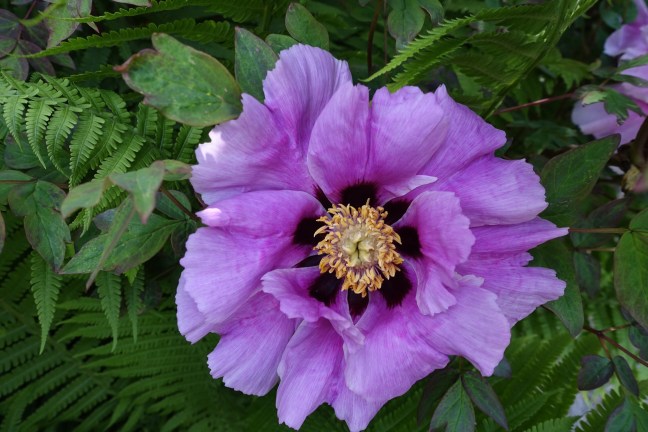
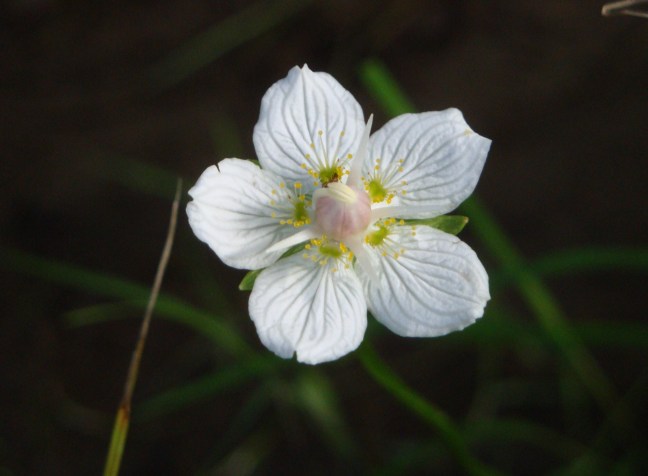
The Flower of Awareness

Awareness is like a flower
Always fresh and present and vibrant
In the morning mist of mind

It awakens to us every moment
Bending its fragrance and petals
To what we think is blurred for a time

Its fragility is an illusory one
For it is the only sharp thing we have
The indestructible ground of living

And in front of such shining beauty
What was once a so familiar scenery
Dissolves and fades like dust in the wind


~~~

Text and photo by Alain Joly

~~~


Suggestion:
Voices from Silence (other poems from the blog)