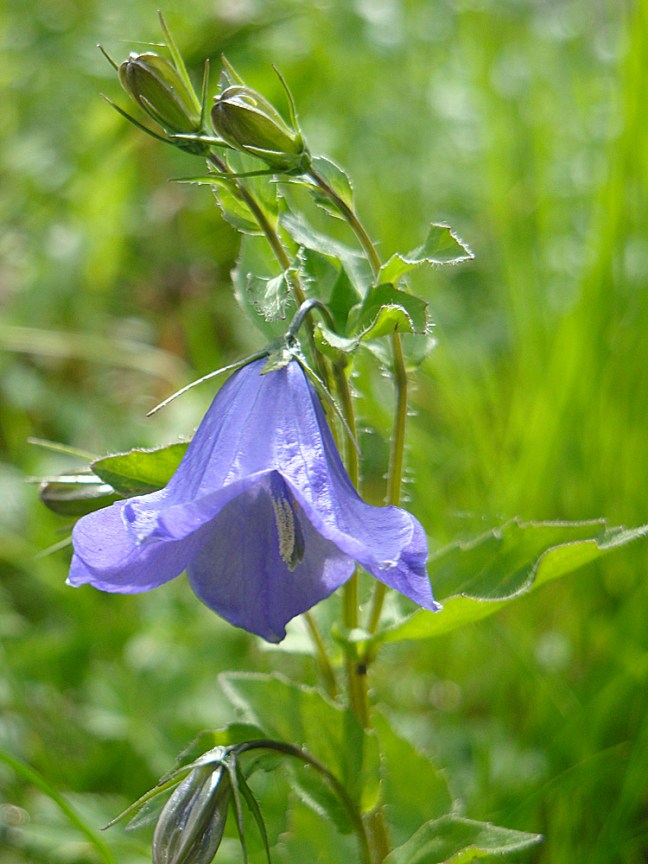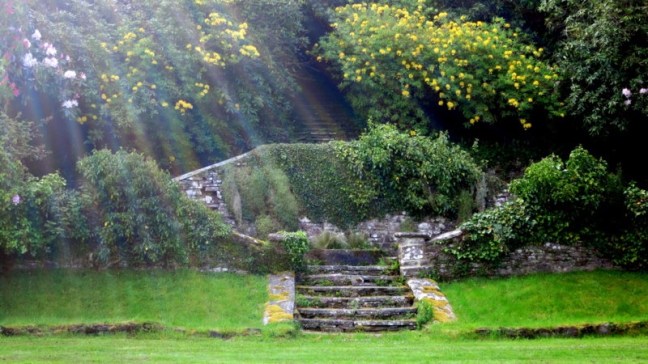
Destroyer of Darkness

We continue our series of texts or essays on different subjects of spiritual interest. The subject here is about examining the figure of the spiritual teacher, or the guru…


Be a light unto yourself; 
betake yourselves to no external refuge. 
Hold fast to the Truth. 
Look not for refuge to anyone besides yourselves
.”
~ Buddha Shakyamuni


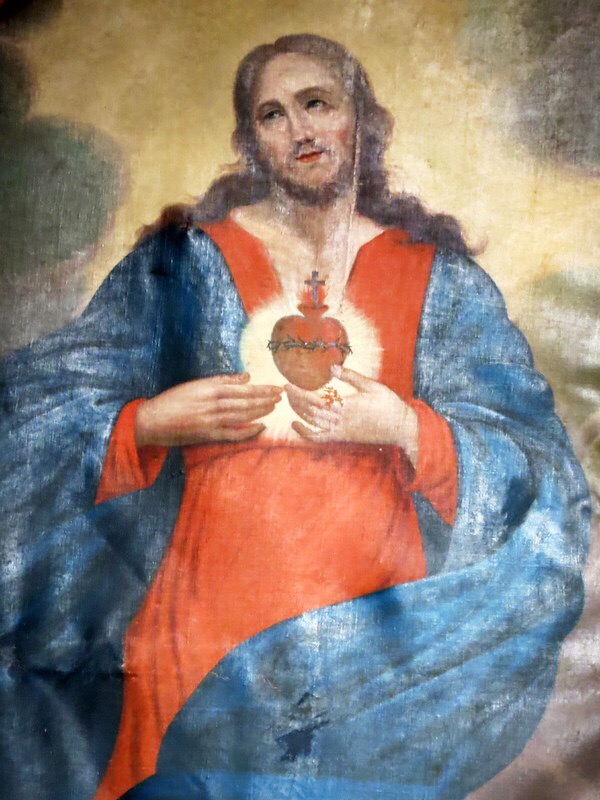
It knew better. This thing, so dense, so light, that took me into its lap, that invited me for a dance with eternity, with infinity, would not leave me alone, unattended. Not even two days after encountering this mystery, after dipping into this bath of love and beauty, I was being shown a way. I believe it is inevitable when there is an opening. In a burst of synchronicity, a friend materialised and handed me a copy of Newsweek magazine where there was an article about a spiritual teacher who had died a couple of weeks earlier. I was immediately drawn to him. It was the beginning of a ten year journey into his teaching. I wasn’t the easiest friend though, nor the most faithful. Just a couple of weeks before, among the temples of Khajuraho, I was explaining to a German lady guru who invited me to her meetings, how little I felt about spiritual authority, how important it was to find out by myself, not to be influenced in these matters. My new spiritual teacher wasn’t the friendliest towards the figure of the guru either, but nevertheless he was my first help and pointer, my first pathway towards understanding. “When the student is ready, the teacher appears.”, it is traditionally said.

An exploration into the function of the spiritual teacher (READ MORE…)


The Last Truth

9DF6C27B-1BF6-4BED-949F-40F4B6360333 man had left his village in search of enlightenment. After many long years, from hardship to hardship, he had become a vagabond, a pariah in our towns. One evening, he landed in a dense forest. He made a fire and thought of everything he had seen, lived and understood: pieces of light, of truth… but nothing like an awakening. He was a little discouraged when he heard a bird singing at the top of a tree: “I have the last truth, I have the last truth. It is for whoever will come and get it…”.

The man then began to climb to the top of this tree. Climbing was difficult and dangerous. As he climbed towards this last truth, he had to fight against vertigo. He was guided by the song of the bird without ever seeing it. He finally reached the summit and, bathing in a sumptuous golden light, he saw the sun set, the stars appear but no bird. However, the voice, coming out of nowhere and everywhere at the same time, said to him: “You came to receive a last truth, so receive it and leave to offer it to everyone who will believe you.”

At that moment all his questions were changed into answers and his answers into questions. The light became shadow and from the shadow was born light. All these pieces of scattered truths came together to form a whole, new, multiple truth. So his last truth became his first. His heart began to smile and his smile began to say the words of his heart. Then, without descending from the tree, awake and light, he was able to continue his way by riding some winds of wild wisdom.

Since then, this tree of passage, of metamorphosis, which was a wild tea tree, is venerated. Some of us offer or receive some of its leaves, attentive to everything that, in the golden glow of a cup, they could tell or sing to us, sensitive to any call.


7A09B8AE-E03F-4F85-A871-D9A2F81617C3


~~~

Text found in my computer attic, source unknown
(Translated from French by Alain Joly)

Photo by Carol Brandt

~~~


Website:
Carol Brandt Photography

Suggestion:
Other articles from the category ‘Shreds of Infinity


The Fleeting Entity

Here is a reminder inspired from the words of Rupert Spira. The ‘fleeting entity’ is an expression he used to describe the separate self. It is necessary and terribly efficient to look into these matters for ourselves. This is why I like to share here the parts of a spiritual teaching that sounds like ‘something to do’, something to experiment and verify for ourselves:

Keep on looking in what way almost all your thoughts, feelings, activities, are based upon the belief that you are going to die… See that underneath all of that is your fear of disappearing…

~~~

Further exploring on the subject:

This imaginary identification of our self with an object, the body, creates the apparently separate self. … This apparently separate self, being made out of an intermittent object, is, by definition, unstable, always threatened with change, decay and disappearance. Hence the fear of disappearance that resides at its heart and its natural corollary, seeking.”
~ Rupert Spira

~

Addiction of any sort, be it to inappropriate sexual behaviour, alcohol, drugs, smoking or any milder form of behaviour, almost always has its origin in the belief and, more importantly, the feeling of being a separate, limited, located self.”
~ Rupert Spira

~

Fear and seeking manifest in the most innocuous forms of behaviour, the most common of which is unnecessary thinking, the almost constant mental chatter or commentary that most of us are familiar with. This innocuous commentary is the simplest form of the ‘resistance to what is’. It is the repetitive background chatter that ensures that attention is almost always diverted away from the immediacy, intimacy and simplicity of ‘what is’. This is the primal addiction.”
~ Rupert Spira

~

Between living and death there is time. Time, that interval between what actually is and something which we call death, of which we are afraid. This interval between life and death is brought about by thought. Of course there is actual dying: the physical organism, through disease, accident, through usage, dies. But there is fear of death and the sorrow of death as a psychological ending. So there is not only the fear of physical dying, but also the fear of losing all the things that one has learnt, the memories, the experiences, the affections, the family, the hopes, the works, the character, all that one has developed, cultivated, nourished – fear of their coming to an end.”
~ J. Krishnamurti

~

We cling when we fear that without identifying with something or as something, “myself” will lack substance entirely, rendering ordinary life devoid of meaning. Even a glimmer of the possibility of emptiness and meaninglessness can feel terrifying—like glimpsing a bottomless void into which one might fall forever. And of course we fear death which, although many attempt to hold it at bay with religion and spirituality, will mean the end of the entire self-centered production called ‘my life’.”
~ Robert Saltzman

~

It all begins with ‘I, the body’,

That is the root of all suffering,

which our addictions seek to alleviate.”

~ Rupert Spira

.

635AFFA2-05B7-486F-8D19-46C78D56DD67

.

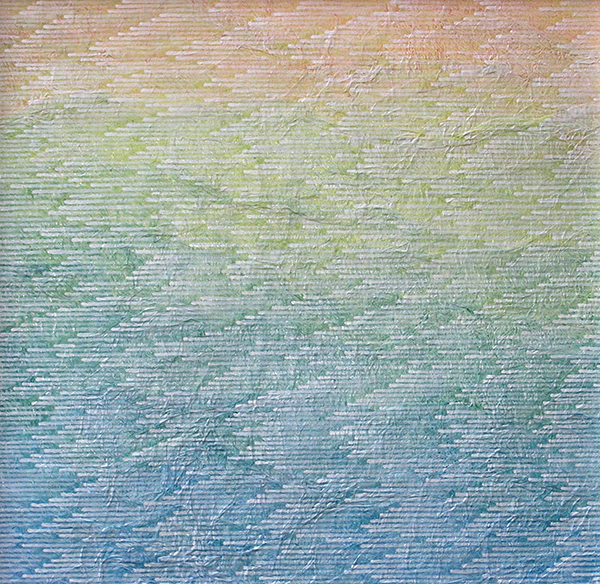
– Artwork by Daniel B. Holeman

Bibliography:
– ‘Presence’, Vol. I & II – by Rupert Spira (Non-Duality Press)
– ‘The First and Last Freedom’ – by J. Krishnamurti – (Rider Publishing)
– ‘The Ten Thousand Things’ – by Robert Saltzman – (Non-Duality Press)

Websites:
Rupert Spira
J. Krishnamurti
Robert Saltzman

Suggestions:
Fleeing to God (other pointers from the blog)
A Day at Brockwood Park (Homage to J. Krishnamurti)

.

The Intelligence of Chaos

The first line of this poem: ‘Trust the intelligence of chaos’, is a phrase borrowed from Jeff Foster. I was inspired with these few lines after reading it…


Trust the intelligence of chaos

It wants to find its way
Through layers of you

It wants to knock at your door
And make you open your heart

It wants to be protected by you
And let itself melt into your emptiness

It wants to see that it is not a bad guy
To be looked upon and pushed away

It wants to be found inexistant
In the inexistence that you are

It wants to be your friend
Claim your love again and again

It wants you to know that it cares
You only can find its implicit order


~~~

Poem by Alain Joly

Photo by Nicki Gwynn-Jones

~~~


6E052D74-E6E9-433B-A389-30CB554DE9B1Nicki Gwynn-Jones is a British photographer currently living in Orkney, a group of islands north of Scotland. She has a passion photographing birds, and the coastal life around, full of a wilderness shaped by wind and water. In 2012 she was awarded a Fellowship in Visual Art by the Royal Photographic Society. 
Nicki’s Websitenicki gwynn-jones


Bibliography:
– “In the Dreamtime: A Meditation on the Flowers of Orkney” – by Nicki Gwynn-Jones – (Orcadian Ltd)

Suggestion:
Voices from Silence (other poems from the blog)


Hymns to the Dawn

The Rig Veda is the oldest Indian text, a corpus of hymns that have been ‘seen’ by sages, or rishis – these ‘sacred poets’. They are hymns to Agni – the fire, to Soma – the drink of immortality, to the Gods and to nature (the Sun, the Earth, Heaven, Night, Dawn).

I have chosen to share here some hymns dedicated to Dawn. They are simple to understand, full of tender and beautiful imagery. They symbolize the eternal beginnings, the very ones that presided over the birth of the Vedas 3500 years ago. Dawn is the goddess Ushas, the beautiful maiden who infuses life with her beauty and qualities. Shardha Batra writes, “She is the pregnant silence at daybreak, which pulsates with a nebulous promise of fresh hope, dreams to be fulfilled, battles to be fought and conquered. Her gentle yet sure vibrations suffuse the most tired of souls with new potential.”

Also, the dawn symbolises the passage from darkness to light, and was bound to become this strong archetypal figure described by Sri Aurobindo: “Night in the Veda is the symbol of our obscure consciousness full of ignorance in knowledge and of stumblings in will and act, therefore of all evil, sin and suffering; light is the coming of the illuminated higher consciousness which leads to truth and happiness.”


5AAA7C06-EFFC-477C-B369-BB42DA6E5D47


The stars were yielding reluctantly to dawn and there was that peculiar silent expectation when the sun is about to come; the hills were waiting and so were the trees and meadows open in their joy.”
~ J. Krishnamurti


Dawn on us with prosperity
O Ushas, Daughter of the Sky.
Dawn with great glory, Lady of the Light.
Dawn Thou with riches bounteous One.

~~

The radiant Dawns have risen up for glory,
in their white splendour like the waves of waters.
She maketh paths all easy, fair to travel, and, rich,
hath shown herself benign and friendly.

~~

The goddess Dawn has eternally shown before,
and the bounteous goddess shines here today.
So will she shine in future. The ageless and immortal Dawn
moves on according to her eternal laws.

~~

Shedding her light on human habitations
this Child of Heaven hath called us from our slumber;
She who at night-time with her argent lustre
hath shown herself e’en through the shades of darkness.

~~

Arise! the breath, the life, again hath reached us:
darkness hath passed away and light approacheth.
She for the Sun hath left a path to travel
we have arrived where men prolong existence.

~~

Singing the praises of refulgent Mornings
with his hymn’s web the priest, the poet rises.
Shine then to-day, rich Maid, on him who lauds thee,
shine down on us the gift of life and offspring.


729B6D14-03AB-4D81-AC47-5AF25511F279

From Rig Veda (1. 92, 113, & 124) – Translation by Ralph T.H. Griffith

Picture by unknown artist ; Mandala by Elsebet Barner

729B6D14-03AB-4D81-AC47-5AF25511F279


Bibliography:
– ‘The Rig Veda: Complete and Illustrated‘ – Translated by Ralph T. H. Griffith – (CreateSpace Independent Publishing Platform)

Websites:
Usha, vedic goddess of new beginnings – by Shardha Batra
– The Vedic Dawn: Goddess Usha – by Sri Aurobindo
Sri Aurobindo (Wikipedia)
Vedas (Wikipedia)


Suggestion:
Other articles from the same category ‘Shreds of Infinity


The Meeting

I come as an orphan to you, moist with love.
I come without refuge to you, giver of sacred rest.
I come a fallen man to you, uplifter of all.
I come undone by disease to you, the perfect physician.
I come, my heart dry with thirst, to you, ocean of sweet wine.
Do with me whatever you will
.”
~ Jagannātha (Ganga Lahari)

.

FDB86CAA-FA77-4C31-8866-289AB1AC3D00enares – a strange and beautiful city, the most religious city of all, so entrancing, so mysterious. Pierre had often heard of this town, and now he was already treading its soil. Many people had advised him that it’s not a place to linger in. “You will be assailed by the rickshaws, the hoteliers, the merchants…”, said the tourist guides. So he was on his guard that morning, on leaving the station, and was preparing to fight hard with the hawkers and profiteers of all kinds. It was six o’clock in the morning and a beautiful day beckoned.

His anxiety was soon dispelled. Everything seemed strangely calm and serene. There wasn’t here this traditional turmoil of Indian cities, nor the famous dust that envelops every city with a gray and dirty halo. An incredible clarity illumined the landscape. Oh! Of course! One had to endure, as everywhere else in this country, the innumerable calls of the rickshaw drivers, or the greedy shopkeepers. Gazes were as intense as everywhere else in India, students as curious, children as mischievous, cows as nonchalant, dogs wandering everywhere. Everything was so marvelously the same as the rest of India, and yet Benares was not a place like any other.

A short story, that tells of an unexpected meeting (READ MORE…)

.

Every Time I Open my Eyes

This poem from Rupert Spira appears at the end of the film ‘The Unknowable Reality of Things’. Produced and directed by Zaya & Maurizio Benazzo, this film is a poem, a meditation made of a series of chapters, each introducing a question like ‘What do we mean by ‘I’”, or “The pure intimacy of experience”. For each of them, Rupert Spira, sitting or standing in a beautiful forest environment, brings a clear answer. It is delivered over a succession of elegant and soothing views of nature, like a dance with shapes, colours, and textures, highly conducive to going within…

~~

Every time I open my eyes,
I invite the world to take shape.
And every time the world takes shape,
I’m invited to open my eyes.

Every time I open my eyes,
I invite the world to take shape.
And every time the world takes shape,
I’m invited to open my eyes
And see the world raw and naked,
Holding out its hand,
Calling me into itself,
Where I am taken into the transparency of thing
And find myself transparent there.
Standing on the edge, looking down and in
To the dark, silent pool in which the world is cradled.
And I am cradled there, held with all things
And hold all things in myself.
Myself, not a thing in the world,
But This, Here, Seeing,
In which the world opens,
Inviting and offering itself.
And every time it is seen, it dies.
And in dying, holds out its hand again
Asking to be taken in.
And every time I take it in,
I, too, die.
And in dying, am known,
As This, Here, Seeing.
Every time I open my eyes.

~ Rupert Spira


~~~

This poem appears in the film ‘The Unknowable Reality of Things’

Painting from Claude Monet: ‘Cliff at Grainval’ (1887)

~~~

4328055C-0BA1-4237-A1D6-95E97931055B


Bibliography:
– ‘The Transparency of Things’ – by Rupert Spira – (New Harbinger Publications)
– DVD: ‘The Unknowable Reality of Things’ with Rupert Spira – (Neti Neti Media)

Websites:
– Rupert Spira
– Neti Neti Media

Suggestion:
Voices from Silence (other poems from the blog)