Diary of a Country Priest

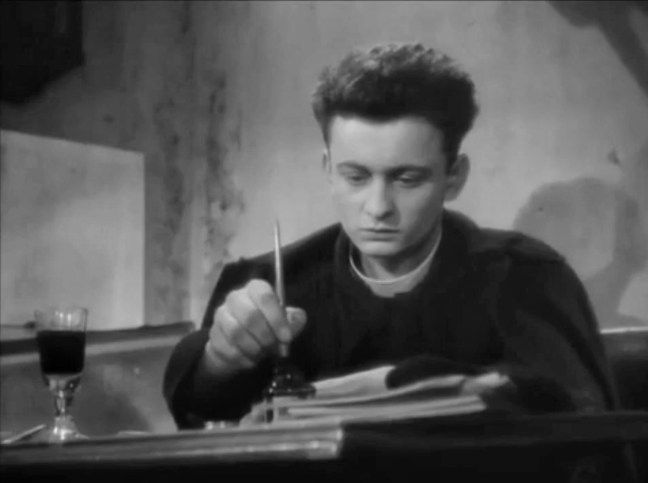
’Diary of a Country Priest’ – Robert Bresson – (With actor Claude Laydu)

.

I try to catch and to convey the idea that we have a soul
and that the soul is in contact with God.
That’s the first thing I want to get in my films
.”
~ Robert Bresson.

.

Robert Bresson is a unique film maker in the history of cinema. He has developed a very personal way of filming that wholly tends towards one thing only: conveying truth. This is achieved by means of the right use of cinema language. As the French master said in the newspaper ‘Libération’: “The true language of cinema is that which translates the invisible. I am trying to convey feelings rather than facts or actions. I am trying to substitute an internal movement for an external movement.” This is particularly well shown in his 1951 film ‘Diary of a Country Priest’, where Bresson, slowly, relentlessly, and above all with simplicity, is scanning the interior life in everything, in the dialogues, the lights, the camera movements, the acting. But this simplicity is here to serve an utter precision. The film is crafted. A skilful surgeon is here at work. And we make silence.

‘Diary of a Country Priest’ tells a simple story based on the novel of the same name by Georges Bernanos, published in 1936. A young priest arrives in his first rural parish where he and his faith will be met with misunderstandings and challenges, both from his parishioners and his declining health. The film opens with these simple lines in his diary: “I don’t think I’m doing anything wrong in writing down daily, with absolute frankness, the simplest and most insignificant secrets of a life actually lacking any trace of mystery.” In the first scene, we see the young priest appearing behind the bars of a gate, signifying that we are about to see the story of an imprisonment. The film is the description of his total dedication to his duty, which will prove to be an ordeal. We are always in a prison, when we are locked in the belief in being somebody.

[…]

Learn more about this movie by French director Robert Bresson… (READ MORE…)

.
The Substance of God

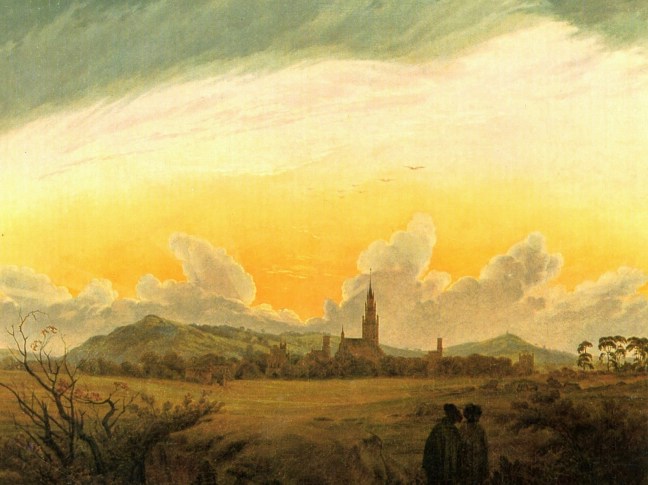
‘Neubrandenburg’ – Caspar David Friedrich, 1816 – WikiArt

How can we account for the beauty of the world? Because in spite of everything that is happening within and without, and afflicts us, leaves us distressed, the world bears at its core an intrinsic perfection. It’s not difficult to see. You only have to stand back, to release the grip, be less involved. To look afresh at the blue sky above your head. To see that a blue sky is an extraordinary thing. As is a tree, and the song of the wind in its foliage. As is a cloud, and the sudden tapping of the millions of drops that come to wet the land. As is any human endeavour, and the skill it takes to play a symphony from Beethoven. As is a chair, a blanket, a paper bin, anything that exists. Existence is a baffling thing. It is the core of the matter — that anything exists — and to understand it is to crack the nature of reality. What is the secret hidden behind any appearance? How can a form acquire beauty, a movement express harmony, a shape provoke love? And more interesting even, how is beauty made ugliness, harmony turned into disorder, love transformed into enmity, perfection changed into chaos? What are the workings behind it all?

[…]

A meditation on the beauty and substance of the world… (READ MORE…)

.

The Program

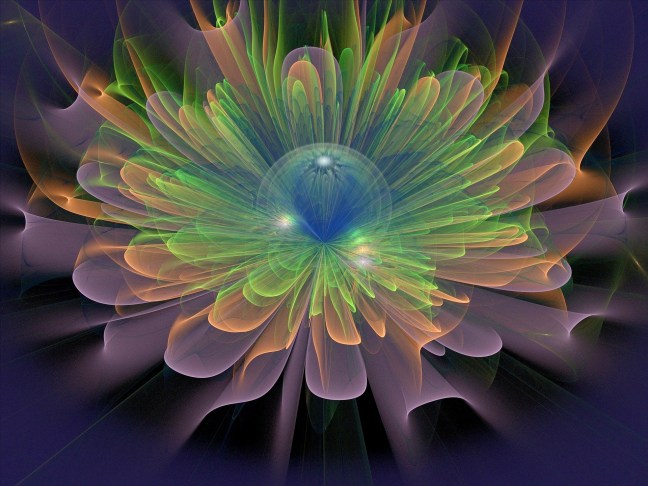
Image by Pete Linforth in Pixabay

.
There is a program that shows up in our being
. This program was created since the dawn of time. It has been affected by countless lines of conditioning. It is moving, dancing like a sea, moulded by habits or necessities, defined by laws, created by the limitations of having a body. It has its own incentives, formed out of previous incentives. It develops in an infinite number of ways. The program is always surprising. It never stands still. It is entrancing, captivating. It occupies us all, and it does it totally. There is no escape from the program. At least, there doesn’t seem to be. Until one day. Until one day…

That day is the day where light shows up at last. And that light comes as a revelation. It is here to clarify the situation. To give us the truth of the matter. There is in fact a way out of the program. We can be free of it. It doesn’t have to mesmerise us, make us fearful. The program was never really a program. It never was limiting. It was play. And the stage for it was not the universe. The stage for the play was dimensionless. It never came into existence. It didn’t have to. For it is unborn, uncreated, unsubstantial. It is not itself a program. Thank god that it isn’t. It would have had tragic implications. Now listen carefully…

All of life is contained in this infinitesimal point of being that is responsible for your saying ‘I’. This is the stage of life. Beware though of mistaking the stage for the program. That sublime ‘I’ is not the ‘I’ that carries the formulation of the program. It is not the ‘I’ that borrows its existence to the existence of the program. Not that shaky ‘I’. No. That sacred ‘I’ of being is the only thing that is seemingly in the program but is in fact not. That all encompassing ‘I’ is before everything that you can name. It is the nameless that harbours all names. It is the no-thing that contains all things. It is independent of all the things that only depend on it. It is alone within itself. And that aloneness is you, ‘I’, all that you are now. All that you have ever been. Will ever be. Can ever be…

.

~~~

Text by Alain Joly

Image by Pete Linforth

~~~

.

Website:
TheDigitalArtist (Pixabay)

.

Other ‘Ways of Being‘ from the blog…

.

The Names of God

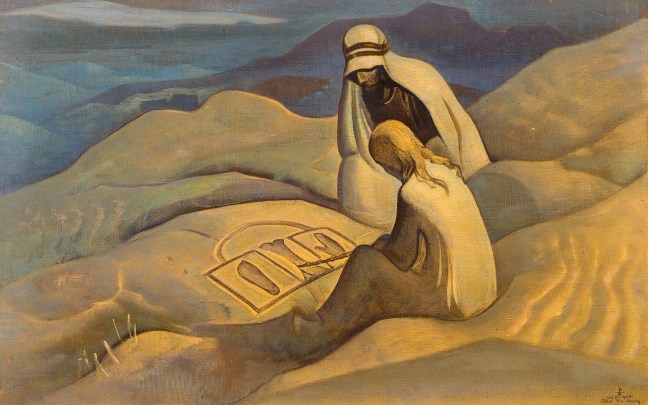
‘Signs of Christ’ – Nicholas Roerich, 1924 – WikiArt

.

The knowing of ‘I am’
is the apparition of God’s being
in our human experience.
It is the being of all beings,
the self of all selves
.”
~ Rupert Spira

.

יהוה               الله               ईश्वर

ब्रह्म               رحمن

אֱלֹהִים

.

There is something that is very hard to understand about God. A survey of the names that have been given to god makes it unequivocally clear, but we keep missing the target: ‘Being’, ‘Mighty Being’, ‘I Am’, and so many others, refer to the fundamental equation of god with ‘being’, with our very everyday experience of plain, simple, pure being. And yet, we keep projecting the presence of god in an hypothetical outside, another ‘being’ that our very ‘being’. So it seems that a study of the different names of god will help focusing on the fundamental nature of god’s being, this mighty Being whose being rests unseen, unnoticed in our own being.

Etymologically, the word ‘god’ (Proto-Germanic ‘gudan’) finds its root meaning in the ancient ritual of sacrifice, as in ‘libation’, or ‘to pour’, or in the Sanskrit ‘hutá’, meaning ‘having been sacrificed’. So god is ‘the one to whom sacrifices are made’, which extends to the sense of calling, invoking. To whom or what do I give the primary attention in myself? Do I indulge in, or fall to any objective appearance as thoughts, sensations, perceptions? Or do I sacrifice these appearances and find rest in the stillness of the one that is aware of these, which is pure being? To whom does my pouring, my libation go?

[…]

See how the many names of god relate to the sense of ‘being’… (READ MORE…)

.