The Rightful King

‘The Crown’ – Odilon Redon, 1910 – WikiArt

.

A thought never comes alone. It appears with a container attached to it. But unfortunately, in our most habitual way to relate to experience, this container is felt to be the negligible part. And the same applies to feelings. Every appearance in the mind comes wrapped up with something that supports it. But that support is unseen, ignored, and the fleeting appearance is too often upgraded as being mind itself. Yet I think that the opposite is truer. That thought is the negligible, feeling is the dispensable. Not that they should be neglected. Far from it. For they are pointers. They are blooming flowers brought to our attention for a mission. They are flagging a message to our conscience. One that says, we — thoughts and feelings — are the negligible. We are not mind, but only temporary appearances in the mind. The mind is what matters. The container matters the most. That which we have taken to be secondary, unimportant, negligible — and that we have as a result pushed in the background — is our innermost reality. It is what needs to be raised in and as the foreground. This is the one and only entity there is, far before — and above — any fluttering thoughts or feelings which, to the mind that supports them, are no more than waves on the surface of an ocean. The container — this vast, indomitable expanse — wants to be explored, visited, admired. Cease taking a few thoughts and feelings to be you. They are not you. They only express the parts of you that are blind, unconscious, indolent. By emphasising them, we neglect all that is around them, behind them, beyond them. All that is supporting them, allowing them to be. Every objective appearance is secondary to that unmatchable presence, to whom even the body is a negligible. How could a few unruly servants think that they are the King, that they run the kingdom in place of the rightful King? But be careful here. Don’t neglect any of these unruly servants. Only remind them of their right place and rank. Invite them at your table. Make them see and understand where lies their interest. By thinking they are themselves little kings and queens, they miss an opportunity to surrender to the one who gives them food and lodging. Consciousness is our rightful King. Only give Him allegiance and contemplate His loving and all encompassing nature. He will make you to His likeness, and will send you back to life with a crown on your head. So be yourself the very subject of this majestic presence. Let Her crown you with Her very crown. And you’re not Her only subject, for everything in the kingdom of experience is Hers. Every house, every being, every tree, every expansive sea, every reflection of the sun on every crested wave, are Her subjects. And every subject subjects only one thing: Herself. So let yourself be the ultimate subject. The one that never bows to any object. Many objective appearances will mistakenly think to be subjects, but never will be, never can be. For this is a kingdom of one subject only. Nobody is meant to take the lead, except that which is the rightful King. 

.

~~~

Text by Alain Joly

Painting by Odilon Redon (1840-1916)

~~~

.

Website:
Odilon Redon (Wikipedia) 

.

Ten Bulls

‘Ten Verses on Oxherding’, 1278 – Metropolitan Museum of ArtWikimedia

.

十牛图

.

Back in the 12th century, in China’s Zen tradition, appeared a series of ten drawings and their accompanying poems. They were meant to describe the ten stages on the path to enlightenment, or to the recognition of our true nature. This series is traditionally named the ‘Ten Ox Herding Pictures’ or more simply ‘Ten Bulls’, and its best known version was created by the Chinese Zen master Kuoan Shiyuan in the 12th century. The present drawings are copies of the originals by the the 15th century Japanese Zen monk and artist Tenshō Shūbun.

The bull and the herder is an old theme in the Buddhist literature of the first centuries AD, and was borrowed and developed in the tradition of Zen. Although other versions have a different number of drawings, this series with ten pictures was adopted in Japan and made famous in the West through the 1957 book ‘Zen Flesh, Zen Bones: A Collection of Zen and Pre-Zen Writings’, by Paul Reps and Nyogen Senzaki. The poems have been translated and commented numerous times, as is often the case with Old Chinese, a language which lends itself to many interpretations.

The main contribution of this version is that the series doesn’t end with the awakened state, shown by a mere circle representing emptiness, but with two more drawings where the realisation of truth is taken further into the realm of form, or everyday life. As the Zen master Jitoku Ki said: “Every worldly affair is a Buddhist work, And wherever he goes he finds his home air; Like a gem he stands out even in the mud, Like pure gold he shines even in the furnace.”

.

Form is not different from emptiness, 
and emptiness is not different from form.
Form itself is emptiness, 
and emptiness itself is form
.”
~ Heart Sutra

.

Taste the poetry and evocative power of these old poems and drawings… (READ MORE…)

.

Churning the Ocean

‘Sagar Manthan’ – Unknown author, 1820 – Wikimedia Commons

.

We cannot be fully established in our true nature as peace and happiness without integrating all our latent tendencies, all these reflexive and self-protective habits born out of our belief in separation. These would prevent the advent of bliss. This is the meaning behind this ancient myth of India called the ‘churning of the ocean of milk’ (‘Samudra Manthan’ in Sanskrit), which is narrated in many religious texts. 

In brief, as the Gods were bored, they decided to gather with some evil beings and unite their strength to churn the ocean of milk with the help of a sacred mountain as the rod, and Shiva’s serpent king as the rope. By doing so, the snake spitted out a deadly poison — called ‘Halāhala’ or ‘kālakūṭa’, literally: ‘black mass’ or ‘time puzzle’ — which Shiva, in its compassionate heart and presence, swallowed to prevent the destruction of the world. The path was cleared for the formation of many precious, invaluable gems, including the ‘amrita’, or ‘soma’, which is God’s drink, the elixir of happiness, or consciousness’ butter. 

[…]

A playful inquiry into the meaning behind this famous Indian myth… (READ MORE…)

.

There is No One and Nothing

The world doesn’t exist
and we just come to see that clearly. 
It’s all an illusion. It never did exist. 
There is no way it can exist —
it’s all the reflection of a concept attached to inside. 
There is No One and Nothing. It’s literal. 
Are you ready to live without a world? 
Is that what you really want? 
Are you willing to lose the moon?

~ Byron Katie

.

~~~

Quote by Byron Katie

Photo by Alain Joly

~~~

.

Bibliography:
– “Loving What Is, Revised Edition: Four Questions That Can Change Your Life” – by Byron Katie – (Harmony)
– “A Mind at Home with Itself” – by Byron Katie and Stephen Mitchell – (HarperOne)

Websites:
Byron Katie (Wikipedia)
The Work of Byron Katie

– An article on Byron Katie’s life and work by The Guardian

.

The Cradle

Nothing I’ve come to see brought me as far 
As I had thought it would — what silly thought!
For I’m forever here where I began,
Locked for eternity in this cradle —
That empty space of birth where I belong.

Never could I travel so long or wide,
As to find a new place away from me.
I live and get busy like in a dream,
But home is immobile — a dreamer’s mind
From where it is impossible to leave.

So this is my cherished destination,
To where I time and again longed to be. 
I thought I left a thousand times before
But had been still at home unknowingly,
Had reached my paradise before journey began.

So now I will not part again and roam
Amongst far lands and promises that fail.
I’ll be simply a humble home keeper,
With all my travels and activities
Kept here at bay and safe in that cradle.

And if I may be blessed with some delight,
I will not make it mine — what impudence!
The twitches I may own but not the peace;
For my home is too broad to be enclosed,
Laughter too wild for an identity.

.

~~~

Text and photo by Alain Joly

~~~

.

Suggestion:
Voices from Silence (other poems from the blog)

.

The Flowers of St. Francis

Brother Nazario Gerardi – ‘The Flowers of St. Francis’

.

Praise be to you, O Lord, and to all your creatures. 
Especially Brother Sun, through whom you light our days. 
He is beautiful and radiant and resplendent, 
and derives all meaning from you
.”
~ Canticle to the Sun

.

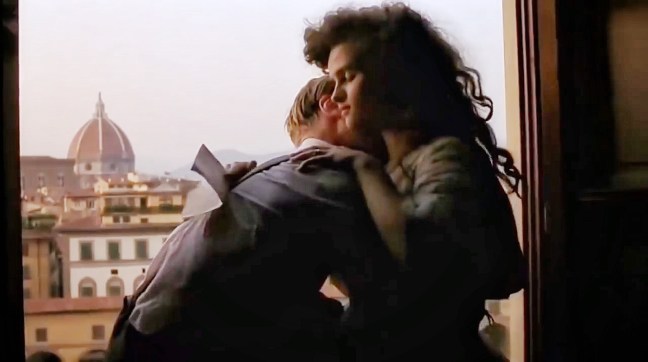
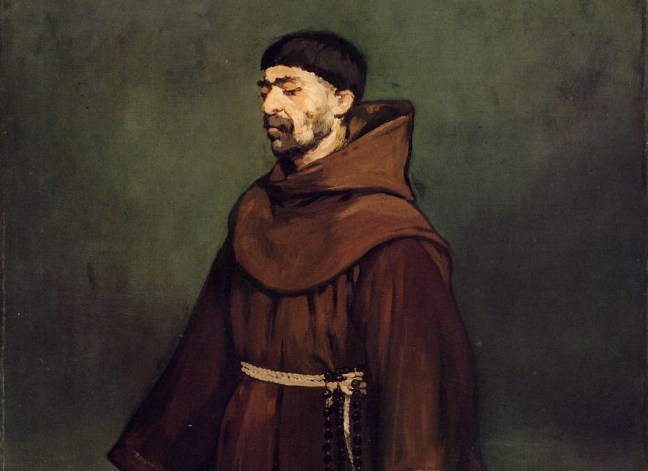
The deepest realisations and expressions of truth in Christianity have sometimes come from words and understanding, as was the case with Meister Eckhart, but it is, by far, not the most common path. Many a man or a woman have come to embrace God’s being through the expression of profound love and surrender. Such a path was trodden by Francis of Assisi, and has been splendidly shown in Roberto Rossellini’s 1950 film ‘The Flowers of St. Francis’. And if all one knew of Francis of Assisi was through watching this supremely elegant film, one would know what needs to be known, one would meet the essential — the essence — of this man’s life, of anybody’s life when it is lived from love and humility. One would know of the pure joy of being, of trust in life’s bounty, of care and attention for every beings on earth.

Showing only a moment of Francis’ life, the film is more a parable on the qualities that were emphasised throughout his life and teachings, than the real description of his life’s journey. Through a succession of simple vignettes, we are exposed to a panoply of Francis’ various expressions of love. We are shown a man who lived with his heart, and a life that has been made into a prayer to god. We are shown that prayer is but an act of love. We are shown people coming together around a common faith in God, their daily life and turmoils, their behaviours. Francis of Assisi encouraged his disciples to access or express god’s being by being oneself an example of the presence of god. And by making this presence shine in all their daily activities, so that the brightness of god can be harvested by everybody around. These expressions are in the film like the little flowers of St. Francis. A whole bouquet of them.

Praise be to you, O Lord, 
for Sister Moon and all the stars, 
which you cause to shine clear and bright
.”
~ Canticle to the Sun

[…]

A homage to Francis of Assisi through Roberto Rossellini’s movie… (READ MORE…)

.

The Great Mystery

‘Lake George’ – Georgia O’Keeffe, 1922 – WikiArt

Bernardo Kastrup is my newly invited guest on ‘The Dawn Within’. Bernardo is a Dutch philosopher and computer scientist who is reflecting on the questions related to mind and matter. His field of study is the nature of empirical reality — of the world we see — which our culture has defined to be fundamentally outside consciousness and made out of matter, with consciousness or mind being a product of that matter. Bernardo Kastrup is tirelessly challenging that idea through his proposition that ”reality is essentially mental” and that “matter is nothing more than the extrinsic appearance of inner experience.” 

Bernardo has worked for the European Organization for Nuclear Research (CERN) and the Philips Research Laboratories (where the ‘Casimir Effect’ of Quantum Field Theory was discovered). His writings and essays have been shared in his website  Metaphysical Speculations’, in his ‘numerous books’, and in many ‘thought provoking videos on YouTube’. His ideas have also been featured in scientific or philosophical magazines.

As an invitation to discover Bernardo Kastrup’s work and ideas, I have selected here a short essay, a few excerpts, and a poem that I hope will unravel this great mystery that lies beyond the nature of our every day reality and world. I hope you will enjoy…

~

I argue that we do not need to postulate a whole universe outside consciousness – outside subjective experience – in order to make sense of empirical reality. The implication is that all reality, including our bodies and brains, are in consciousness, not consciousness in our bodies and brains.”
~ From Bernardo’s article ‘My philosophy and quantum physics

[…]

Explore Bernardo Kastrup’s work on the nature of reality… (READ MORE…)

.