
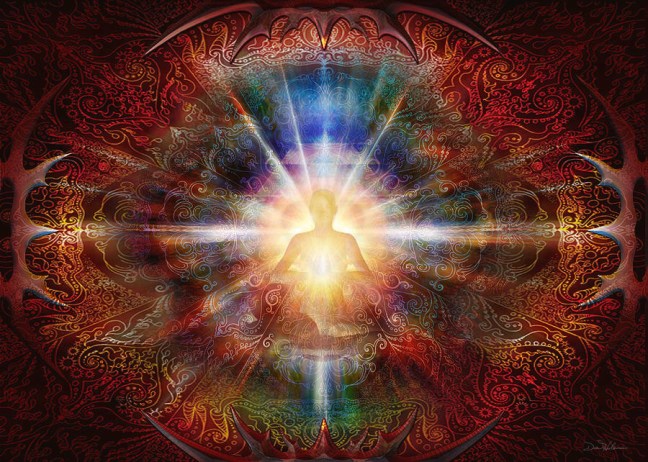
Here is a reminder inspired from the words of Rupert Spira. The ‘fleeting entity’ is an expression he used to describe the separate self. It is necessary and terribly efficient to look into these matters for ourselves. This is why I like to share here the parts of a spiritual teaching that sounds like ‘something to do’, something to experiment and verify for ourselves:
‘Keep on looking in what way almost all your thoughts, feelings, activities, are based upon the belief that you are going to die… See that underneath all of that is your fear of disappearing…’
~~~
Further exploring on the subject:
“This imaginary identification of our self with an object, the body, creates the apparently separate self. … This apparently separate self, being made out of an intermittent object, is, by definition, unstable, always threatened with change, decay and disappearance. Hence the fear of disappearance that resides at its heart and its natural corollary, seeking.”
~ Rupert Spira
~
“Addiction of any sort, be it to inappropriate sexual behaviour, alcohol, drugs, smoking or any milder form of behaviour, almost always has its origin in the belief and, more importantly, the feeling of being a separate, limited, located self.”
~ Rupert Spira
~
“Fear and seeking manifest in the most innocuous forms of behaviour, the most common of which is unnecessary thinking, the almost constant mental chatter or commentary that most of us are familiar with. This innocuous commentary is the simplest form of the ‘resistance to what is’. It is the repetitive background chatter that ensures that attention is almost always diverted away from the immediacy, intimacy and simplicity of ‘what is’. This is the primal addiction.”
~ Rupert Spira
~
“Between living and death there is time. Time, that interval between what actually is and something which we call death, of which we are afraid. This interval between life and death is brought about by thought. Of course there is actual dying: the physical organism, through disease, accident, through usage, dies. But there is fear of death and the sorrow of death as a psychological ending. So there is not only the fear of physical dying, but also the fear of losing all the things that one has learnt, the memories, the experiences, the affections, the family, the hopes, the works, the character, all that one has developed, cultivated, nourished – fear of their coming to an end.”
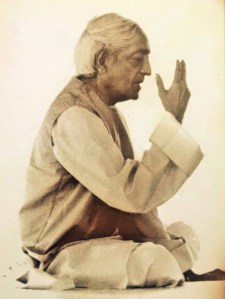
~ J. Krishnamurti
~
“We cling when we fear that without identifying with something or as something, “myself” will lack substance entirely, rendering ordinary life devoid of meaning. Even a glimmer of the possibility of emptiness and meaninglessness can feel terrifying—like glimpsing a bottomless void into which one might fall forever. And of course we fear death which, although many attempt to hold it at bay with religion and spirituality, will mean the end of the entire self-centered production called ‘my life’.”
~ Robert Saltzman
~
“It all begins with ‘I, the body’,
That is the root of all suffering,
which our addictions seek to alleviate.”
~ Rupert Spira
.

.
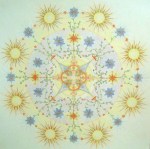
– Artwork by Daniel B. Holeman
Bibliography:
– ‘Presence’, Vol. I & II – by Rupert Spira (Non-Duality Press)
– ‘The First and Last Freedom’ – by J. Krishnamurti – (Rider Publishing)
– ‘The Ten Thousand Things’ – by Robert Saltzman – (Non-Duality Press)
Websites:
– Rupert Spira
– J. Krishnamurti
– Robert Saltzman
Suggestions:
– Fleeing to God (other pointers from the blog)
– A Day at Brockwood Park (Homage to J. Krishnamurti)
.
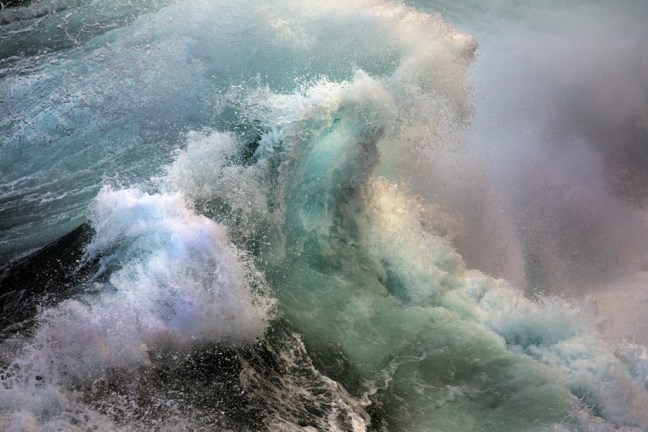
 Nicki Gwynn-Jones is a British photographer currently living in Orkney, a group of islands north of Scotland. She has a passion photographing birds, and the coastal life around, full of a wilderness shaped by wind and water. In 2012 she was awarded a Fellowship in Visual Art by the Royal Photographic Society.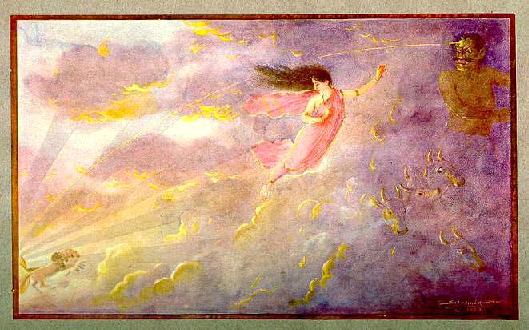

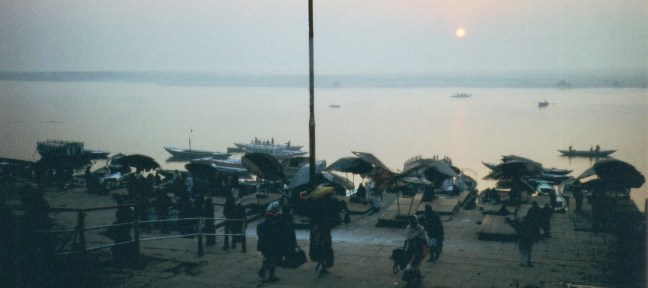
 enares – a strange and beautiful city, the most religious city of all, so entrancing, so mysterious. Pierre had often heard of this town, and now he was already treading its soil. Many people had advised him that it’s not a place to linger in. “You will be assailed by the rickshaws, the hoteliers, the merchants…”, said the tourist guides. So he was on his guard that morning, on leaving the station, and was preparing to fight hard with the hawkers and profiteers of all kinds. It was six o’clock in the morning and a beautiful day beckoned.
 ”Demand is born out of duality: ’I am unhappy and I must be happy’. In that very demand that I must be happy is unhappiness. When one makes an effort to be good, in that very goodness is evil. Everything affirmed contains its own opposite, and effort to overcome strengthens that against which it strives. When you demand an experience of truth or reality, that very demand is born out of your discontent with what is, and therefore the demand creates the opposite. And in the opposite there is what has been. So one must be free of this incessant demand, otherwise there will be no end to the corridor of duality. This means knowing yourself so completely that the mind is no longer seeking.”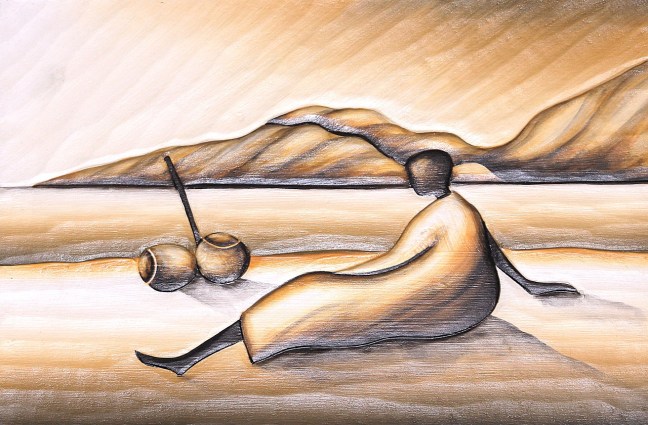
 long time ago, in India, lived a man named Admita. All his life had been spent in a harsh and hostile desert, surrounded by sand and dry, swirling winds. He led a life of wandering without help or hope on this desolate land. He had well heard of stories that described places of lush greenery and great beauty, where valleys, forests, meadows, rushing streams and great rivers were home for countless animals, where mountains stood above deep blue seas, where the sun was warm and friendly and the air ever filled with a cool and gentle breeze. He did not believe that such places really existed, but in front of so much loneliness, sorrow, and adversity, he could not help thinking about it and hoping to discover this wonderful land.
 The Dawn Within