The Quiet Mind

Meister Eckhart was a Christian theologian and mystic born in 13th century Germany. He became famous as a talented preacher and his sermons, unusual and disruptive to the church dogma and ritual, caused him troubles. Largely forgotten until the 19th century, he is now appreciated by contemporary spirituality, for he is speaking a universal message that many can understand beyond the usual Christian jargon. Simon Parke, who wrote the beautiful ‘Conversations with Meister Eckhart’, says: “Here we have a teaching open to all, but possessed by none, and therefore free like a butterfly in the garden of the soul.”

~

.

The most powerful prayer,
one well nigh omnipotent,
and the worthiest work of all
is the outcome of a quiet mind.

The quieter it is
the more powerful,
the worthier, the deeper,
the more telling and more perfect the prayer is.

To the quiet mind all things are possible.
What is a quiet mind?

A quiet mind is one
which nothing weighs on,
nothing worries,
which,
free from ties and from all self-seeking,
is wholly merged into the will of God
and dead to its own. 

~ Meister Eckhart 

.

~~~

Text by Meister Eckhart (1260 – 1328)

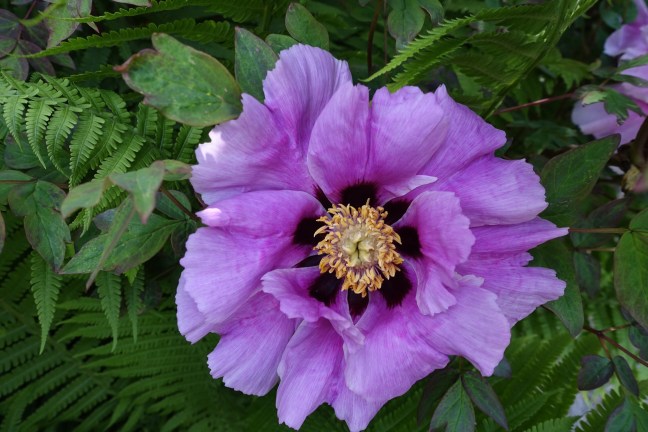
Photo by Elsebet Barner

~~~

.

Bibliography :
– ‘Meister Eckhart, Selected Writings’ – by Meister Eckhart – (Penguin Classics)
– ‘Conversations with Meister Eckhart’ – by Meister Eckhart & Simon Parke – (White Crow Books Ltd)

Website:
Meister Eckhart (Wikipedia)

.Suggestions:
– Other articles from the same category ‘Shreds of Infinity
This is Meister Eckhart (Homage to Meister Eckhart)
The Poor Man (a Sermon by Meister Eckhart)

.

.

The Natural State

‘The natural state’ is an expression borrowed from Joan Tollifson that refers to enlightenment. This is a beautiful way to look at what is often thought to be an extraordinary event. Rupert Spira says nothing less, when he defines it as ‘the absence of resistance to what is’, or simply: ‘this’.

.

Thought doesn’t know truth; it dissolves in it. 
Feeling doesn’t find love; it merges in it. 
Perception doesn’t see beauty; it dies in it
.”
~ Rupert Spira 

.

.

Enlightenment could be defined as the absence of resistance to what is, 
the total intimacy with whatever is taking place 
without any desire to reject or replace it; 

so intimate that there is no room for a self to separate itself out from the whole, 
to stand apart and look at the situation from the outside, 
to judge it as worthy or not worthy, good or bad, 
right or wrong, desirable or undesirable; 

so intimate that there is no room, nor any time, 
in which a separate self could take refuge inside the body 
and so finds itself without boundaries or borders 
pervading the whole field of experience; 

so intimate that there is no ‘me’ on the inside 
and no object or other on the outside,
but only seamless intimate experiencing; 

so intimate that there is no room for a ‘self’ and an ‘other’, 
a ‘me’ and a ‘you’, a ‘this’ and a ‘that’, a ‘now’ and a ‘then’. 

So utterly now and here that there is no time for time 
and no place for distance or space
.”

~ Rupert Spira

.

~~

.

Wouldn’t it be a wonderful relief to recognize that nothing could actually be any other way right now than exactly how it is, that THIS is how the universe IS, that everything belongs? And already, it has completely changed! Can you feel the freedom in knowing that there is no “you” who “should” be doing a better job? How wonderful to see that enlightenment is not a special attainment that only a special few can reach, but rather that enlightenment is the natural state, the groundlessness that is always already fully present. Rather than something we lack and need to attain, it is what we always already ARE.”
~ Joan Tollifson

.

~~

.

As this intimate oneness, it is known as love. 
In its untouchable-ness it is known as peace and 
in its fullness it is known as happiness. 
In its openness and willingness to give itself to any possible shape 
(including the apparent veiling of its own being), 
it is known as freedom and, 
as the substance of all things, 
it is known as beauty. 
However, more simply it is known just as ‘I’ or ‘this’
.”

~ Rupert Spira

.

635AFFA2-05B7-486F-8D19-46C78D56DD67

.

Picture by Alain Joly

Bibliography:
– ‘Presence’, Vol. I & II – by Rupert Spira (Non-Duality Press)
– ‘Nothing to Grasp’ – by Joan Tollifson – (Nonduality Press)

Websites:
Rupert Spira
– Joan Tollifson

Suggestion:
Fleeing to God (other pointers from the blog)
The Inconceivable Actuality Here-Now (a text by Joan Tollifson)

.

The Old Mansion

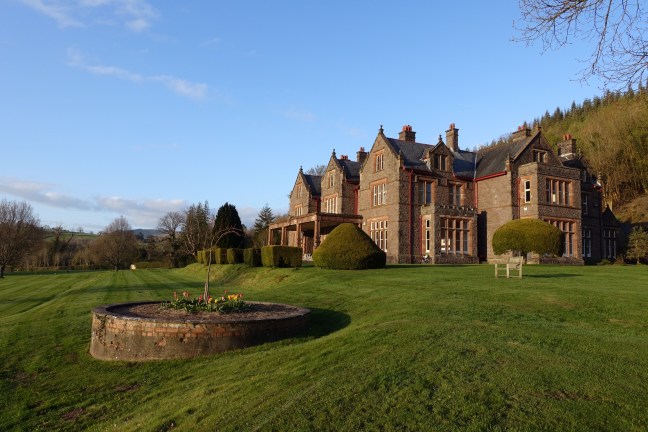
Two short writings, poems, that came to me while at a retreat:


The old mansion was taking it all
The songs of amazing grace 
The whispers of friends chatting softly

It was a week where beauty took its share
Giving to all and giving to me
Showing what an allowing space can do

It was like a burning fire 
Infused by the warmth of many happenings, 
Of each of our sweet hearts,
Leaving ashes of love behind


~~


The vales and tops of Wales
Have come our way another time 
For a meeting in consciousness 
Another beautiful embrace

Between unease, heart openings
Questions were put into the fire 
Grappling with an understanding
Asking for a dissolution 

But there was more for us to come
For it blossomed against all odds

In the old mansion nothing less
Than an apotheosis of Love


~~~

Text and photo by Alain Joly

~~~


Suggestion:
Voices from Silence (other poems from the blog)


Promenade Parisienne

I love, during my walks in Paris, to stop in one of the many small parks that you find in the capital. I sit on a bench and rest while observing, listening. Some children are having some fun a little further, pushing each other on the slides, playing on the swings. I hear the gate slam from time to time, when a mother arrives with her child, an old man leaves with his dog. All the benches are not occupied. Some old ladies are chattering on one of them, two lovers are kissing tenderly. Some older men are playing pétanque and the balls are slamming, breaking the joyous monotony of the carousel music. Some children are shouting with joy. Suddenly, a din of flapping wings falls on me. A swarm of pigeons, lured by abundant crumbs of bread, swoops down on the nearby bench. A few scattered sparrows come to join in the feast. A couple is passing by, stopping for a moment, while their little dog is stretching in the lawn. A young woman is walking fast. Friction of wings. All around, the trees rise majestically and protect all this little world from the warm rays of the sun. They are like big umbrellas and their tall rough trunks spring from the ground, sometimes seeming to counterbalance their bending choice, like big tensed muscles. …

Share with me a poetical promenade in Paris (READ MORE…)


In the Morning I Remember

Here is a beautiful prayer composed by Adi Shankara around the 8th century. These three verses, meant to be recited in the early morning, are a beautiful and touching summary of the heart of Advaita. I have chosen here a simple version, devoid of the Sanskrit terms…

~

प्रातः स्मरामि हृदि संस्फुरदात्मतत्त्वं
सच्चित्सुखं परमहंसगतिं तुरीयम् ।
यत्स्वप्नजागरसुषुप्तिमवैति नित्यं
तद्ब्रह्म निष्कलमहं न च भूतसङ्घः ॥१॥

prātaḥ smarāmi hṛdi saṃsphuradātmatattvaṃ
saccitsukhaṃ paramahaṃsagatiṃ turīyam |
yatsvapnajāgarasuṣuptimavaiti nityaṃ
tadbrahma niṣkalamahaṃ na ca bhūtasaṅghaḥ ||1||

~

At dawn, I meditate in my heart on the truth of the radiant inner Self.
This true Self is Pure Being, Awareness, and Joy, the transcendent goal of the great sages.
The eternal witness of the waking, dream and deep sleep states.
I am more than my body, mind and emotions, I am that undivided Spirit.

At dawn, I worship the true Self that is beyond the reach of mind and speech,
By whose grace, speech is even made possible,
This Self is described in the scriptures as “Not this, Not this”.
It is called the God of the Gods, It is unborn, undying, one with the All.

At dawn, I salute the true Self that is beyond all darkness, brilliant as the sun,
The infinite, eternal reality, the highest.
On whom this whole universe of infinite forms is superimposed.
It is like a snake on a rope. The snake seems so real, but when you pick it up, it’s just a rope.
This world is ever-changing, fleeting, but this eternal Light is real and everlasting.

Who recites in the early morning these three sacred Slokas,
which are the ornaments of the three worlds,
obtains the Supreme Abode.

~ Adi Shankara (8th century)


C727EDAF-5B36-4020-8A69-4AA950D7689C


  • Vimala Thakar wrote a beautiful translation and commentary on these lines, starting eloquently: 

In the morning as I meet the dawn, I remember that my heart contains the God, the Beloved, who has not yet been defined and described. I remember that it is He who vibrates within my heart, enables me to breathe, to talk, to listen, to move.”

  • Sanskrit language has infinite subtleties that don’t always appear, even in the best translations. Here, Vimala gives the beautiful analogy of the swan present in the original language:

I arrive at a state of being that has been called by the ancient wise Indians “Paramahansa”, a swan that swims through the waters of duality.”

  • Further down, she exposes the impossibility for the mind to attain the reality of Presence by these beautiful lines:

On the frontiers of the mind I give the mind a job to explore that which lies beyond its own frontiers, that which is not accessible to the word, to the speech, as well as to the mind.

I ask the mind to travel back, through the word, to the source of the word, the sound, and find out how the sound is born.”

“The source can only be experienced, the source can only be perceived and understood, but never defined and described. That is how the mind becomes silent.”

  • She then exemplifies the famous vedantic analogy of the serpent and the rope, and ends up with a perfect conclusion:

I had mistaken the rope of duality for the snake and cobra of misery and sorrow. But the light dispels the darkness and I see that the duality is only a rope that cannot bind me in any way unless I bind myself with it.”

The perfect eternity. The God divine. That is really my nature. I had mistaken the tensions of duality to be me, but then the light dispels all the darkness, and I get rooted back into the ‘ajam’, the ‘aychuta’ – that which can never be swept off its feet. Ajam – that which was never born, and can never die. I am that.”


~~~

Prayer by Adi Shankara (8th century)

Translation & Commentary by Vimala Thakar
(Hunger Mountain, MA – October, 1972)

~~~


– The prayer by Adi Shankara comes from Aghori.it

– Here is the full commentary from Vimala Thakar.

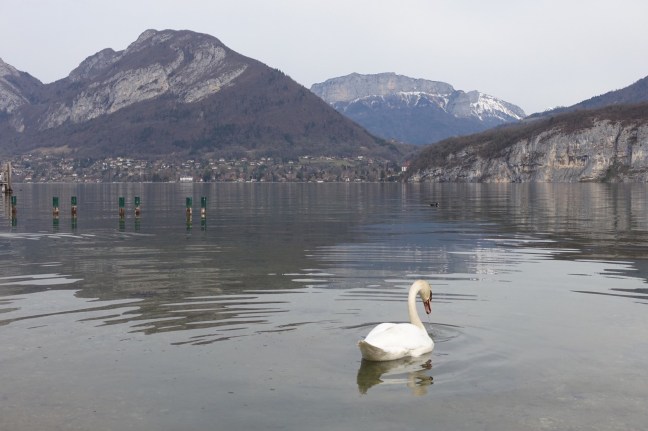
– Photo by Alain Joly

Bibliography:
– ‘The Crest-Jewel of Wisdom’ – by Shankaracharya / Translated by Charles Johnston – (The Freedom Religion Press)
– ‘Blossoms of Friendship’ – by Vimala Thakar – (Rodmell Press)

Website:
Adi Shankara (Wikipedia)
Vimala Thakar (Wikipedia)


Suggestion:
Other articles from the same category ‘Shreds of Infinity


Destroyer of Darkness

We continue our series of texts or essays on different subjects of spiritual interest. The subject here is about examining the figure of the spiritual teacher, or the guru…


Be a light unto yourself; 
betake yourselves to no external refuge. 
Hold fast to the Truth. 
Look not for refuge to anyone besides yourselves
.”
~ Buddha Shakyamuni


It knew better. This thing, so dense, so light, that took me into its lap, that invited me for a dance with eternity, with infinity, would not leave me alone, unattended. Not even two days after encountering this mystery, after dipping into this bath of love and beauty, I was being shown a way. I believe it is inevitable when there is an opening. In a burst of synchronicity, a friend materialised and handed me a copy of Newsweek magazine where there was an article about a spiritual teacher who had died a couple of weeks earlier. I was immediately drawn to him. It was the beginning of a ten year journey into his teaching. I wasn’t the easiest friend though, nor the most faithful. Just a couple of weeks before, among the temples of Khajuraho, I was explaining to a German lady guru who invited me to her meetings, how little I felt about spiritual authority, how important it was to find out by myself, not to be influenced in these matters. My new spiritual teacher wasn’t the friendliest towards the figure of the guru either, but nevertheless he was my first help and pointer, my first pathway towards understanding. “When the student is ready, the teacher appears.”, it is traditionally said.

An exploration into the function of the spiritual teacher (READ MORE…)


The Last Truth

9DF6C27B-1BF6-4BED-949F-40F4B6360333 man had left his village in search of enlightenment. After many long years, from hardship to hardship, he had become a vagabond, a pariah in our towns. One evening, he landed in a dense forest. He made a fire and thought of everything he had seen, lived and understood: pieces of light, of truth… but nothing like an awakening. He was a little discouraged when he heard a bird singing at the top of a tree: “I have the last truth, I have the last truth. It is for whoever will come and get it…”.

The man then began to climb to the top of this tree. Climbing was difficult and dangerous. As he climbed towards this last truth, he had to fight against vertigo. He was guided by the song of the bird without ever seeing it. He finally reached the summit and, bathing in a sumptuous golden light, he saw the sun set, the stars appear but no bird. However, the voice, coming out of nowhere and everywhere at the same time, said to him: “You came to receive a last truth, so receive it and leave to offer it to everyone who will believe you.”

At that moment all his questions were changed into answers and his answers into questions. The light became shadow and from the shadow was born light. All these pieces of scattered truths came together to form a whole, new, multiple truth. So his last truth became his first. His heart began to smile and his smile began to say the words of his heart. Then, without descending from the tree, awake and light, he was able to continue his way by riding some winds of wild wisdom.

Since then, this tree of passage, of metamorphosis, which was a wild tea tree, is venerated. Some of us offer or receive some of its leaves, attentive to everything that, in the golden glow of a cup, they could tell or sing to us, sensitive to any call.


7A09B8AE-E03F-4F85-A871-D9A2F81617C3


~~~

Text found in my computer attic, source unknown
(Translated from French by Alain Joly)

Photo by Carol Brandt

~~~


Website:
Carol Brandt Photography

Suggestion:
Other articles from the category ‘Shreds of Infinity