Blown Out

We continue our series of texts or essays on different subjects of spiritual interest. The question here is about ‘having a spiritual experience’, and delving into the nature of what is called ‘awakening’…


There is a safe place in view of all, but difficult of approach,
where there is no old age nor death, no pain nor disease.
It is what is called nirvāṇa, or freedom from pain, or perfection;
it is the safe, happy, and quiet place which the great sages reach.
That is the eternal place, in view of all, but difficult of approach.

~ Uttaradhyana Sutra, 81-4 (Buddhism)


Nothing much, really. Something just like peeking out of the window. But let’s not be overly disdainful, for this can bend the course of a life and change it in a profound way. To have a spiritual experience is a blessing, a call, maybe a rehearsal for the final dissolution. It leaves you puzzled, wanting to understand, and above all, searching to have it again in the future. It can be just a flavour suddenly lingering at the back of your mind, or a spectacular awakening, or anything in between. In all cases, you meet something new, that is outside any known experience, and yet has a familiar flame, like an old forgotten memory. Above all, peace, love, and happiness are attached to it. It is the DNA of any genuine experience, its vital core, and what makes it so desirable. After all, do we want anything in life but a lasting happiness? It can last for seconds, minutes, or days. It comes as a grace, unexpected, uninvited. One important characteristic is that it fades away, finally disappears. Otherwise we wouldn’t call it an ‘experience’. A spiritual experience is an awakening that failed.

An essay to delve into the nature of Awakening (READ MORE…)
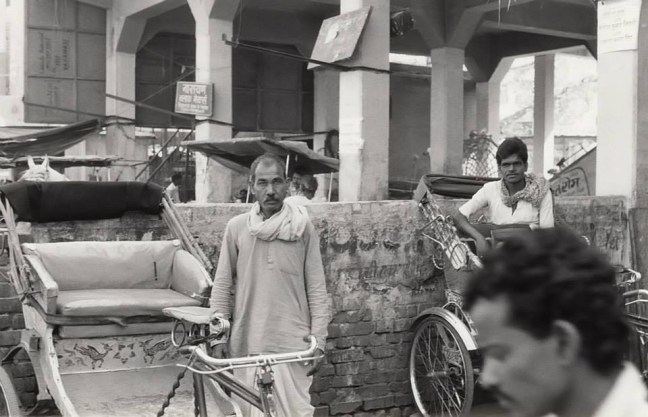
 

Le carillon de Bénarès

I’m sharing here a new page for the people speaking French only. If you are bilingual, you can check it too, since a few articles have not been shared on the main blog in English…

Voici une nouvelle page de la section En Français, où textes, poésies, citations vous sont proposés comme autant de mises en abîme de l’Être. Voici l’une d’elles:


A Bénarès, il est une rue qui descend doucement en serpentant,
Une artère où se répète chaque jour un événement extraordinaire.
Le soir venu, à l’heure où la nuit se pose, où la lumière des échoppes
Fait briller bracelets, pans de soie, et ustensiles,
Les habitants de la cité rentrent chez eux, empruntant
Les nombreux rickshaws qui descendent le long de cette avenue.
Les vélo-rickshaws de Bénarès ont une particularité étonnante,
Une sonnette placée sur la roue qui, par l’effet des rayons venant la frapper,
Produit quand on l’active une sonnerie continue et harmonieuse.
Du flot incessant des conducteurs de rickshaws avertissant de leur présence
Se répandait alors un carillon qui inondait la nuit de sa pureté,
Et remplissait la rue d’une atmosphère sonore féerique à nulle autre pareille.
Là, dans cette rue tout près du Gange sacré,
Des hommes simples, parmi les plus pauvres,
Nous offraient par le simple fait de pédaler
Une nuée de sons, cascades et tintinnabulements,
Composant une symphonie
Dont la splendeur ravive encore aujourd’hui ma mémoire endormie.
La musique céleste des rickshaws-wallahs de Bénarès.


~~~

Texte et photo de Alain Joly

~~~


Les autres articles présentés :
– ‘Prompt comme l’oiseau’ (texte court)
– ‘La solitude de l’Être’ (citations)
– ‘Les passants de l’abîme’ (poésie)

Quatre mises en abîme de l’Être… (LIRE LA SUITE)


‘I am’ is the door

Here is a reminder from Nisargadatta Maharaj. It is necessary and terribly efficient to look into these matters for ourselves. This is why I like to share here the parts of a spiritual teaching that sounds like ‘something to do’, something to experiment and verify for ourselves:

Just keep in mind the feeling ‘I am’, merge in it, till your mind and feeling become one. By repeated attempts you will stumble on the right balance of attention and affection and your mind will be firmly established in the thought-feeling ‘I am’. Whatever you think, say, or do, this sense of immutable and affectionate being remains as the ever-present background of the mind.
~ Nisargsadatta Maharaj

~~~

Further exploring on the subject:

The knowledge ‘I am’ is God’s signature in the mind. It is the portal through which awareness localises itself as the mind and the same portal through which the mind passes in the opposite direction as it investigates its essential nature. The knowledge ‘I am’, or the knowledge of our own existence – awareness’s knowing of its own being – is our primary knowledge, upon which all other knowledge and experience depend. Until the nature of ourself is known, it is not possible to have correct knowledge about any other thing. Thus, there is no higher knowledge than to know the nature of oneself, the nature of ‘I’.
~ Rupert Spira

~

It is the simple that is certain, not the complicated. Somehow, people do not trust the simple, the easy, the always available. Why not give an honest trial to what I say? It may look very small and insignificant, but it is like a seed that grows into a mighty tree. Give yourself a chance!
~ Nisargadatta Maharaj

~

Look at yourself steadily — it is enough. The door that locks you in, is also the door that lets you out. The ‘I am’ is the door. Stay at it until it opens. As a matter of fact, it is open, only you are not at it. You are waiting at the non-existent painted doors, which will never open.
~ Nisargadatta Maharaj

.

635AFFA2-05B7-486F-8D19-46C78D56DD67

.

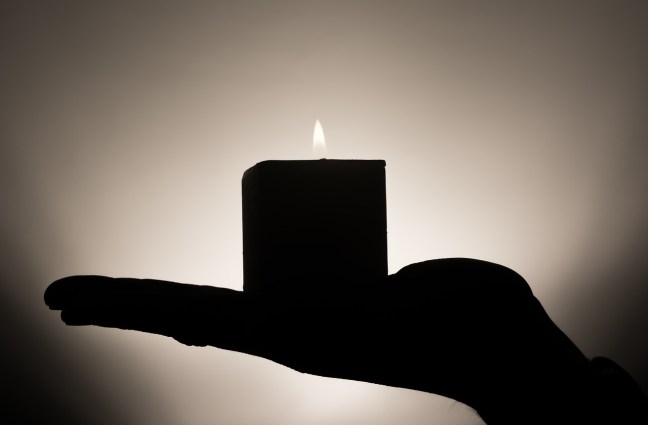
The picture is by Thomas Mühl/Pixabay

Bibliography:
– ‘The Nature of Consciousness’, – by Rupert Spira (Sahaja Publications)
– ‘I Am That‘ – by Sri Nisargadatta Maharaj (Non-Duality Press)

Websites:
Rupert Spira
Nisargsadatta Maharaj (Wikipedia)

Suggestions:
Fleeing to God (other pointers from the blog)
Khetwadi Lane (Homage to Nisargadatta Maharaj)

.

The ghost in the system

Here is a reminder inspired from the words of Rupert Spira. I love this expression from Rupert: a ‘ghost in the system’, because it gives a vivid image of a reality that is so easily overlooked. It is necessary and terribly efficient to look into these matters for ourselves. This is why I like to share here the parts of a spiritual teaching that sounds like ‘something to do’, something to experiment and verify for ourselves:

During the day, doing whatever you do, keep on searching for the ruthless person or entity you have been working for frantically, check that it ever existed, look if it is there at all, if you are not the zealous servant of an illusory master who actually never ever existed… Is there anybody there, an entity to whom all this is happening?… Enquire by looking within…

~~~

Further exploring on the subject:

You know so many things about yourself,
but the knower you do not know.
Find out who you are, the knower of the known.
So far, you took the mind for the knower,
but it is just not so. Look within diligently.

~ Nisargadatta Maharaj

~

All we know is experience but there is no independent ‘we’ or ‘I’ that knows experience. There is just experience or experiencing. And experiencing is not inherently divided into one part that experiences and another part that is experienced. From the point of view of experience, which is the only real point of view, experiencing is too intimately one with itself to know itself as ‘something,’ such as a body, mind or world.
~ Rupert Spira

~

The self that we seem to have become as a result of the forgetting or veiling of our essential being is an imaginary one. It is in fact a thought, not an entity or a self, that has caused this exclusive association of our self with an object of the body and mind.
~ Rupert Spira

.

635AFFA2-05B7-486F-8D19-46C78D56DD67

.

Bibliography:
– ‘Presence’, Vol. I & II – by Rupert Spira (Non-Duality Press)
– ‘I Am That‘ – by Sri Nisargadatta Maharaj (Non-Duality Press)

Websites:
Rupert Spira
Nisargadatta Maharaj (Wikipedia)

Suggestions:
Fleeing to God (other pointers from the blog)
Khetwadi Lane (Homage to Nisargadatta Maharaj)

.