
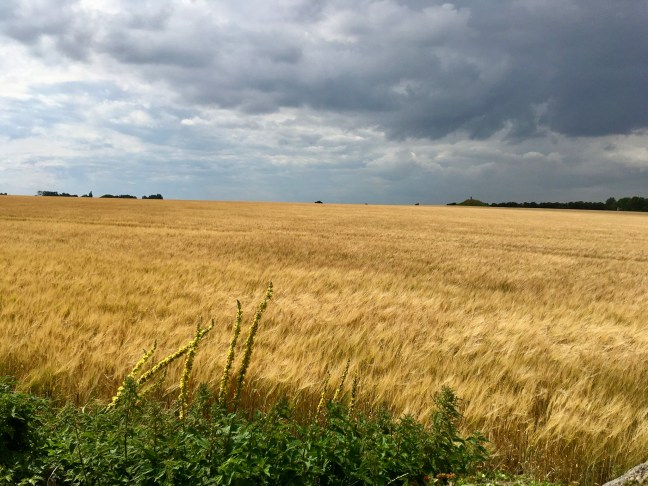
We are strolling down a lane of a thousand gorgeous temples. Only we need to see it, to give ourself the gift of sightseeing. We need to open our life to this reality. But first, we must release this tension present in believing to be a self, and honour this temple of pure being that we are when all our beliefs and identifications have been met and dismantled. Then open your eyes. You are living in a beautiful, never yet visited land. Every fellow human being met, is a temple of consciousness. Every animal encountered, a temple of presence. Every living being that crosses our eyes, our ears, our touch, a temple of awareness, a reflection of our being. We are touring in a world of our self. Never in a distant, exotic land. Always in the comfort of our home as being. Forever linked to and as our deepest presence. We are visitors of presence, being both the presence that visits — as our self, and the presence that is visited — as apparent others.
Down this lane of presence, you will meet countless other temples. Every tree that stands majestic in your gaze, every flower that attracts you with its net of beauty, every fallen leaf on your path, every drop of rain landing on your skin, all temples of your own, scrumptious being. And every object surrounding you, a temple of isness. The clothes you are wearing are existing things. So is the watch at your wrist. Or the chair you are sitting on, or a pen, or a musical sound — the thousand fellow objects of your life. All sharing this same quality of presence, of isness. All temples that reflect the inner beauty or quality of your self, that can be met at every step. See them. Hear them. Touch them. Feel them as your own. Sense their making as your own. Honour them every time you can. They will tell you the story of your self. They are like sculptures of being in the temple of your life.
Don’t forget that every traveller or companion of life, is an altar of friendship, a temple for love. And every object distant or at hand, a recipient for beauty. And every felt presence, an echo of peace, and an occasion for happiness. All are hymns of the divine. All praises to god. But don’t stop here, for there is more to pray, or meditate on; more invitations to honour; more temples to enter; ever more heart openings to experience. Life is a dynamic thing. Bow to everything that shows up. Do not bypass the fact that behind every glance of most human beings you meet, and of many animals too, is also a temple with a cross of suffering. Be sensitive to it. That’s how you will come to exercise your compassion. And notice that within any word uttered by any conscious self, or behind any cry of a distant animal, is a sermon to learn from, by a priest in being. Listen to it carefully. That’s how you will come to exercise your humbleness, or your understanding. And in many actions or behaviours of many of your living friends battling through existence, you will be offered a lesson in equanimity, in courage. Be aware of it. Take it as the expression of your own living self, and an occasion for you to face your unmet challenges. These are the many temples placed at every step of your everyday life. A lane of temples to rest both your broken soul or your radiant being. Enjoy the sight. Be the ardent disciple of it all.
.
~~~
Text and photo by Alain Joly
~~~
.
Suggestion:
– Other ‘Reveries’ from the blog…
.
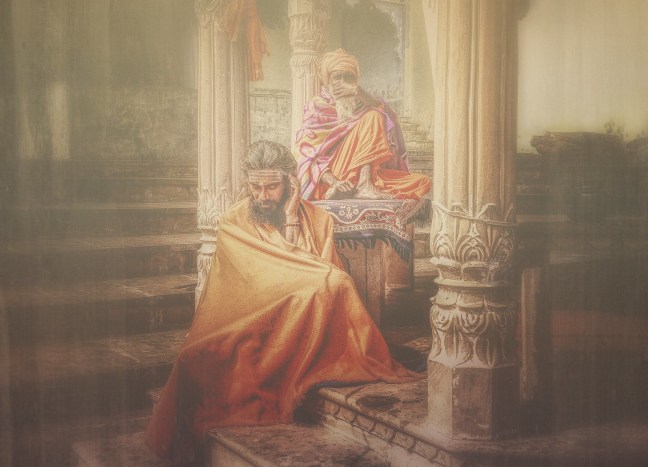
 The Dawn Within