The Rig Veda is the oldest Indian text, a corpus of hymns that have been ‘seen’ by sages, or rishis – these ‘sacred poets’. They are hymns to Agni – the fire, to Soma – the drink of immortality, to the Gods and to nature (the Sun, the Earth, Heaven, Night, Dawn).
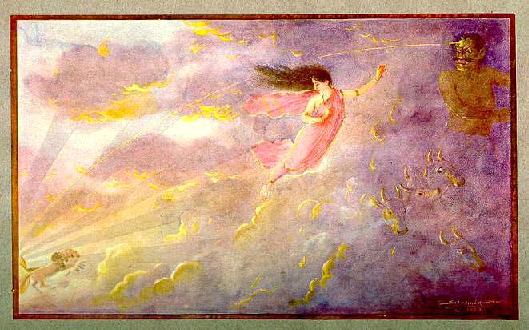
I have chosen to share here some hymns dedicated to Dawn. They are simple to understand, full of tender and beautiful imagery. They symbolize the eternal beginnings, the very ones that presided over the birth of the Vedas 3500 years ago. Dawn is the goddess Ushas, the beautiful maiden who infuses life with her beauty and qualities. Shardha Batra writes, “She is the pregnant silence at daybreak, which pulsates with a nebulous promise of fresh hope, dreams to be fulfilled, battles to be fought and conquered. Her gentle yet sure vibrations suffuse the most tired of souls with new potential.”
Also, the dawn symbolises the passage from darkness to light, and was bound to become this strong archetypal figure described by Sri Aurobindo: “Night in the Veda is the symbol of our obscure consciousness full of ignorance in knowledge and of stumblings in will and act, therefore of all evil, sin and suffering; light is the coming of the illuminated higher consciousness which leads to truth and happiness.”
“The stars were yielding reluctantly to dawn and there was that peculiar silent expectation when the sun is about to come; the hills were waiting and so were the trees and meadows open in their joy.”
~ J. Krishnamurti
Dawn on us with prosperity
O Ushas, Daughter of the Sky.
Dawn with great glory, Lady of the Light.
Dawn Thou with riches bounteous One.
~~
The radiant Dawns have risen up for glory,
in their white splendour like the waves of waters.
She maketh paths all easy, fair to travel, and, rich,
hath shown herself benign and friendly.
~~
The goddess Dawn has eternally shown before,
and the bounteous goddess shines here today.
So will she shine in future. The ageless and immortal Dawn
moves on according to her eternal laws.
~~
Shedding her light on human habitations
this Child of Heaven hath called us from our slumber;
She who at night-time with her argent lustre
hath shown herself e’en through the shades of darkness.
~~
Arise! the breath, the life, again hath reached us:
darkness hath passed away and light approacheth.
She for the Sun hath left a path to travel
we have arrived where men prolong existence.
~~
Singing the praises of refulgent Mornings
with his hymn’s web the priest, the poet rises.
Shine then to-day, rich Maid, on him who lauds thee,
shine down on us the gift of life and offspring.

From Rig Veda (1. 92, 113, & 124) – Translation by Ralph T.H. Griffith
Picture by unknown artist ; Mandala by Elsebet Barner
Bibliography:
– ‘The Rig Veda: Complete and Illustrated‘ – Translated by Ralph T. H. Griffith – (CreateSpace Independent Publishing Platform)
Websites:
– Usha, vedic goddess of new beginnings – by Shardha Batra
– The Vedic Dawn: Goddess Usha – by Sri Aurobindo
– Sri Aurobindo (Wikipedia)
– Vedas (Wikipedia)
Suggestion:
Other articles from the same category ‘Shreds of Infinity’
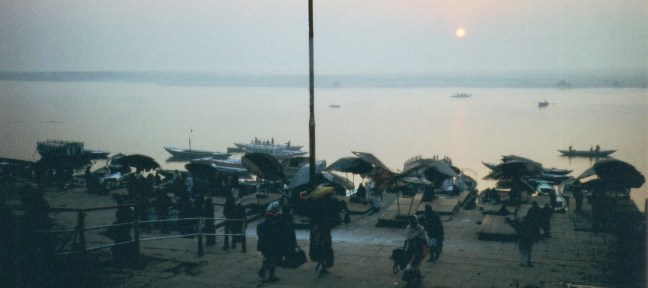
 enares – a strange and beautiful city, the most religious city of all, so entrancing, so mysterious. Pierre had often heard of this town, and now he was already treading its soil. Many people had advised him that it’s not a place to linger in. “You will be assailed by the rickshaws, the hoteliers, the merchants…”, said the tourist guides. So he was on his guard that morning, on leaving the station, and was preparing to fight hard with the hawkers and profiteers of all kinds. It was six o’clock in the morning and a beautiful day beckoned.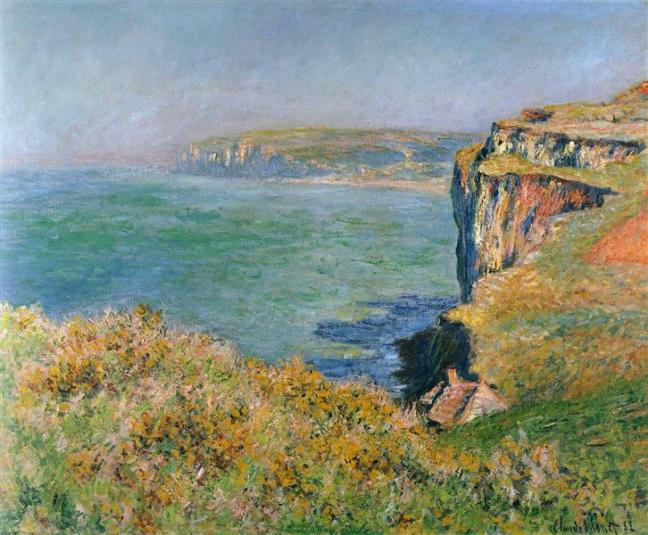
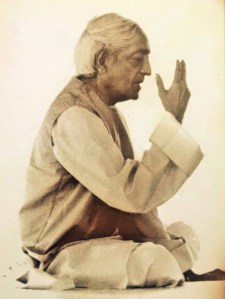 ”Demand is born out of duality: ’I am unhappy and I must be happy’. In that very demand that I must be happy is unhappiness. When one makes an effort to be good, in that very goodness is evil. Everything affirmed contains its own opposite, and effort to overcome strengthens that against which it strives. When you demand an experience of truth or reality, that very demand is born out of your discontent with what is, and therefore the demand creates the opposite. And in the opposite there is what has been. So one must be free of this incessant demand, otherwise there will be no end to the corridor of duality. This means knowing yourself so completely that the mind is no longer seeking.”
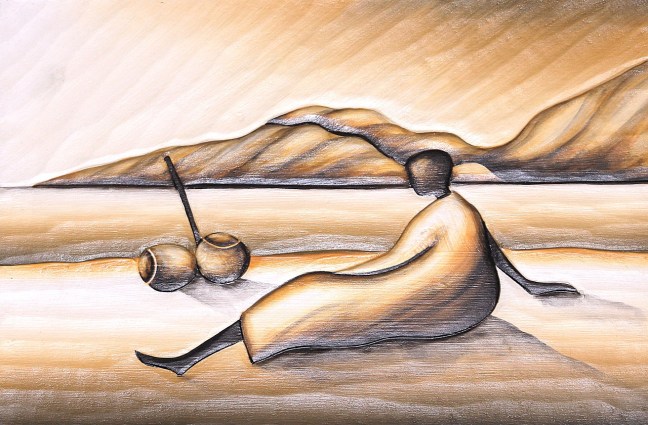
 long time ago, in India, lived a man named Admita. All his life had been spent in a harsh and hostile desert, surrounded by sand and dry, swirling winds. He led a life of wandering without help or hope on this desolate land. He had well heard of stories that described places of lush greenery and great beauty, where valleys, forests, meadows, rushing streams and great rivers were home for countless animals, where mountains stood above deep blue seas, where the sun was warm and friendly and the air ever filled with a cool and gentle breeze. He did not believe that such places really existed, but in front of so much loneliness, sorrow, and adversity, he could not help thinking about it and hoping to discover this wonderful land.