The Serene Background

Here is a reminder inspired from the words of Rupert Spira. It is necessary and terribly efficient to look into these matters for ourselves. This is why I like to share here the parts of a spiritual teaching that sounds like ‘something to do’, something to experiment and verify for ourselves:

Just try to feel or sense this same inherent, serene, peaceful background in all your daily agitated experiences, be it thoughts, bodily activities, or external circumstances like noise… In any circumstances, at any moment, see that you can ask yourself the question: “Is awareness present? Is my knowing of my own being, its knowing of itself, veiled in any way whatsoever by the current appearance of the mind, the body, or the world?…’

~~~

Further exploring on the subject:

We always feel essentially the same whole, indivisible, consistently present person, only we mistake the essential nature of that person. Although innumerable thoughts, feelings, sensations and perceptions are added to us and subsequently removed from us during the course of our lives, the person or self that we essentially are remains always the same. That is, pure knowing, the essence of mind, ‘I’, always remains in the same pristine condition.”
~ Rupert Spira

~

When the Sufis say ‘La ilaha illa la’ – ‘There is no God but God’ – they do not mean that their God, Allah, is the only true God as opposed to all the other religions’ Gods, as is commonly supposed. Rather, they mean that no mind, person, self, object or world ever actually comes into existence. No thing is a thing unto itself. No thing has its own being. The apparent existence of all objects and selves is borrowed from God’s infinite, self-aware being, infinite awareness, our very own intimate, impersonal self, from whose point of view there is nothing other than itself. That being shines in the mind as the knowledge ‘I am’ and in the world as the experience ‘it is’. The amness of the self is the isness of things.”
~ Rupert Spira

~

The personality is nothing other than a projection, a habit created by memory and nourished by desire. Ask yourself the question ‘Who am I?’ and lucidly observe that the questioner, thinker, doer, sufferer are all forms that appear and disappear within the consciousness of ‘I am,’ the ever-living background. They have no reality in themselves. What we call the person is due to a mistake. Thoughts, feelings and actions appear and disappear indefinitely, creating an illusion of continuity. The idea of being a person, an ego, is nothing other than an image held together by memory.”
~ Jean Klein

~

The self must cease through awareness of its own limitation, the falseness of its own existence. However deep, wide, and extensive it may become, the self is always limited, and until it is abandoned, the mind can never be free. The mere perception of that fact is the ending of the self, and only then is it possible for that which is the real to come into being.”
~ J. Krishnamurti 

.

635AFFA2-05B7-486F-8D19-46C78D56DD67

.

– Artwork by Daniel B. Holeman

Bibliography:
– ‘Presence’, Vol. I & II – by Rupert Spira (Non-Duality Press)
– ‘The First and Last Freedom’ – by J. Krishnamurti – (Rider Publishing)
– ‘Who Am I‘ – by Jean Klein – (Non-Duality Press)

Websites:
Rupert Spira
J. Krishnamurti
Jean Klein (Wikipedia)

Suggestions:
Fleeing to God (other pointers from the blog)
A Day at Brockwood Park (Homage to J. Krishnamurti)

.
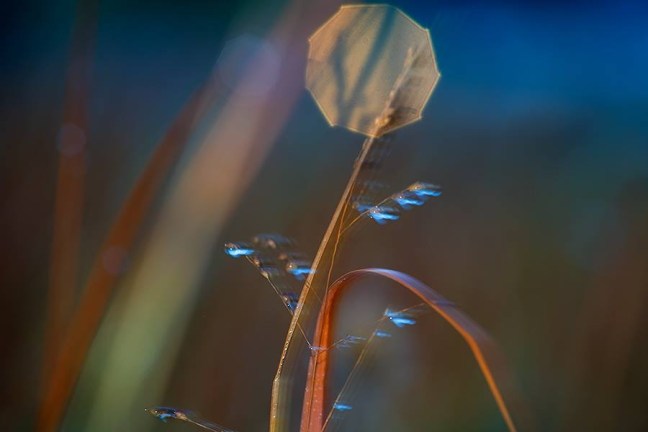
One Dreamer

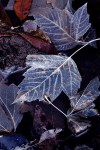
“There is only one dreamer,
the one Self,
dreaming many dreams.
In everybody there is a dream,
but the dreamer is the same,
the one Self,
which reflects itself
in each body
as I am.”

~ Nisargadatta Maharaj 

.

~~~

Photograph by Dan Baumbach

Quote by Nisargadatta Maharaj 

~~~

.

Bibliography:
– ‘I Am That’ – by Sri Nisargadatta Maharaj – (Chetana Pvt.Ltd)

Website:
Nisargsadatta Maharaj

Suggestion:
Khetwadi Lane (Homage to Nisargadatta Maharaj)

~

7ab7b119-4e1b-4061-9f8a-625d0a6f80dcDan Baumbach is an American photographer currently living in Colorado. He draws his inspiration from landscapes and the natural world, but looks “to do something more abstract that can be appreciated as more than a document of natural beauty.” He aims at “capturing little vignettes that pull us inward to experience our own beauty. … I want art to inform us of our higher nature, of the intrinsic beauty in all things: of the timelessness of existence.”
Dan’s website and blog: Timelesslight & dan baumbach photography

.

The Heart of Tagore

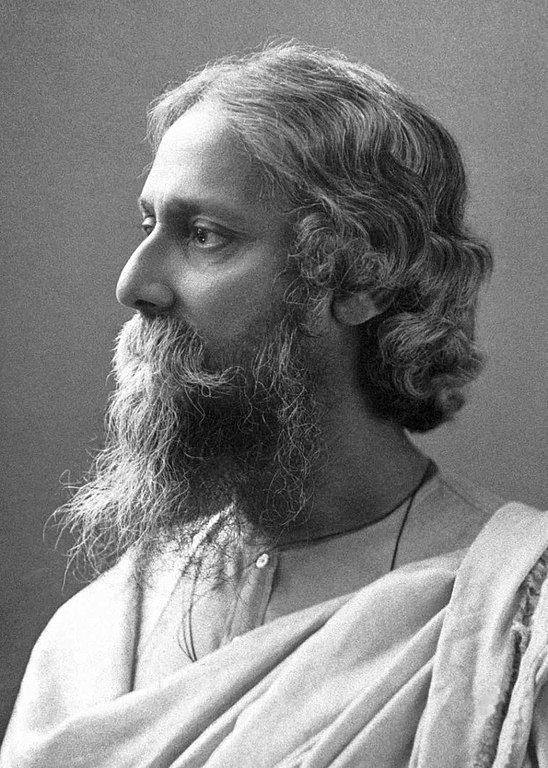
Rabindranath Tagore is certainly one of the fathers of modern Indian literature. His work is immense and fascinating. He is the author of more than a thousand poems, two thousand songs of which he also wrote the music, novels, short stories, plays. He has also written essays on all subjects that were dear to him, from philosophy to politics, from education to the arts, and left many sketches, drawings and paintings. But Tagore was first and foremost a poet, ‘The Poet’, as he is affectionately known in India, and it was through his poetry that he became known throughout the world.

He was born the last child of a Brahmin family from Calcutta, in 1861, and grew up in the shadow of a learned father and religious reformer. He took part in the intense intellectual and social emulation that Bengal experienced in the 19th century, when it struggled with modern Western influences. Educated in the three languages ​​- Sanskrit, Bengali and English, he wrote poems very early, and translated some of his collections into English himself. The publication of ‘Gitanjali’ in Europe and North America made Tagore famous, and he received the Nobel Prize for Literature in 1913. His sudden renown allowed him to make numerous trips to various continents for conferences or visits of friendship, in which he tirelessly preached peace, non-violence and unity among men. A friend of Gandhi, Tagore participated in his own way to the emergence of India as a nation. He is the author of many poems and patriotic songs, two of which have become the national anthems of India and Bangladesh.


Thou hast made me endless, such is thy pleasure. 
This frail vessel thou emptiest again and again, 
and fillest it ever with fresh life
.”
~ Gitanjali


‘Gitanjali’ (1912) is a succession of dialogues, praises to God, filled with some accents of the most profound spirituality. Face to face with the Master, with the Friend, with the Lord, the poet is alternately filled with aspirations, confusions, caught in lamentations, or in luminous resolutions. These poems combine the finesse of language with philosophical reflection or contemplation, and they do so so harmoniously that we are invited to a double and indissociable meditation.


And it shall be my endeavour to reveal thee in my actions, 
knowing it is thy power gives me strength to act
.”
~ Gitanjali

Let’s delve into the spiritual heart of Tagore’s poetry and essays (READ MORE…)


Swami Bharatananda

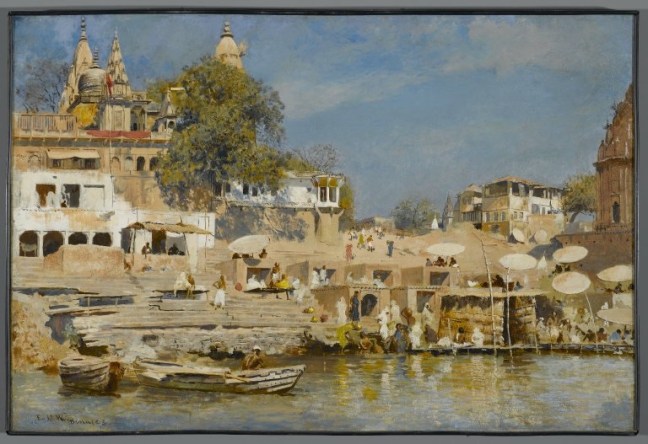
‘Temples and bathing ghat at Benares’ – Edwin Lord Weeks – wikiart

Maurice Frydman is one of most extraordinary people I’ve ever come across and virtually nothing is known about him.” said David Godman, one of the foremost and infatigable exponents of Ramana Maharshi’s life and teachings. Maurice Frydman was born a polish jew in 1894, in Warsaw. Exceptionally bright at school, he was a prolific inventor, spoke many European and Indian languages, and was an earnest and passionate seeker of truth. He has explored many traditions, including Judaism, Orthodox Christianity, and the Theosophical movement of Annie Besant. He devoured books from all possible traditions, particularly interested in all the great writings of Hinduism. Over the years, he met and was close to numerous spiritual teachers like J. krishnamurti, Ramana Maharshi, swami Ramdas, and Nisargadatta Maharaj. He wrote a book on Ramana Maharshi, ‘Maharshi’s Gospel’, and was responsible for recording and publishing the now classic ‘I Am That’ by Nisargadatta Maharaj. He lived in India during the later part of his life, becoming an Indian citizen, and was associated with Mahatma Gandhi, inventing a new implement on the famous Indian spinning wheel, the Charkha. He was given the Indian name Swami Bharatananda when he was initiated as a Hindu monk or sannyasi by Swami Ramdas. Ramana Maharshi refused him this initiation, saying that “Sannyas is taken from within; not from without”. Maurice also greatly helped to organise the Dalaï Lama’s escape to India and to find places for the Tibetan refugees, like Dharamsala. But, “there is no mention of Maurice in any of the books related to either Dalai Lama‘s escape or the smuggling in of the Buddhist manuscripts from Tibet. I have never seen a person as Self-effacing as Maurice”, wrote V. Ganesan. Maurice Frydman died in Bombay in 1976, after an accident. Nisargadatta Maharaj, who held Maurice in high esteem, and considered him as a true jnani, was by his side. Of the days spent in Ramana Maharshi’s presence, Maurice wrote: “We took a cupful when the ocean was at our feet.”

.

~~~

.

Here are two Extracts from Maurice Frydman’s poetry: 

I am at the end of the tether 
and can’t break the cord 

All my going ahead 
is a deceitful dream, 

All my thinking not true, 
all my feeling not pure, 

All my doing not right, 
all my living not clear. 

I am tied to myself 
by myself through myself, 

The knot out of reach, 
I am in your hands.

There is a Heart and a mind, 
and a body and soul 
Waiting for you. 

You will come when you choose, 
And whatever you like 
you are welcome to do.

.

* * * 

.

Heavy with the mud of many lands 
I was flowing lazily, 

Making obstacles of myself 
out of my unholy accumulations. 

Suddenly I awakened 
to the freshness of endless beauty, 

And felt the eternal environment 
of endless peace. 

My beloved I have found you, 
and yet never were we separated, 

Every drop of my being is you 
and yours is the force of my flow, 

Never are we apart 
and yet I always strive after you. 

The flow of creation will go on 
with me or without me, 

Only do not make me forget 
that I am none 

and that you only exist and create 
in ever-changing mobility. 

.

~~~

Poems by Maurice Frydman (1901-1977)

Painting by Edwin Lord Weeks (1849-1903)

~~~

.

– Maurice Frydman’s poetry is from the book:
Face to Face with Sri Ramana Maharshi’ – by Laxmi Narain – (Sri Ramana Kendram, Hyderabad)

– Read this more extensive biography of Maurice Frydman here.

Bibliography:
– ‘I Am That’ – by Sri Nisargadatta Maharaj – (Chetana Pvt.Ltd)
– ‘Maharshi’s Gospel’ – by Ramana Maharshi and Maurice Frydman – (Sri Ramanasramam)

Websites:
Maurice Frydman (Wikipedia)
Paula Marvelly, An Interview with Sri V. Ganesan
Edwin Lord Weeks (Wikipedia)

.

Grace

“If you seek the grace of God
with your whole heart,
then you may be assured
that the grace of God
is also seeking you.”

~ Ramana Maharshi

.

~~~

Quote by Ramana Maharshi (1879 – 1950)

Photo by Alain Joly

~~~

.

Bibliography:
– ‘The Collected Works of Ramana Maharshi’ – (Sophia Perennis et Universalis)
– ‘Be As You Are’ – by Ramana Maharshi (Edited by David Godman) – (Penguin Books)

Website:
Ramana Maharshi (Wikipedia)

Suggestion:
Rendezvous with Ramana, Part II (Homage to Ramana Maharshi)

.

Dear God

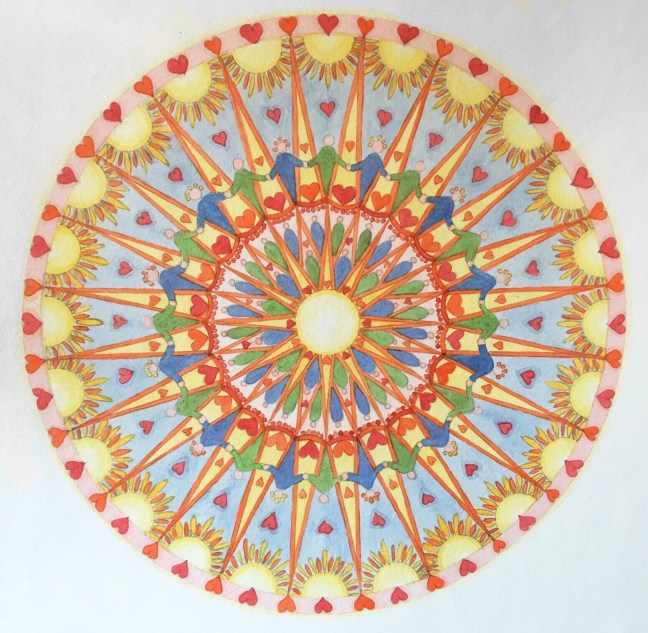
A prayer comes from the heart, and points to something that is beyond words and meaning. Its only function is to throw you back to yourself, to silence. It must be devoid of demands, which can only be objective and an expression of separation. In prayer, the result precedes the wish. Tiger Singleton gives us here two different versions of a prayer:

~

The confused prayer

Dear God, please help me put my illusions back together. All this uncertainty of tomorrow really makes it difficult to hide, and pretend to know what I’m doing.

Dear God, help me hold on, and please make other people change so I don’t have to see the truth I’m afraid of. If you would just give me what I want, it would be so much easier to love and trust you.

Dear God, how can I still protect the image of myself and worship you in everything? They say you are everywhere all the time, but that makes it really difficult to find myself.

Dear God, everything I trust in that’s not you, keeps failing. Why? Wouldn’t life be easier if everything just did what I wanted? By the way, I have plans this weekend so it’s better for all (really for myself) if it doesn’t rain.

Dear God, mosquitoes are stupid, please kill them all. It would be much better for everyone (really myself). Except maybe for nature, clearly though nature is confused about how to do things.

Dear God!! Hello?! Are you listening?! I want to be God. It’s not going so well. Please help.

~

The Sincere Prayer

Dear God, thank you. May you continue to help me see what actually is, rather than looking for what I want.

Dear God, thank you. Your ways are mysterious, yet it’s because of your ways, that this breath flows. I may not always understand, but I always end up seeing a gratitude.

Dear God, thank you. Somehow the rain falls perfectly on time, Im so grateful it’s not up to me. I have a hard enough time managing my own calendar.

Dear God, thank you. You keep showing me it’s okay to let go, no matter how stubborn I might be. Your patience is infinite, and in this I feel your Love.

Dear God, thank you. I feel in some way you are always smiling, not laughing at me, but comforting my impossible fears. As if the sun only pretends not to shine.

Dear God, thank you. I’m so humbled by you. I see it’s a constant invitation for me to relax and let you do what you do. Allowing me an opportunity to return to love.

Dear God, thank you; not for this or for that, but for everything. I see your fingerprints everywhere.”


~~~

Text by Tigmonk

Mandala by Elsebet Barner

~~~


Tiger Singleton (Tigmonk), founder of InLight Connect, is an inspirational public speaker, satsang facilitator, and author who shares wisdom and insight from the heart. With an open heart, Tiger holds space for a profound exploration into the art of being (you). 

Bibliography:
– ‘An Explosion of Love: The Color of All Things Beautiful’ – by Tigmonk – (The Blooming Heart Center)
– ‘Intimacy, with the Silent Nothing that is Everything’ – by Tigmonk – (The Blooming Heart Center)

Websites:
Inlight Connect (the art of being)
Tigmonk (All… is Incredibly Well)
Already Done (The Poetic Life of Being)

Suggestion:
Fragrance (on the role and nature of prayer)


The Churches of Rome

This is the end of my old ways, dear Christ!
Now I will hear Your voice at last
And leave the frosts (that is: the fears) of my December.
And though You kill me, (as You must) more, more I’ll trust in you.
For though the darkness and the furious waters of that planting
Seep down and eat my life away
Yet my dark night both eats and feeds me,
‘Til I begin to know what new life, green life springs within my bones
.”
~ Thomas Merton


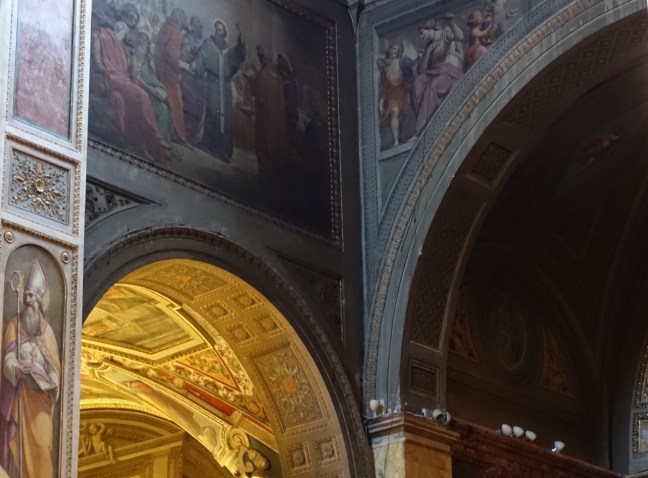
Ah the churches of Rome! Here I am, trodding for the second time the worn, disjointed, unsettled paved streets of the eternal city, with one thing in mind: visiting and admiring some of its most beautiful basilicas, churches, chapels, oratories… It is said that there are about 900 churches in Rome, so the choice is wide and elegant. One thing to remember here: this place is the cradle of Christianity and hosts the Holy See of Catholicism, a religion to more than a billion people in the world. The sheer number of tourists and pilgrims is huge and many want to see the Vatican in their lifetime, with its most famous Sistine Chapel, the Coliseum of the ancient Roman Empire, or the Trevi Fountain. I have just come from a retreat in the mountains of Umbria, and I wonder what will touch me here, after this week of thinking and meditating on the non-dual nature of experience. 

I am the light of the world.”
[John 8:12]

What strikes me most here, is not the gigantism and wealth of the most famous basilicas, nor the beautiful art that you will find hidden in the innermost corners of many churches: Raphael, Caravaggio, the Baldacchino and Ecstacy of Saint Teresa of Bernini, the Pietà and Moses of Michelangelo, the frescoes of Gaulli and Pozzo. No, something else touches me profoundly. …

An essay on the churches of Rome and their deeper meanings (READ MORE…)