The Tail of the Tiger

Here is a reminder from Robert Adams. It is necessary and terribly efficient to look into these matters for ourselves. This is why I like to share here the parts of a spiritual teaching that sounds like ‘something to do’, something to experiment and verify for ourselves:

You’ve got to realize you are greater than you think, and you’ve got the same power within you as everybody else does. It may appear to be asleep, but as you work on yourself, work on yourself, work on yourself, you will awaken it, and one day it will become stronger than you are and take you over completely and you’ll be free. But you’ve got to keep on working on yourself, and stop putting yourself down. That’s the worst thing you can do is to put yourself down. That’s blasphemy because you’re putting God down. Think of yourself as a higher person, love yourself, worship yourself, bow to yourself. You are greater than you think.”

~~~

Further exploring on the subject:

Increase and widen your desires till nothing but reality can fulfil them. It is not desire that is wrong, but its narrowness and smallness. Desire is devotion. By all means be devoted to the real, the infinite, the eternal heart of being. Transform desire into love. All you want is to be happy. All your desires, whatever they may be, are expressions of your longing for happiness. Basically, you wish yourself well.”
~ Nisargadatta Maharaj

~

Hold on to the tail of the tiger, don’t let it go, because you will see if you hold on, you will enter into quite, totally a different dimension. But if you let go, you know it is like coming back to living in the beastly life of struggle and conflict and battle with each other.”
~ J. Krishnamurti

~

I think the best way to live in this world, the most important thing, is to explore and to recognise who we essentially are. And having recognised who we essentially are, or as we are engaged in this exploration, to think and feel in a way that is consistent with our understanding of ourself. And to act in a way that is consistent with those thoughts and feelings. In other words, our knowledge of ourself, our understanding of ourself, is the most important aspect of life, because everything we do, everything we think, all the relationships we engage in, we think and feel and act and relate on behalf of ourself. And therefore, everything depends on our understanding of ourself.”
~ Rupert Spira

~

O soul, seek the Beloved, O friend, seek the Friend,
O watchman, be wakeful: it behoves not a watchman to sleep
.”
~ Rumi

~

You always have two choices. One choice is the familiar one: to sacrifice this mysterious awakeness for something else. The second choice is not to sacrifice this that’s awake and present, whatever you happen to be. You can choose not to sacrifice this for the next promise of a better moment, a better event, or a better experience. This is your choice — to be true to what’s true or not. And this is the Fire of Truth. This that is awake now, as you, in you, reveals the utter irrelevance of every other argument, whatever that may be. This that is awake to itself renders everything that is not true irrelevant. This silence burns the grasping for anything else and frees the life that you are, to live itself without negotiation. Feel the immediate visceral invitation of this that is awake, to put down everything else. The invitation asks you to cease bargaining with life, with the moment, yourself, your teacher, your friend, your mate. Just stop. This fire is unseen and unknown, and yet it burns everything other than itself.”
~ Adyashanti

..

B4B1EF62-8C55-4D3A-A93C-CEF684A607CC

.

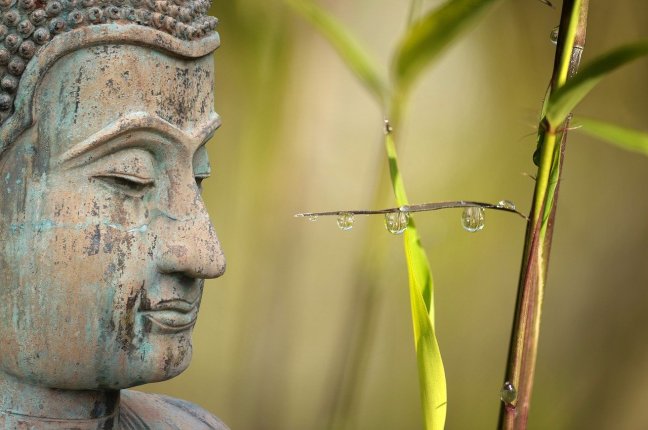
The picture is by Susann Mielke / Pixabay

Bibliography:
– ‘Silence of the Heart’ – by Robert Adams – (Infinity Institute)
– ‘Being Aware of Being Aware’, – by Rupert Spira – (Sahaja Publications)
– ‘I Am That‘ – by Sri Nisargadatta Maharaj – (Non-Duality Press)
– ‘Krishnamurti’s Notebook’ – by J. Krishnamurti – (Krishnamurti Publications of America, US)
– ‘The Essential Rumi’ – Translated by Coleman Barks – (HarperOne)
– ‘Falling into Grace: Insights on the End of Suffering’ – by Adyashanti – (Sounds True Inc)

Websites:
Robert Adams (Wikipedia)
Rupert Spira
Nisargadatta Maharaj (Wikipedia)
J. Krishnamurti 
– Rumi (Wikipedia)
Adyashanti

Suggestion:
Fleeing to God (other pointers from the blog)
A Day at Brockwood Park (Homage to J. Krishnamurti)
Rumi (Homage to Rumi)
Khetwadi Lane (Homage to Nisargadatta Maharaj)

.

Be Still and Know

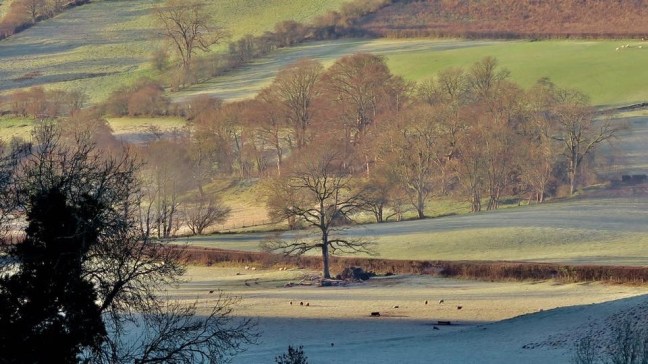
This was our last retreat there. In the old mansion that we so dearly loved. Amongst the rolling hills of Wales. Here we have listened and felt. Here we have known what needs to be known. We have felt our heart sing and thrive beyond measure. 

Here we sang together for the last time. A small improvised choir. A last song that is like a hymn for future days. Its lovely tune I cannot convey to you. But the words. Oh the words… Only listen and feel the heart of it. It goes:

Be still and know that I am God
And there is none besides me

The first injonction is ‘be still’. It’s a call. There is a wild world out there. Don’t run after every seducing thought. Don’t follow every glitter of experience. Be disinterested for once. Turn your head away. Say: I don’t want you! Try it.

Don’t let the world eat you. If anything, swallow it yourself! But do it softly. Let it go and disappear of its own accord. Be gentle. We don’t want to upset it. It needs to tell you more. Wait a little longer. You will be surprised.

Put yourself together. Find the place of togetherness in you. Stay there. See how good it feels. Be reunited with your own self. Make it happy. Make yours its sweet presence. Hear its heartfelt cry resonating. You’re here. At last! […]

Continue unraveling these verses from a song… (READ MORE…)


Insights into Wholeness

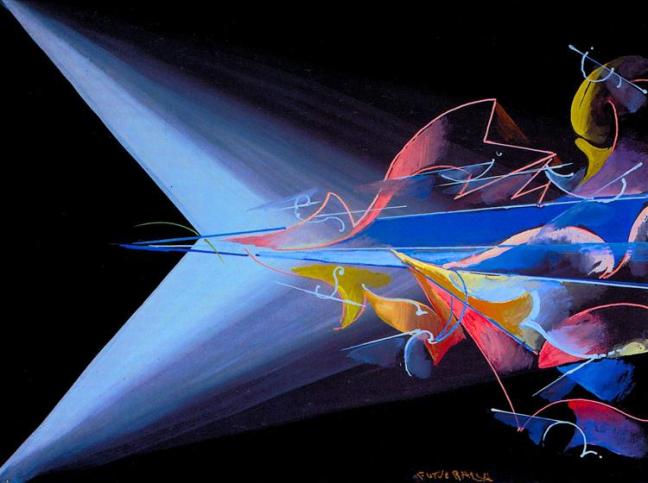
‘Science against Obscurantism’ – Giacomo Balla, 1920 – WikiArt


To see a World in a Grain of Sand 
And a Heaven in a Wild Flower 
Hold Infinity in the palm of your hand 
And Eternity in an hour

~ William Blake 


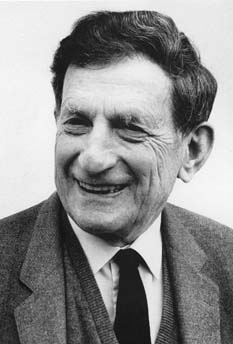
It really was a thrill. The day when David Bohm was announced to come and participate at our staff meeting. This was back in the years when I was working in Brockwood Park, the school founded in England by J. Krishnamurti. Just realise: one of the greatest theoretical physicist of the 20th century, who worked closely with Albert Einstein and had numerous insightful dialogues with Krishnamurti — participating in creating this very school we were in — was here a humble friend amongst us. My poor English at the time was making rather challenging the understanding of this man’s soft, monotonous voice. But the quality of his thinking and analysis, the speed with which he would come up with and express meanings to the questions that were raised during our dialogues, were indeed impressive. Above all, his humble and unassuming demeanour was touching beyond measure. He was truly a gentle man. 

David Joseph Bohm was born in 1917 in Pennsylvania, USA to a Jewish family of Eastern European descendance. His early career around the Second World War started rather spectacularly, since he was asked by Robert Oppenheimer to work with him in the secret laboratory created to design the atom bomb, but was refused access because of his youthful acquaintances with communist ideas. Soon after this, while completing his Ph.D., he made some calculations that proved useful to the very project which he had just been barred from! But because they were now classified, he “was denied access to his own work; not only would he be barred from defending his thesis, he was not even allowed to write his own thesis in the first place!” wrote his biographer F. David Peat.


CB02E968-2C1D-4DD5-9C3E-CE50AB497AF6
David Bohm – Wikimedia

Science itself is demanding a new, non-fragmentary world view, in the sense that
the present approach of analysis of the world into independently existent parts
does not work very well in modern physics
.” 
~ David Bohm (Wholeness and the Implicate Order, 1980)

[…]

Continue reading about David Bohm’s life and insights… (READ MORE…)


Otherness…

Here is a reminder inspired from the words of Rupert Spira. It is necessary and terribly efficient to look into these matters for ourselves. This is why I like to share here the parts of a spiritual teaching that sounds like ‘something to do’, something to experiment and verify for ourselves:

See in your everyday, every moment experiences that you are never an inside self experiencing an outside world, even when it seems that it’s looking like that. See that both are identical — the screen and the characters or objects inside — that the seer is the seen. In other words, see how you have made an abstraction of the inside self, and of the outside world, or object…’

~~~

Further exploring on the subject:

First, you must know that the seer and the seen, the one who finds and what is found, the knower and the known, the creator and the created, the perceiver and the perceived, are one. He sees, knows and perceives His being by means of His being, beyond any manner of sight, knowledge or perception, and without the existence of any of the forms of sight, knowledge or perception. Just as His being is beyond all condition, so the vision, knowledge and perception which He has of Himself are without condition.”
~ Awhad al-din Balyani

~

Jesus said to them, ‘When you make the two one, and when you make the inside like the outside and the outside like the inside, and the above like the below, and when you make the male and the female one and the same, so that the male not be male nor the female; and when you fashion eyes in the place of an eye, and a hand in place of a hand, and a foot in place of a foot, and a likeness in place of a likeness; then will you enter the kingdom.’
~ The Gospel of Thomas

~

The density and solidity of the body and the otherness of the world are penetrated and suffused with the light of pure knowing, God’s infinite being, and are gradually outshone by it. The body becomes impersonal like the world, and the world becomes intimate like the body.”
~ Rupert Spira

~

There is only one mistake you are making: you take the inner for the outer and the outer for the inner. What is in you, you take to be outside you and what is outside, you take to be in you. The mind and feelings are external, but you take them to be intimate. You believe the world to be objective, while it is entirely a projection of your psyche. That is the basic confusion and no new explosion will set it right. You have to think yourself out of it. There is no other way.”
~ Nisargadatta Maharaj

The tree was alive, marvellous, and there was plenty of shade and the blazing sun never touched you; you could sit there by the hour and see and listen to everything that was alive and dead, outside and inside. You cannot see and listen to the outside without wandering on to the inside. Really the outside is the inside and the inside is the outside and it is difficult, almost impossible to separate them. You look at this magnificent tree and you wonder who is watching whom and presently there is no watcher at all. Everything is so intensely alive and there is only life and the watcher is as dead as that leaf. There is no dividing line between the tree, the birds and that man sitting in the shade and the earth that is so abundant.”
~ J. Krishnamurti 

.

B4B1EF62-8C55-4D3A-A93C-CEF684A607CC

.

The picture is by brenkee / Pixabay

Bibliography:
– ‘Being Aware of Being Aware’, – by Rupert Spira – (Sahaja Publications)
– ‘I Am That‘ – by Sri Nisargadatta Maharaj – (Non-Duality Press)
– ‘Know Yourself’ – by Awhad al-din Balyani – (Beshara Publications)
– ‘Krishnamurti’s Notebook’ – by J. Krishnamurti – (Krishnamurti Publications of America, US)

Websites:
Rupert Spira
Nisargadatta Maharaj (Wikipedia)
J. Krishnamurti 
Gospel of Thomas (Wikipedia)

Suggestion:
Fleeing to God (other pointers from the blog)
A Day at Brockwood Park (Homage to J. Krishnamurti)
Khetwadi Lane (Homage to Nisargadatta Maharaj)

.

The Gentle Manner

“Let the Awareness function.
Then the mind becomes quiet. 
Motives disappear; 
tranquility pervades the whole being. 
In that state alone does the perception of Truth come. 
And it comes naturally. 
It is there. 
It is revealed in a gentle manner.”

~ J. Krishnamurti 

.

~~~

Quote by J. Krishnamurti (1895-1986)

Photo by Alain Joly

~~~

.

Bibliography :
– ‘Krishnamurti’s Notebook’ – by J. Krishnamurti – (Krishnamurti Publications of America, US)

Website:
J. Krishnamurti

Suggestions:
Beauty in Essence (other pointers from the blog)
A Day at Brockwood Park (Homage to J. Krishnamurti)

.

The Flame of Sorrow

Here is a reminder inspired from the words of Rupert Spira. It is necessary and terribly efficient to look into these matters for ourselves. This is why I like to share here the parts of a spiritual teaching that sounds like ‘something to do’, something to experiment and verify for ourselves:

Try to see in what way the function of most thoughts in our life is to deflect our attention away from the feeling of emptiness and sorrow and lack… Try to feel the very first impulse of the now being insufficient, not quite enough, and the very beginning of the indulging in an activity, or a thought pattern such as daydreaming… Try to notice the very start of it and do not move, stay where you are right now… See how the mind will be upset by your not moving…

~~~

Further exploring on the subject:

There are various ways of escape but there is only one way of meeting sorrow. The escapes with which we are all familiar are really the ways of avoiding the greatness of sorrow. You see, we use explanations to meet sorrow but these explanations do not answer the question. The only way to meet sorrow is to be without any resistance, to be without any movement away from sorrow, outwardly or inwardly, to remain totally with sorrow, without wanting to go beyond it. … When there is no movement of escape from sorrow then love is. Passion is the flame of sorrow and that flame can only be awakened when there is no escape, no resistance.”
~ J. Krishnamurti (Dialogue 1 – New Delhi, 12th December 1970 )

~

The apparently separate self is made out of the resistance to the Now. There is only one place the separate self cannot stand, and that is Now. In fact, the separate self is not an entity that resists the Now; it is simply the activity of resisting the Now. … See clearly how many of our thoughts contain this imaginary entity at their origin, and how this imaginary entity ventures into a past or future in order to avoid the Now.”
~ Rupert Spira (The Light of Pure Knowing, Meditation 8)

~

We miss the real by lack of attention,
and create the unreal by excess of imagination
.”
~ Nisargadatta Maharaj

~

At certain moments, when alone, we feel a great lack deep within ourselves. This lack is the central one giving rise to all the others. The need to fill this lack, quench this thirst, urges us to think and act. Without even questioning it, we run away from this insufficiency. We try to fill it first with one object then with another, then, disappointed, we go from one compensation to another, from failure to failure, from one source of suffering to another, from one war to another.”
~ Jean Klein

~

No matter what state dawns at this moment, can there be just that? Not a movement away, an escape into something that will provide what this state does not provide, or doesn’t seem to provide: energy, zest, inspiration, joy, happiness, whatever. Just completely, unconditionally listening to what’s here now, is that possible?
~ Toni Packer

.

635AFFA2-05B7-486F-8D19-46C78D56DD67

.

The picture is  by Nick_H / Pixabay

Bibliography:
– ‘Presence’, Vol. I & II – by Rupert Spira (Non-Duality Press)
– ‘The First and Last Freedom’ – by J. Krishnamurti – (Rider Publishing)
– ‘Who Am I‘ – by Jean Klein – (Non-Duality Press)
– ‘The Silent Question: Meditating in the Stillness of Not-Knowing’ – by Toni Packer – (Shambhala)

Websites:
Rupert Spira
J. Krishnamurti
Jean Klein (Wikipedia)
Toni Packer

Suggestions:
Fleeing to God (other pointers from the blog)
A Day at Brockwood Park (Homage to J. Krishnamurti)
Khetwadi Lane (Homage to Nisargadatta Maharaj)

.

Duet of One

We sat quietly and watched an osprey circle and swoop over the river. This is what I loved about being in India — the vibrancy, the unexpected, the chance encounters, the conversations that quickly moved from small talk into the question of life and death.”
~ (Excerpted from ‘The Shadow that Seeks the Sun’ – by Ray Brooks)


This quote is the essence of Ray Brook’s book ‘The Shadow that Seeks the Sun’. Ray wrote the book that I would have loved to write, mixing the many small happenings, encounters, and dramas of Indian life, to the delving into the self, the contemplation of a new possibility of being. Intertwined with the description of everyday life in Rishikesh are nine conversations between Ray and Rudra, a newly met Anglo-Indian man. These chapters form the backbone of the book, where we delve deeper and deeper into the recognition of our inescapable reality, Rudra leading us into the patient recognition of our true being, relentlessly pointing: “See that what you are is not dependent on anything. See that this indescribable presence is shining as its own light.”

Ray Brook is my newly invited guest on ‘The Dawn Within’. Born and raised in England, Ray discovered at an early age the Japanese art of shakuhachi flute playing and became an accomplished musician. Ray and his wife Dianne, co-writer of the book, now live on Vancouver Island in Canada, and continue to spend most of their winters in the foothills of the Indian Himalaya.

I have chosen here the excerpt where Ray recalls his one to one meeting with Krishnamurti in Ojai, California. I was touched by the simple, humble, yet probing nature of the inquiry that is described. I hope you will enjoy…


~

So, Ray, here we are again. You can only find awareness. Tell me. What are you?”

A large brown and turquoise kingfisher landed on a rock in the water. Its huge beak looked too big for its body, its feathers impossibly vibrant in the morning sun. We watched the bird silently, waiting for it to dive. 

“What I am — is all of this.”

~


The Ojai Valley runs along an east-west mountain range, twenty miles inland from the Pacific coastline. The area where Krishnamurti was staying was located at the east-end of the valley surrounded by lush green mountains, oak and pine forests, and acres of orange and avocado groves. The locals call Ojai ‘Shangri-la’, and I could see why. It was the most beautiful place I had ever been. 

I arrived early — two hours early — and entered a large, well-kept garden behind an old nineteenth-century redwood house. The lovely property, named Arya Vihara or Noble Abode, was Krishnamurti’s former home and where our meeting would take place. He had lived in this house for a number of years but now, during his visits to Ojai, stayed in Pine Cottage, which was behind Arya Vihara. An inviting bench at the far end of the garden was perfectly placed in the shade. It had a good view of the property and the sun-dappled lawns surrounding it. As I sat down, I wondered whether Krishnamurti and other eminent scientists, philosophers, psychologists, and scholars had sat here. I read somewhere that Aldous Huxley had been to Arya Vihara. Huxley, who had been a good friend of Krishnamurti’s, claimed that listening to him speak was “like listening to a discourse of the Buddha — such authority, such intrinsic power.” …

Continue with Ray Brooks’ one to one meeting with Krishnamurti (READ MORE…)

~

5BF87B92-145E-4EBC-8A16-13820E829BE8

Photo by Ray Brooks

Bibliography:
– ‘The Shadow that Seeks the Sun: Finding Joy, Love and Answers on the Sacred River Ganges’ – by Ray Brooks – (Watkins Publishing)
– ‘Blowing Zen: Finding an Authentic Life’ – by Ray Brooks – (Sentient Publications)

Websites:
The Shadow that Seeks the Sun
Ray Brooks’ Facebook Page