The Carder of Innermost Souls

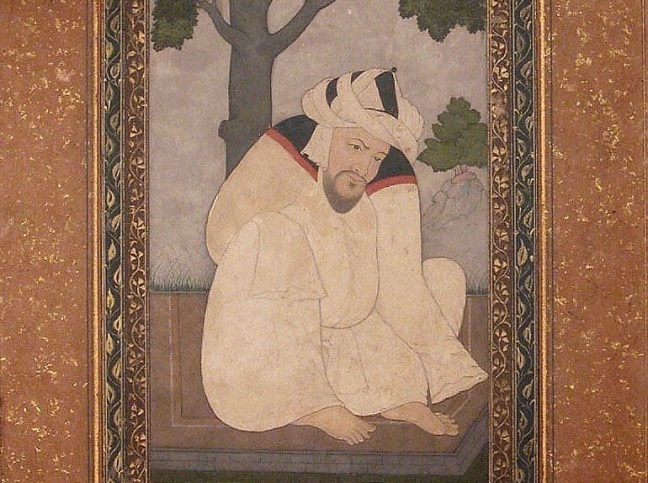
‘Portrait of a Sufi’ (part), 17th AD –Metropolitan Museum of Art – Public Domain

.

أنا الحق
Anā l-Ḥaqq
“I am the Truth.”
~ Mansur al-Hallaj

.

We all enjoy a good story. Here is one coming from far ago, in ancient Persia, where lived a man who became one of the most celebrated mystic, poet, and teacher of Sufism. Mansur al-Hallaj was born in 858 AD near Shiraz, in the Pars province of today’s Iran. He was considered an ‘al-Insān al-Kāmil’, which in the Islamic tradition is a honorific title meaning literally ‘the complete person’, a human being whose identity is merged with pure consciousness. Al-Hallaj is also known as the ‘Jesus of Islam’. He was tortured and publicly crucified for having pronounced the highly blasphemous statement: “I am the Truth”, which equals in Islam to saying ‘I am God’. The French scholar of Islam Louis Massignon wrote that al-Hallaj was “the most beautiful case of human passion that I had yet encountered, a life striving entirely towards a higher certainty.” The mystic’s last words were said to be:

.

Help me, O You only One,
to whom there is no second!
~ Al-Hallaj (‘I Am the Truth’)

.

From an early age, Mansur al-Hallaj was a devoted practitioner of truth. He grew up in a Sunni Muslim family and read the Quran at an early age, but he was irresistibly drawn towards the mystics. As a young man, he received the Sufi habit and moved to Basra in today’s Irak. After marrying, he began travelling extensively and made his first pilgrimage to Mecca, staying there for a year, facing the mosque in fasting and total silence. Although also the father of three children, he kept pursuing a life of devotion and started preaching to a growing number of followers. He became known as ‘ḥallāj al-asrār’, ‘the carder of innermost souls’, for his name ‘hallaj’ means ‘cotton-carder’. From that time on, he began writing exclusively in Arabic. His reverence for truth and the simplicity of his writing are here perceptible:

.

I have abandoned to the people
their religion and their customs
to dedicate myself to Thy love,
Thou my religion and my use.”
~ Al-Hallaj

.

”For your sake, I hurry over land and water;
For your sake, I cross the desert and split the mountain in two,
And turn my face from all things,
Until the time I reach the place
Where I am alone with You.”
~ Al-Hallaj (‘Perfume of the Desert’)

.

Know that Judaism, Christianity and Islam, like other religions,
are only denomination and appellation,
the goal sought through them never varies or changes.”
~ Al-Hallaj

.

[…]

.

The life and teaching of the ancient Sufi master Mansur al-Hallaj… (READ MORE…)

.
The Wisdom of Humility

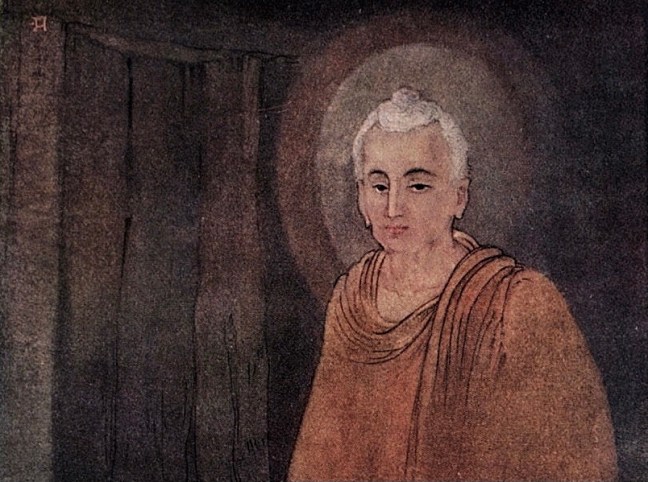
‘Buddha as mendicant’ (Part) – Abanindranath Tagore, 1914 – Wikimedia

.

To look into and understand the meaning and implications of being truly humble, of that state of humility which we often hear about — but rarely fully understand — is a precious thing. The word ‘humble’ finds its roots in the Latin ‘humilis’ which means ‘lowly’, literally ‘on the ground’ (from ‘humus’ meaning ‘earth’). Its etymology covers both the more active aspect contained in being ‘humiliated’, or being ‘humbled’, and the one that refers to the state, or quality, of being ‘selfless’. The first one gives the primary importance to the self that we are, to this separate entity that we believe to be, and which needs to be rendered humbler, smaller, lower. But why would we want to do that? Why, if it wasn’t for our deep intuition that this self is illusory, false, and is ultimately preventing our true identity of peace and happiness to be recognised and realised? 

This inherent peace contained in just ‘being’ refers to the second aspect of the word. Being humble is being without self, without the belief of being separate from objective experience. We are not this restless entity that wants to achieve, to aggrandise itself, and needs to be rendered low. We are rather this pure being whose very nature is complete, and already, unconditionally humble. Otherwise, why would Shiva or Buddha be portrayed as a mendicant? Therefore, the solution to our chronic state of suffering and conflict does not lie in having more, or less, or better ‘self’, but in realising, and living from, this deep and already achieved peace that we are. This realisation, and the action that is born of it, is what true humility is about. This simple phrase from the Bible made it crystal clear long ago: “When pride comes, then comes disgrace, but with humility comes wisdom.” (Proverbs 11:2)

I am sharing here a few quotes that will further explore this deep and essential question:

~~~

In a space of humility,
no conflict is possible
.”
~ Éric Baret (‘Let the Moon be Free’)

~

Humility contains in itself the answer to all the great problems of the life of the soul. It is the only key to faith with which the spiritual life begins: for faith and humility are inseparable. […] If we were incapable of humility we would be incapable of joy, because humility alone can destroy the self-centeredness that makes joy impossible.”
~ Thomas Merton (‘Seeds of Contemplation’)

[…]

Discover many more quotes on this question of humility… (READ MORE…)

.

The Churches of Rome

This is the end of my old ways, dear Christ!
Now I will hear Your voice at last
And leave the frosts (that is: the fears) of my December.
And though You kill me, (as You must) more, more I’ll trust in you.
For though the darkness and the furious waters of that planting
Seep down and eat my life away
Yet my dark night both eats and feeds me,
‘Til I begin to know what new life, green life springs within my bones
.”
~ Thomas Merton


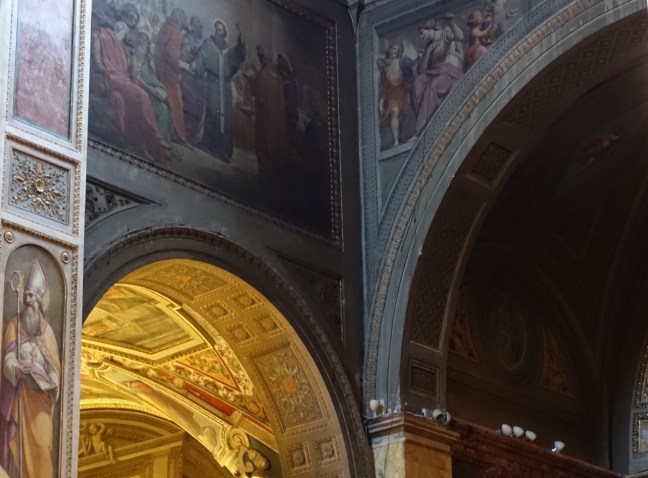
Ah the churches of Rome! Here I am, trodding for the second time the worn, disjointed, unsettled paved streets of the eternal city, with one thing in mind: visiting and admiring some of its most beautiful basilicas, churches, chapels, oratories… It is said that there are about 900 churches in Rome, so the choice is wide and elegant. One thing to remember here: this place is the cradle of Christianity and hosts the Holy See of Catholicism, a religion to more than a billion people in the world. The sheer number of tourists and pilgrims is huge and many want to see the Vatican in their lifetime, with its most famous Sistine Chapel, the Coliseum of the ancient Roman Empire, or the Trevi Fountain. I have just come from a retreat in the mountains of Umbria, and I wonder what will touch me here, after this week of thinking and meditating on the non-dual nature of experience. 

I am the light of the world.”
[John 8:12]

What strikes me most here, is not the gigantism and wealth of the most famous basilicas, nor the beautiful art that you will find hidden in the innermost corners of many churches: Raphael, Caravaggio, the Baldacchino and Ecstacy of Saint Teresa of Bernini, the Pietà and Moses of Michelangelo, the frescoes of Gaulli and Pozzo. No, something else touches me profoundly. …

An essay on the churches of Rome and their deeper meanings (READ MORE…)