
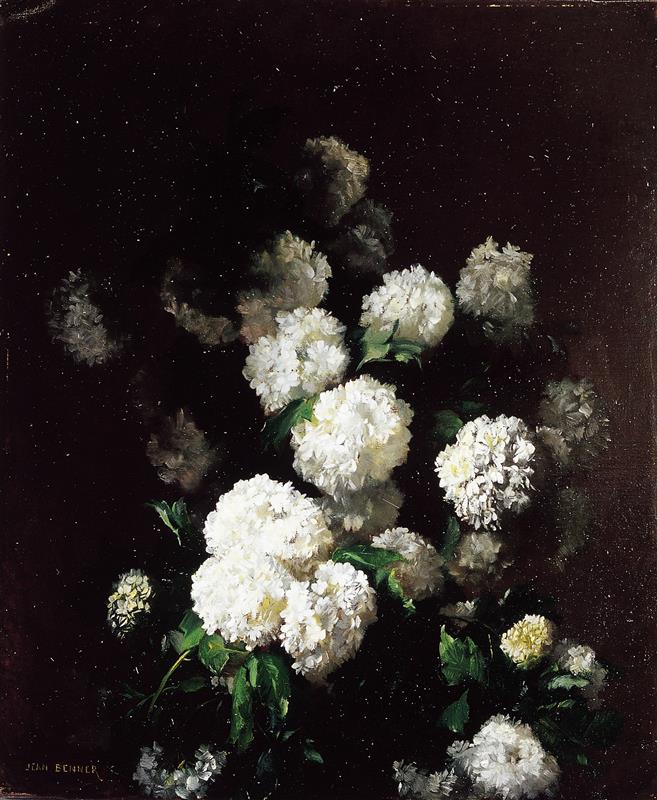
 ‘Fleur’ – Jean Benner, 1860 – WikiArt
.
The difficulty in the spiritual endeavour is that we have to question the unquestionable. We have to doubt the obvious. We have to turn the stones that we have carefully placed here to pave the road. One such indisputable truth is that we choose our thoughts. That the decisions or actions we are taking, the thoughts or attitudes we are having, are the products of a controller, of a self that has them, chooses them. But is it so? Have we even tried to question it? Have we ever looked if there truly was a self here in capacity to choose? What if there wasn’t? What if this self, this ‘I’ that we seem to be, only drew its existence from our imagination? What if our own self was just another thought? If this entity that we love to pamper and strengthen was not there, not at all? If we have played a game with ourself? If there is here no person outside our indulgence in having the thought of one?
Many of our conflicts and problems in life come precisely from the belief that we are the chooser of our thoughts, that there is an ‘I’, a person here that runs the show when there is not. That’s the mistake, the original sin, to think of ourself as a doer, a thinker, a separate entity that has control, that manufactures happiness, freedom, and is responsible for our experience such as it is. We want to carry the load of our DNA, of our body, thoughts, habits, suffering, or even happiness, and not let them go. We want to be grandiose. The truth is: there is no personal ’I’ that can act on our thoughts or decision-making. These are better left alone, and informed by the only ‘I’ there is, that finds its true essence in the infinity of being, which is selfless. With this understanding or realising, we would come to treat what we have as a jewel of the most precious kind — beyond control but lovingly tailored for us by the universe and its supreme intelligence.
The responsibility of our thoughts and actions will stop falling on a self which is only believed. We’d stop being implicated. We’d be a silent, impersonal watcher of our thoughts, the reliable one in the changing weather of our countless experiences. Some traditions have given to this silent, impersonal presence the name of god. So god becomes responsible, not you. Life is the orchestrator, not you. You as a body-mind are but the random result of a zillion past events or conditionings that have cascaded down from ages upon ages. To think that we could control any of this is a form of madness. God or life has the bigger picture, the bigger understanding. It is lending you the love with which you love, the passion you so enjoyed to have, and the peace that you always find below the most hectic circumstances. We don’t need to fabricate, or bring about anything. We only need to recede and rest in the peace of our true nature, to let go of the limited entity which we were unfortunate enough to believe in. This simple resting in and as our being will soothe all contradictions and conflicts. We will be put in the best possible place to think, choose, act and live.
So, do we really want to interfere with God’s grand plan? Do we want to steal God’s privilege? To tread on God’s flower bed? To conduct a life when we are but a bundle of body, thoughts, objects? Our freedom is God’s prerogative, not our own. So do not lock your choices up in your own limiting conditionings and habits. Do not limit freedom with the limitations born of your thoughts and beliefs. Freedom means to love, to share our being, and is the expression of the infinite, which is the only self there is, and the only chooser if there is one. For there is a choice that is choiceless, not bound by any limit such as thoughts or conditionings. So give your thoughts and choices freedom. Don’t impose your idiosyncrasies and limitations on them. They are in good hands with god, which is but the natural intelligence of being — unconditioned, unfettered, unlimited. This intelligence knows how to conduct a life. It knows the inside of it all, the essence of everything, and knowing the essence, which is being, it knows the end product too which is but the same being. So we can live a life without choosing as such. Choices are happening in the same way that everything else is happening. And our not interfering with the choices of our life, our not endorsing them, is the best guarantee of their being informed by qualities that are themselves choiceless, unborn, such as love, peace, and the understanding contained in only being. After all, does love choose to love? Does peace choose to be peaceful?
We don’t miss out on anything by not having a self. If there is a self, an ‘I’ that can choose our thoughts, then there is an ‘I’ that is fearful, ashamed, uncertain, suffering. See that the better deal for living the good life is this absence of a limited ‘I’, which is the absence of separation, and the presence of our true reality of love and understanding. This no-‘I’ or no-entity takes us on the threshold of oneness, which is but another name for love. This being nobody will inform, affect our thoughts and decision-making in a natural, non-judgemental, non-causal way. It will brighten up our life, for the believed presence of a non-existent self is the darkening, confusing, conflicting factor in our everyday experience. Choice and thoughts will happen, while you stay behind, vibrant, contemplating everything, bathing it in your loving, non-implicated awareness of being. There is no person or entity bringing upon your thoughts, your choices, its limitations and beliefs. The underlying ground of pure, unconditioned being is free to emerge and cast on everything and everyone the peace and clarity from which our thoughts and decisions will find their share of understanding and clarity. Life will be lived not according to the ways of a limited, deeply wounded apparent self, but according to the love and freedom that is the very nature of our disencumbered self as being.
.
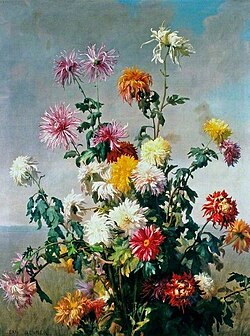
‘Flowers’ – Jean Benner – Wikimedia
.
~~~
Text by Alain Joly
Painting by Jean Benner (1836-1906)
~~~
.
Website:
– Jean Benner (Wikipedia)
Suggestion:
– Other ‘Essays’ from the blog…
.
Back to Pages
.
 The Dawn Within
Dearest Alain,
Thank you for this post as it resonates deeply with many questions that have been arising for me lately. It certainly seems the deepest and most fundamental of beliefs—that we are a separate self. And this line really touched deeply: “And our not interfering with the choices of our life, our not endorsing them, is the best guarantee of their being informed by qualities that are themselves choiceless, unborn, such as love, peace, and the understanding contained in only being.”
Much love, Cindy
LikeLike
Thank you Cindy, I’m happy you connect to it.. 🙏
LikeLike
By definition, “I” must always refer to the subject of perception or experience. It cannot be an object of itself. “Am” must always be present. It can’t be in the future or the past. Therefore “I am” must be eternally present as awareness of all perceivable and conceivable objects. As the eternal present, “I am” is dimensionless. It doesn’t actually exist as things exist. There is no room in the eternal present for anything but itself and yet the whole universe is its constantly moving content. It has no movement, no duration, no extension, yet it is consciousness itself. All forms, including thoughts pass before it; it is that in which we “…live, move and have our being…” yet it is perfectly still for eternity. When scripture says God is closer than hands and feet, closer than breath, this is what it means. God is the eternal present Consciousness.
LikeLike
Thank you for your comment! It’s perfectly said and crafted.. 🙏
LikeLike